

Everyday We Get More Illegal
The poem “Everyday We Get More Illegal” by Juan Felipe Herera reflects the struggles that many immigrants face and their resilience upon adversities. The title itself represents how through time their hardships get worse through the use of ‘Everyday’. It emphasizes how their struggles remain persistent and is consistently worsening which decreases their chance of success. The rules just continue to get stricter. The poem uses lot’s of repetition such as “Another law and then another” which contributes to their emphasis on how the rules are getting stricter and creating more adversity for the people trying to prosper. It incorporates other literary elements such as Irony, Symbolism, Personification, and Imagery to provide a thorough understanding of their struggles.

The poem itself represents many themes that include marginalization and resilience. It displays the central idea of marginalization through the hardships that the Hispanic-Americans must face. The quote “Detention cells husband with the son the wife,” conveys how the family is being separated as well as put into cells while the daughter has to live a depressing routine with her husband as shown through “ And the daughter who married a citizen they stay behind broken slashed.” The daughter must continue living a low-income lifestyle and the rest of her family has to struggle with the trauma of being separated which is suggested by the metaphor of the family being “broken slashed”. This act of mistreatment dehumanizes the migrants viewing that the family is being treated with no regard towards their closeness and love shared between each other.
The fact that the poem carries on by mentioning “Another law and then another” emphasizes the marginalization shown towards the people among the Hispanic community, trying to live in the United States. It demonstrates the idea of how the government shows no concern towards the migrants. They continue to maintain or worsen the dreadful lifestyles for the community through the inclusion of more restrictive laws.

Resilience is another dominant concept of the poem. Throughout the piece is displayed aspects of struggle and suffering to fulfill the desire in finding an adequate lifestyle. However, the end of the poem describes a person named Alberto that successfully left for Denver where he could pursue a difficult but better lifestyle. It ends off by mentioning that he is “Walking working under the silver darkness/ Walking working with our mind our life.” which uses repetition of “Walking working” to encourage the point that he is living a monotonous lifestyle. Nevertheless, the quote provides detail to how Alberto’s mindset is crucial in supporting his perseverance as shown by “our mind our life.” It represents that through resilience he is able to overcome the obstacles and maintain the opportunity of being able to live in Denver. Hence, the poem’s theme of resilience is shown through the persistence of the migrants towards their hardships.
Juan Felipe tries to express the idea on how perseverance and determination will significantly support an individual in the midst of adversity. Even the author himself struggled in the beginning and grew up living in a tent. Despite his difficult childhood, he strived to succeed and was able to obtain a Master’s in Stanford University. This demonstrated his resilience and his inspiration to create a meaningful poem like this.
Look At The City From Here
The poem “Look at the City from Here” by Faiz Ahmad Faiz provides a potent message on how a difference in perspective can create a new understanding in relation to the discovered realities of the world . It repeats the statement of “If you look at the city from here” to emphasize the significance in changing one’s outlook of the city in order to acknowledge the true flaws of it. This is shown through the quote “If someone raises his arm/You expect to hear the jangling of chains” which describes how one can anticipate a form of repression when someone chooses to show resistance.

The poem develops the concept that the people are treated like prisoners and that the rebellious attempts often result in death. This is notably shown by the writing piece’s consistency on implying on how the people are restricted. It uses a tone that makes the poem’s events and perspective more reflective through the incorporation of sentences like the question “Why hasn’t he been stopped by a shout. The poem allows the reader to reflect on their outlook of different societies among them and how they can change their view in order to uncover some of the unapparent issues surrounding them. Overall, this type of literature provides the theme of how a person’s change in perspective can help enlighten them through their discovery of the more concealed truths of the world.

In my initial adolescence, I believed that my family’s country of origin, Russia, was the best country to a point where I refused to believe that it had any flaws to it. I thought the president was a great representation of a leader that the other countries needed and that my country had the best life. I would often go to Russia in the summer and be heavily influenced by the discussions as well as beliefs shared by the people I was often surrounded by. They would tell me about how terrible America is and that Russia is miles ahead of the other countries. Their opinions ended up impacting my beliefs in which I developed the confidence to say that my country was perfect.
I would share my opinions among my friends and many of them would agree with me due to a lack of knowledge. However, one of my friends expressed a different perspective in which he stated that my country has many flaws such as their suppression of speech that voices against the Russian government. He told me that people could be arrested simply for speaking out. As a result of my ignorance and biased beliefs, I had tried to deny his accusations. I insisted that the government would never do that. I had even told him that this type of suppression only occurs in Canada. Although I tried to change his mind, my friend maintained his beliefs. He showed me videos of people describing their experiences of being arrested for speaking out in Russia. The evidence of mistreatment was clear and I started to empathize with the person in the video. The person made me take on his perspective of Russia through the details of his experiences and develop the understanding that indeed my country had flaws to it.

I felt enlightened by this point of view. I may still be a proud Russian however, I am aware that my family’s place of origin has many negatives to it which especially included the actions of the government. Just like the title of the poem “Look At The City From Here” I viewed the country through a different person’s perspective and was able to develop a stronger understanding of the realities among the nation-state.
https://www.semcoop.com/event/juan-felipe-herrera-every-day-we-get-more-illegal-virtual-event
https://pixabay.com/illustrations/resilience-toughness-keep-up-7371389/

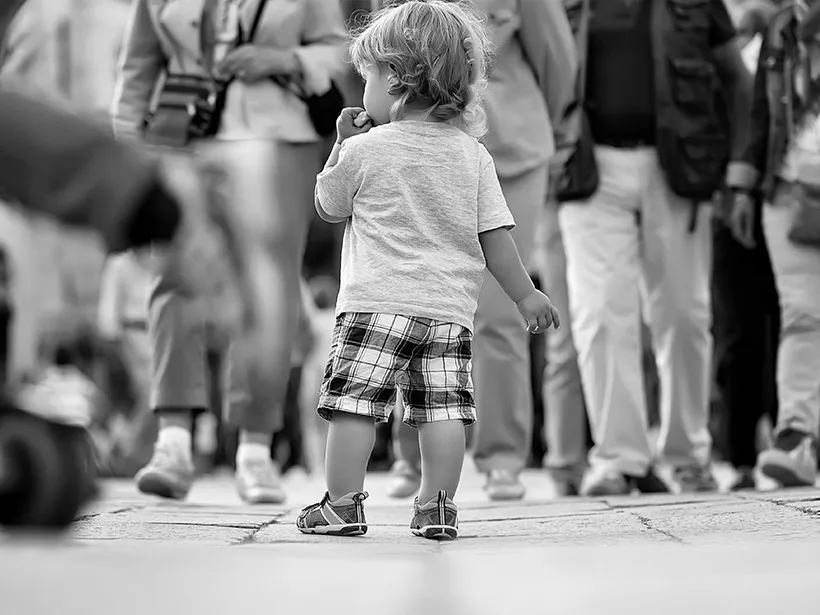 ns of others. This highlights the profound impact that external influences can have on our understanding of ourselves. At its core, “Child Before A Mirror Of Strangers” prompts us to reflect on the complex interplay between individual identity and societal expectations. It challenges us to question the extent to which we allow others to define us and how we can assert our authentic selves amidst the multitude of voices and opinions. The poem encourages us to embrace our own unique reflection, even in the face of strangers, and to navigate the path of self-discovery with courage and resilience. Overall, Wole Soyinka’s “Child Before A Mirror Of Strangers” is a thought-provoking poem that invites us to contemplate the complexities of self-perception and the role of external influences in shaping our identities. It serves as a reminder to nurture our true selves amidst the sea of unfamiliar faces and to embark on a journey of self-discovery that is both introspective and resilient.
 on the thought of adulthood creeps on us sooner and sooner with each coming generation. For example: My first phone was my mom’s old Samsung that I got when I was 14, meanwhile my cousins who are 10 got an IPhone 14 as his first phone! This shocking discovery made me come to a realization that not only was my cousin a spoiled brat, but was also an example of being exposed to the expectations and social standards at a very young age. And it’s not just phones; the language, dress sense, even goal setting are all shown to be similar between adolescent and teenage people. In our pursuit of adulthood we’ve forgotten to embrace the precious moments that came with childhood. Exposure to things that force adulthood shouldn’t be shown when the child is still young and not fully developed as a child, it forces them to act more “mature” without knowing exactly what maturity is and how it is displayed.