Guilt in the Kite Runner

In “The Kite Runner,” Khaled Hosseini masterfully explores the multifaceted nature of human choices, crafting a narrative that weaves together personal morality, societal expectations, and the relentless pursuit of redemption. At the heart of the novel is the protagonist, Amir, whose life unfolds as a tapestry of decisions shaped by the haunting specter of guilt. Early in his childhood, Amir betrays his loyal friend and half-brother, Hassan, during a moment of vulnerability. The consequences of this betrayal reverberate throughout Amir’s life, becoming a driving force that propels him to make choices entwined with a fervent desire for redemption.


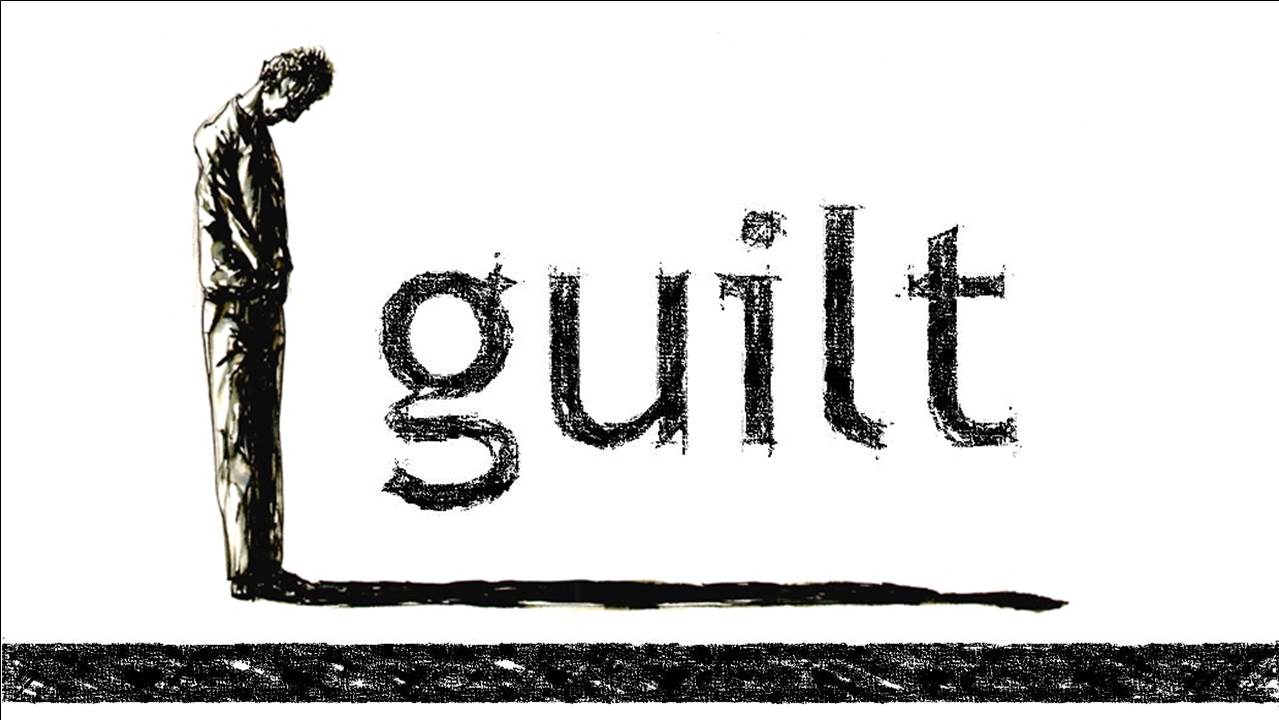
Guilt emerges as a powerful motivator, pushing Amir to grapple with the consequences of his past actions. Hosseini delves into the psychological complexities of guilt, portraying it as an ever-present force that colors Amir’s perceptions and influences his decision-making. Amir’s guilt is not a passive burden but an active agent that shapes his choices, from his internalized self-loathing to his external actions. His migration to the United States is, in part, an attempt to escape the shadows of his past, a geographical move that mirrors his quest for a clean slate. However, as the narrative unfolds, it becomes evident that physical distance alone cannot sever the ties to guilt. Hosseini suggests that redemption is an internal journey, a series of choices that require /courageous confrontations with one’s own conscience. In Amir’s case, this internal struggle manifests in the form of tangible actions, such as his decision to return to Afghanistan and rescue Hassan’s son, Sohrab, from the clutches of the Taliban.
The novel also delves into the interplay between individual moral dilemmas and the external pressures of societal expectations. Set against the backdrop of the political turmoil in Afghanistan, the characters in “The Kite Runner” navigate a complex tapestry of cultural norms and societal judgments. Amir’s choices are not solely shaped by his internal moral compass; they are also influenced by the societal expectations of honor, loyalty, and masculinity. The juxtaposition of Amir’s personal guilt and the societal expectations of his role as a son and friend creates a nuanced portrait of the intricate dance between personal conscience and external pressures. Hosseini suggests that individuals exist within a dynamic interplay of internal and external forces when making life-altering decisions.

Moreover, the novel underscores the cyclical nature of choices, as the repercussions of one’s decisions ripple through generations. The sins of the fathers are visited upon the sons, and the narrative unfolds as a testament to the inescapable legacy of choices. Amir’s journey for redemption extends beyond his personal salvation; it becomes a quest to break the cycle of betrayal and atone for the sins of the past. The choices made by the older generation cast long shadows over the lives of their progeny, illustrating how individual decisions reverberate through time, shaping the destinies of future generations. In this exploration of generational consequences, Hosseini prompts readers to reflect on the enduring impact of choices and the responsibility that comes with wielding the power to shape one’s destiny.


In conclusion, Khaled Hosseini’s “The Kite Runner” is a rich tapestry that delves into the intricate motivations driving individuals to make choices in their lives. Through the lens of Amir’s journey, the novel explores the pervasive influence of guilt, the interplay between personal morality and societal expectations, and the cyclical nature of choices. This narrative complexity serves as a mirror reflecting the universal truths about human nature and the intricate web of factors that contribute to the decisions individuals make. Ultimately, “The Kite Runner” invites readers to contemplate the profound implications of choices and the transformative power of redemption in the face of personal and societal adversity.

Plato’s allegory of the cave is a centuries-old philosophical discussion that has managed to stay relevant since the times of ancient civilizations. It’s message is still analyzed and held as one of the more important messages for society. The allegory is a tale which informs people how ignorance is like a ‘cave’ that is difficult to escape from, and how hard it is to accept new facts and knowledge. The original text is comprised of a conversation between Plato’s brother, Glaucon, and his mentor, Socrates. They discuss the nature of reality, and how one who has always known a false reality might react when confronted with the ‘real reality’.

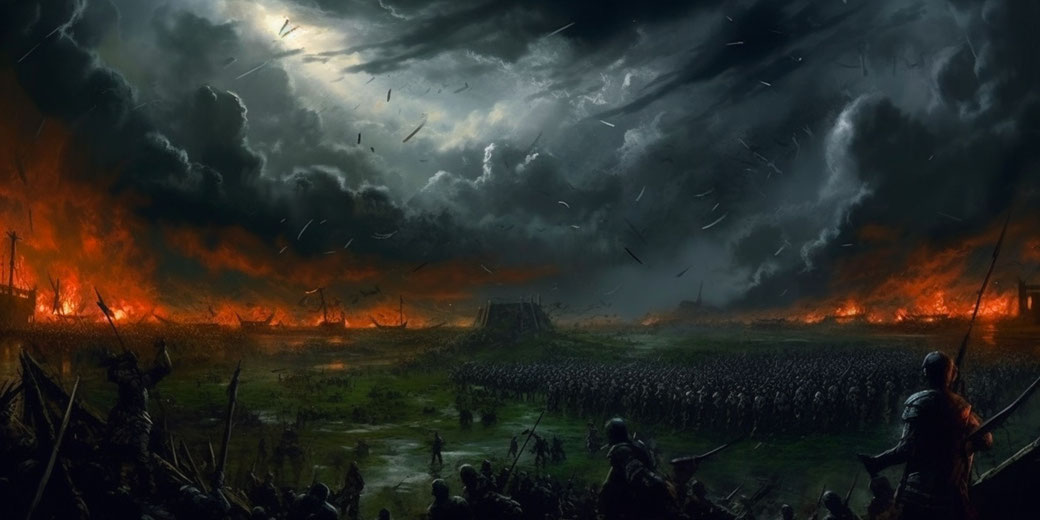
Humans are designed to resist change, because a fixed system is perceived by our troglodytic brains as safe, and any deviation perceived as unsafe. Through thousands of years of evolution, this response has been ingrained in people’s brains as a survival tactic. Although people may know that they should learn more and that knowledge will ultimately improve their lives and the lives of others through things like technology, there exists a very powerful instinct to stay on the beaten path, and in this cognitive dissonance, the easiest idea to express is the one that comes to people instinctually. The progress of humanity is an uphill battle against this instinct, to create and explore new things. The jump out of apathy programmed into individuals is caused by hitting rock bottom. When the fixed system or ‘cave’ cannot get any worse, the survival instinct in one’s brain will push for a change, to get out of the ‘cave’ and discover something new, because it must be better than what the current situation is.

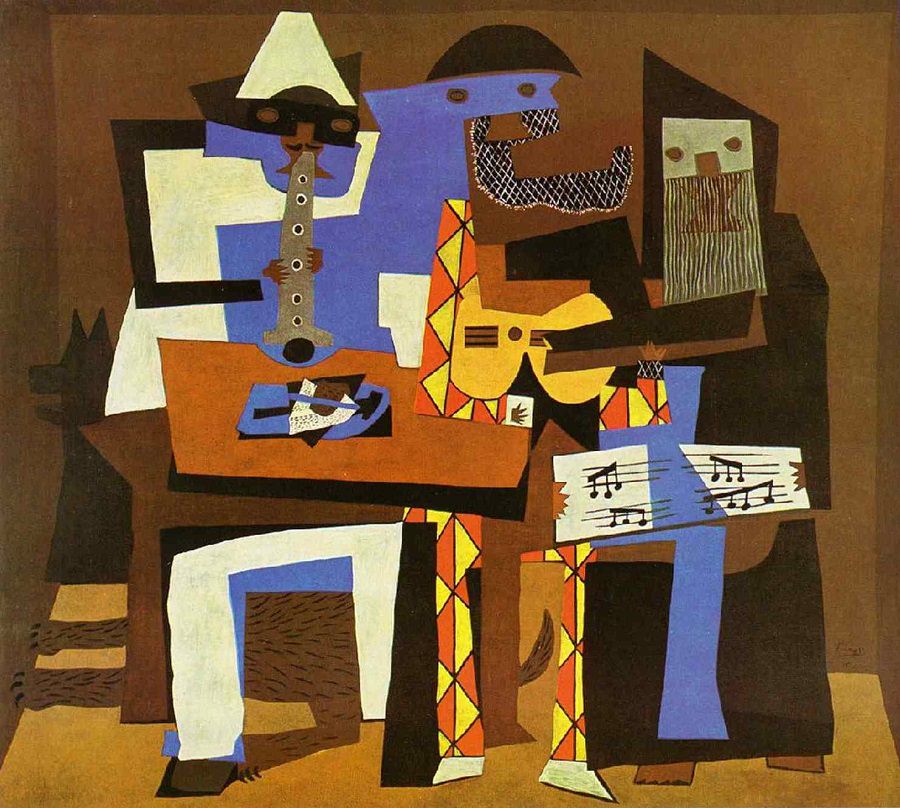
The Renaissance,  celebrated as one of the greatest periods of art, science, and technological advancement, came after the Dark Ages, in which the general treatment of people was awful, and most people had nothing. Although it took many decades, one survival instinct overcame the other, and people began to prosper. Examples of people finally overcoming their troglodytic brain in order to find progress is seen in every revolution in history, and many other places if one is willing to go looking. Many of the best poets and artists have produced what is considered to be their best works in their darkest of times. Picasso’s Blue Period is a famous example of this. Right after the Blue Period, in which he was depressed, Picasso started painting in his most well known style, cubism. These are the paintings he is most known for, because they were in a unique style. It was only after hitting rock bottom that the change was brought forth.

All of these examples go to show why Plato’s message continues to be so relevant. They are a reminder that change is good, and a call to ignore the mindset that would keep one trapped in the cave, and encourages one to seek truth and understanding. Even once one has read and understood the allegory, there is no guarantee that change will arise. The earlier mentioned cognitive dissonance will cause the desire to remain the same to prevail most times, and one cannot just con their own brain into working differently. The more this problem is talked about, the harder it is for the brain to outright dismiss change as something to be avoided, and the greater a chance for change to arise is.

A Tale of Memories and Hardships

A Tale of Memories and Hardships

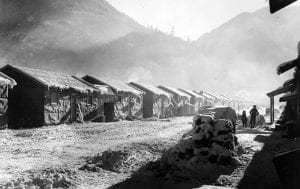
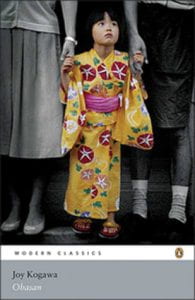
Obasan, written by Joy Kogawa, is an insightful novel into the horrors the Canadian-Japanese experienced during the Second World War, and how the history still shapes many of their lives years later.

The story follows Megumi Naomi Nakane, who as a young girl experiences the internment of the Japanese-Canadians first hand and how she grew up throughout such a harsh period of time. The story is told through a handful of Naomi’s perspectives starting the story off in 1972 with her uncle Isamu. Her uncle soon passes away and Naomi drives out to visit her Obasan (aunt/uncle’s wife). After a few chapters with Obasan the story then transitions to being told through a series of old letters and flashbacks. It is here where we are given the full story from Naomi’s perspective piece by piece until we return to the 70s for the final few chapters, still pondering the past events.

Though an important perspective and a powerful story, the novel can feel very run-on and unnecessary at times especially during the first half of the book. This is due to the writing style which the author has chosen to use. Throughout the story Kogawa writes in extreme and precise detail, outlining every aspect of the scene she’s describing. While useful for laying down exactly what the author wants the reader to know and picture, Kogawa tends to do this somewhat erratically, choosing to focus on some of the most mundane or insignificant aspects of a scene. This can be anything from a full page exclusively about the clutter of a kitchen fridge, to the patterning on a set of dishes used once in a single chapter. While one could look at this from a literary standpoint and say it shows the contrast of different ways Naomi and her family lived throughout the years, this unique usage of description can turn a reader away from the story due to how frustratingly time consuming it can be. The novel can feel slow and verge on boring thanks to Kogawa’s writing, which can be quite bothersome when trying to read a novel that tackles such a complex and painful subject. The use of flashbacks can also feel rather jarring at times, due to not always being certain as to where and when an event is taking place unless explicitly stated (which it often is fortunately). However, I did find that the impact certain points or ideas had would not be felt the same if the story were to be told in a linear fashion.

Though a tough read at times due to the author’s methodology, Obasan is an important story working to understand about how to live with oneself after an atrocity like the internment camps during WWII. In the end, I enjoyed this book, even if it isn’t for everyone. I would recommend it to any and all looking for a historical-fiction that delves deep into the personal and emotional aspects of how war changes even those not directly involved in it.


-Image links-

https://www.project44.ca/japanese-canadian-internment

Japanese Canadian Historic Sites in BC: Journeys of Home

https://fvcurrent.com/p/tashme-museum/

Obasan By Joy Kogawa Book Review

The Kite Runner Response

The Kite Runner Response

The book I am reading is called The Kite Runner. It goes through the childhood of Amir and Hassan and how they survived during the war. I am going to choose a prompt and respond to it using evidence from this book.

My prompt is: “What is the significance of the kite in “The Kite Runner (so far) and what deeper meaning does it have between the characters and their relationships?

Symbols - The Kite Runner Project

In the initial stages of ‘The Kite Runner,’ the kite symbolizes both the innocence and the complexities of the friendship between Amir and Hassan. The kite-fighting tournament in Kabul becomes a pivotal moment that sets the tone for their relationship. The blue kite, emblematic of Amir’s desire for his father’s affection, takes on layers of meaning as it becomes entwined with themes of betrayal and guilt. The kite’s meaning changes as the story goes on in light of Amir’s efforts at atonement. His life becomes somewhat stable after he marries Soraya in America, but the resonance of the kite never goes away. Amir’s relationships and self-perception are still shaped by the memory of the kite-fighting competition, which acts as a symbol for personal development.

In this stage, Amir’s continuous search for atonement is symbolized by the kite. His unresolved remorse and desire to atone for his past transgressions are reflected in his recurrent nightmares about the blue kite. Amir’s story is woven with the concept of the kite, which links his time in Kabul with his current life in America and shows his redemption’s final phases.


16,456 Redemption Images, Stock Photos, 3D objects, & Vectors | Shutterstock


The Importance of Good Influences

The Importance of Good Influences

You Know I'm No Good by Foley, Jessie AnnThe book I am reading is called, “You Know I’m No Good,” by Jessie Ann Foley.  I am about halfway through this book and it is about a teenage girl. This teenage girl is very troubled in ways like underage smoking and drinking, sleeping with boys without any meaningful connection, and punching her stepmom. All these activities got the main character Mia Dempsey into a boarding school.

I believe that it is hard to connect to a character like Mia. Not many teenagers experience being so bad toHeavy drinking and smoking can age you faster: Study | DD News the point of being sent away from their families. But, they may be troubled in their own ways and the advice that the therapist gives Mia in this book could be helpful to anyone.
Friends Clipart Images | Free Download | PNG Transparent Background - Pngtree

To many I would not be considered a troubled teenager as I get good grades, I play sports, I do not skip class, and I have a good group of trusted friends. I believe it is who you surround yourself with that makes you who you are. If someone is friends with many bad people they will be influenced by them. I have the luxury of finding a great group of friends with the same morals as me. Mia did not have many close friends but the people that she chose to hang around were definitely not good influences. They did drugs and drank often while also skipping class.

Being around others who are positive influences is essential to good personal growth. Individuals pick up the habits of who they spend lots of time with so it is very important they are uplifting habits instead ofWays To Improve Your Self Towards Personal Growth | Unlocked Potentials poor ones. Good friendships provide nurturing environments that allow people to learn from each other and build a strong support system. Good influences inspire others to make better and thought-out decisions. In the end, this helps others reach their goals and maintain a positive mindset. Mia Dempsey is a great example of how surrounding yourself with the wrong people most likely will have a bad effect on you. All in all, being friends with positive influences can not only enhance your personal development but also create a supportive community to help many more. 


https://www.google.com/search?q=smoking+and+drinking+bad&sca_esv=586493926&rlz=1C5CHFA_enCA935CA937&tbm=isch&source=lnms&sa=X&ved=2ahUKEwjUl5eW0-qCAxUENn0KHQMlB_EQ_AUoAXoECAMQAw&biw=1280&bih=715&dpr=2#imgrc=xeqbB0hPIww0rM&imgdii=orMHy6TgpKqkMM

https://www.google.com/search?q=friends+clipart&rlz=1C5CHFA_enCA935CA937&oq=&gs_lcrp=EgZjaHJvbWUqCQgCEEUYOxjCAzIJCAAQRRg7GMIDMgkIARBFGDsYwgMyCQgCEEUYOxjCAzIJCAMQRRg7GMIDMgkIBBBFGDsYwgMyCQgFEEUYOxjCAzIJCAYQRRg7GMIDMgkIBxBFGDsYwgPSAQoxOTU3NDNqMGo3qAIIsAIB&sourceid=chrome&ie=UTF-8#vhid=3E54ktFs_oSKNM&vssid=l

https://www.google.com/search?sca_esv=587515418&rlz=1C5CHFA_enCA935CA937&q=personal+growth&tbm=isch&source=lnms&sa=X&ved=2ahUKEwjyj8_Aj_SCAxVYFDQIHZjTB_QQ0pQJegQIDhAB&biw=1280&bih=715&dpr=2#imgrc=YeESGeQ_ntgIHM

https://www.google.com/search?sca_esv=587515418&rlz=1C5CHFA_enCA935CA937&q=you+know+im+no+good+book&tbm=isch&source=lnms&sa=X&ved=2ahUKEwjA-IT6j_SCAxVEGDQIHaVJDIEQ0pQJegQIDxAB&biw=1280&bih=715&dpr=2#imgrc=Yn6jCdp8KCoyIM

Why Do Good People Die?

    In my current novel study You Know I’m No Good the main character, Mia, proposes a question of why good people die, while bad people get the privilege of living a longer life. I chose to write on this topic because I know that it is a common question that is asked yet has never received just one answer.


You Know I'm No Good by Foley, Jessie Ann

    As Mia is sent to a rehabilitation center for struggled teens, she begins a process of self reflection. These reflections are based on the bad behaviors she exhibited, which included actions of punching her step-mother, getting into drugs and alcohol, alongside participating in promiscuous activities. This is what guides Mia to create this rhetorical question with the belief that she is a bad person who deserves to die.


    To start simply, what makes someone a good person? Everyone has different ideas about what qualities make up someone who is good, which is why the given question is open ended. My personal belief is that everyone dies, regardless of their character. The death of good people is perceived as more common because people tend to care more about the death of those they consider to be good people, meaning more emphasis is placed on the death of good over bad people. An example of this can be seen in the novel The Great Gatsby when nobody shows up to Gatsby’s funeral because the whole of society believed he was a bad guy for “killing” Myrtle. If the circumstances were varied and Gatsby was seen as innocent in society’s eyes, all opinions and feelings would have switched, becoming more solemn and sympathetic. Countless people die every day; there is no such thing as only good people dying. People mourn the loss of good because they think that they deserved more time alive than those who were -in their eyes- bad. They have this concept in their head that good people are more important and contribute more to the world than someone who is “bad”, which isn’t necessarily true. Good people are held up on a pedestal while others are thrown to the side and labeled as insignificantBlog: Responding to being left out important meetings — People Matters


    All in all, there will always be different answers to this question based on an individual’s beliefs and experiences, with no answer being correct or incorrect. Death is an inevitable occurrence that everybody experiences.


Citations:

https://www.peoplematters.in/blog/watercooler/responding-to-being-left-out-important-meetings-14994


Obasan’s Parallels Between Fiction and Real Life

Obasan by Joy Kogawa uses the weight of historical injustices to provide a great example of how individuals live through war. The protagonist, Naomi, deals with the trauma of internment and the loss of her mother. Initially, this may have felt burdensome, but as the story progresses, the subtle details and insights of Kogawa’s writing become apparent.

One compelling piece of evidence is the unique characterization within the novel. Characters like Aunt Emily, seemingly rigid and stern initially, gradually reveal layers of resilience and quiet rebellion against the injustice imposed upon Japanese-Canadians. Aunt Emily’s defiance, particularly in her determination to preserve the truth and resist forgetting the past, adds a layer of strength to the narrative that might not be immediately evident in the story’s beginning.

Moreover, Kogawa’s exploration of cultural identity becomes increasingly profound as the narrative progresses. The interplay between Naomi’s Japanese heritage and her Canadian upbringing is portrayed with delicacy. Scenes that may have felt unfamiliar or impartial initially, such as the memories of Obasan’s silence. This helps the story gain significance as the novel unfolds. The cultural practices of each character are not presented in isolation, but rather woven into the fabric of the characters’ lives, enriching the narrative with a deeper understanding of the complexities of identity.

Additionally, the narrative structure itself contributes to the evolving appreciation of the novel. The fragmented and casual storytelling, mirroring the fractured memories of the characters, may have initially posed a challenge. However, as the reader becomes accustomed to this narrative style, it becomes a poignant reflection of the characters’ fractured lives and the impact of historical trauma.

In retrospect, the initial discomfort I experienced as a reader was a testament to the novel’s power to provoke thought and emotional response. The evidence within “Obasan” demonstrates that the challenges posed by the narrative are intentional and contribute to a more profound and interesting reading experience. As the layers of the story unfold, so too does the depth of its impact, leaving a noteworthy impact on the reader’s consciousness. This evolution of understanding and appreciation is why, ultimately, I find myself liking “Obasan” more than when I first embarked on this literary journey.


IMAGE CITATIONS:

1st image – https://www.thecanadianencyclopedia.ca/en/article/internment-of-japanese-canadians

2nd image – https://archive.org/details/obasannovel00koga

Society and How it Changes

Society and How it Changes

I’m going to be writing about my personal response to Pleasantville and the Allegory of the Cave, as well as contrasting the two.

The thought-provoking movie “Pleasantville” examines both personal development and social norms. The narrative centers on brothers David and Jennifer as they enter a world of black-and-white 1950s television. The movie represents the ability of people to grow and discover who they are, as the characters in this idyllic community begin to feel emotions and desires beyond their predetermined roles. The change from black and white to color symbolizes the acceptance of uniqueness and defiance of social conventions. By emphasizing the importance of variety, tolerance, and acceptance, the film challenges viewers to consider conventional wisdom and embrace change. “Pleasantville” is a potent allegory that encourages introspection on escaping social restrictions to discover one’s true identity and appreciate the individuality in both ourselves and other people.

Can we change society? To change the way our society thinks, what can we do? - Quora

The “Allegory of the Cave” by Plato offers a significant comparison between perception and the pursuit of knowledge. It shows inmates imprisoned in a cave who can only see the shadows created by a fire, symbolizing their narrow perspective on the world. The story highlights how our senses are limited and how difficult it is to discern a deeper truth than what is immediately apparent. The journey toward enlightenment and the search for true truth are symbolized by the prisoner who breaks free and discovers the outside world. For me, this metaphor has pushed me to critically think, challenge presumptions, and have an open mind to fresh viewpoints. It emphasizes how crucial it is to keep learning new things and how we must question our own assumptions in order to understand the world more fully. The narrative has made me more aware of the intricacy of perception as well as the never-ending pursuit of knowledge and enlightenment in a world where comprehension is complex and constantly changing.

Plato’s “Allegory of the Cave” and “Pleasantville” both examine the concepts of perception, social conventions, and personal development. In the movie, protagonists escape a world of black and white to embrace their uniqueness, but in Plato’s metaphor, captives can only see shadows, underscoring the need to look deeper for truth than what is immediately apparent. Both stories emphasize the significance of overcoming limitations—societal or perception-related—as well as the path to enlightenment and self-discovery. Although “Pleasantville” presents a contemporary portrayal of freedom from social conformity, Plato’s allegory functions as a timeless story that highlights the difficulties in interpreting reality that go beyond immediate sensations. Both encourage critical thinking, the pursuit of knowledge, and the celebration of individuality in understanding reality more profoundly.

Journey of Losing and Regaining Identity

Journey of Losing and Regaining Identity

The poem, “The Hidden Fence” by Rita Joe, is a poem about a First Nations girl going to a residential school and losing her identity and her connection to her culture. It is told in the author’s perspective and shows how she struggled to regain her lost sense of identity. Rita was once free and surrounded by her culture and beliefs. Rita was stripped of her identity and culture but managed to find a way to reclaim her lost identity. She expresses how she felt trapped by the changes and obstacles she faced in her life. She also discusses how she managed to overcome these changes and find the light when she thought she was trapped in the darkness.

Since this poem is about a First Nations girl losing her culture and identity, it was difficult to find a way that I could relate to this. I found an experience which I share the same feelings to her circumstance. Of course, in no way could my experience compare to the tragedy of what occured in residential schools, but it made me feel a similar way, just on a lower level. I found a way in which I relate to the feeling of losing my identity.

I am a Canadian, but my family is from Syria. Around every two years my family and I return to Syria to visit family and friends. When I was younger, the bi-yearly trip to my home country

meant nothing more than a fun vacation where I can visit my family and make new friends. This was until my last trip, which was two years ago. Due to covid and flight restrictions, we hadn’t gone to Syria in almost 4 years. In this 4 year period, I grew and changed as an individual. I began to understand the world around me more, and most importantly, connect with my family. I returned to Syria, a completely new person then I was the last time I visited. This trip to my home country wasn’t just a fun vacation anymore but it was also an opportunity for me to grow as an individual and enhance my identity.

In the summer of 22′, I visited Syria after a long 4 year wait. During my time there, I bonded with my family, experienced new things and embraced my heritage. This trip helped me get a better understanding of my identity and my culture. I reconnected with my roots and my heritage and I felt a connection like I had never felt before. I felt a sense of belonging, a feeling that was present in Canada, but not as strong as it was in Syria. I was surrounded with people who shared my culture, religion, ethnicity, language, history, and blood. Now that I was older, I was finally able to embrace and understand the meaning of identity. I realized that where I am from holds a major part in the shaping of my identity. Visiting Syria was like the feeling of returning home, even though I was born and raised elsewhere. I had discovered a part of me that I never knew was there.

Eventually, I did have to return to Canada. It was very tough for me to leave because I knew how much I would miss the feeling of comfort and belonging of being in Syria. I felt like I had lost a major part of my identity. A piece of my heart felt as if it remained in my home country. After returning, I was unsure of what to do, and where to go next. “Now slowing to a trickle. My stride becoming a shuffle.” This was an accurate way of representing how I felt. Relating to Rita, I was missing a part of my identity. I almost felt guilty leaving, like I was ditching a part of me halfway across the world. A part of my identity and culture was missing and I felt as if I had no way to retrieve it.

After time passed, I found a way to embrace my identity again, but virtually. I would facetime my relatives daily, and be in constant communication with them. I also followed an instagram account that would update daily with photos, news and information about Syria. This helped me stay connected with my home country. “The spaces are still there for me to follow”, is how I felt. Even though, at first, it seemed like I had forever lost my identity and culture, I found out that there were still many ways that I could maintain my connection with Syria.

During this experience, I realized that seemingly losing your culture and identity isn’t always forever. Similar to Rita, she was stripped from her culture but she found a way to rembrace her supposedly lost culture. I cannot wait to return to Syria and grow my personal identity even more.

https://images.app.goo.gl/Limc9guWgpHxgFwY9

https://images.app.goo.gl/WyG9GT7RtJYnfJEL7

https://images.app.goo.gl/rWqqEfZxpcfHSbXu8

https://images.app.goo.gl/nYFnqAwAZXwsWdYi7

A Poetic Call to Embrace Nature

A Poetic Call to Embrace Nature

In a world perpetually driven by technological advancements and urbanization, this poem stands as a powerful reminder about the importance of reconnecting with nature. This poem echoes a sentiment that is still relevant today: humans nowadays go on devices for an average of 7 hours a day instead of embracing nature or exploring the outside world. The reason that people don’t embrace nature and instead go on their devices is because either they are trying to escape reality (got bullied or harassed) or they are trying to connect with social media. I too have been affected by this, but I am trying my best to go outside more often or change my habits, as later on in the future, if I do not change the way I view things, I will become a couch potato and won’t accomplish anything in my life

Going off the first paragraph, when I was young, I used to go hiking and play football all the time with my family and even my friends, I grew accustomed to these habits until technology came in. Once I got my first device, I found that as time went on, I was becoming more and more attached to the device until I didn’t go outside sometimes for days on end. So I realized that I had to collect myself and think about what the video games gave me that nature didn’t, and I realized that nature as a whole was giving me more knowledge than the video games because I could learn about the trees, the planToon Fantasy Nature | 3D Landscapes | Unity Asset Storets, the soil, how everything is grown, and the reactions that take place, as well as the weather, while from video games all I got was more and more dopamine inserted into my brain. I might have been happy from the video games and stress-relieved but it didn’t help me learn more and become smarter the same as nature did.

This poem serves as a call to action, urging readers to put down their books and venture outside to learn firsthand from the Earth and the surrounding fauna. Wordsworth is of the opinion that the natural world is the best teacher there is and that by immersing ourselves in it, we might learn more about life and find peace in our minds. I agree with this statement because it serves a reminder to not be so involved with our devices and to go out once in a while. The reason I repeat myself is to emphasize the idea and how it can impact our worlds in a negative or a positive way, it all depends on yourself.

Citations: https://img.freepik.com/premium-photo/open-magic-book-life-knowledge-wisdom-fantasy-nature-learning-concept-with-heart-shaped-tree_786587-7810.jpg?w=740

https://encrypted-tbn0.gstatic.com/images?q=tbn:ANd9GcQHaF029qQAINgh7kQQY0bJTbbR1XYYMPw31g&usqp=CAU