Culture is an Identity’s Heart


The Hidden Fence

Rita Joe


Once upon a time I was in spaces free

I trod the lane of the rainbow road

My identity my own

And all the earth and sky my friend.

In barricaded fences of rescue

Submission becoming my prison

Now slowing to a trickle.

My stride becoming a shuffle

The feathers hanging limp as I signed the X


The spaces are still there for me to follow

In the wide open range

I teach you my culture

I want to teach you about me


Let me.


    The poem “The Hidden fence” by Rita Joe, is compelling with ties to culture and its significance to an individual and how it makes a person them. With this poem Joe has made a statement to not just aboriginal people but also to those who have lost their culture and can’t connect like they once were. This further connects to the importance of cultural identity to someone. In the context of the poem and Joe herself this would tie to her and those closest to her as they had once lost their culture and were assimilated into the western way of life. She describes the way the indigenous people lost their way of life and lost their connection due to the residential schools. With those who love and care about the culture they strive to teach others and preserve its significance to them and many others. Joe has a wonderful way of describing how culture is important to her and a way for those to reconcile with their culture identity.
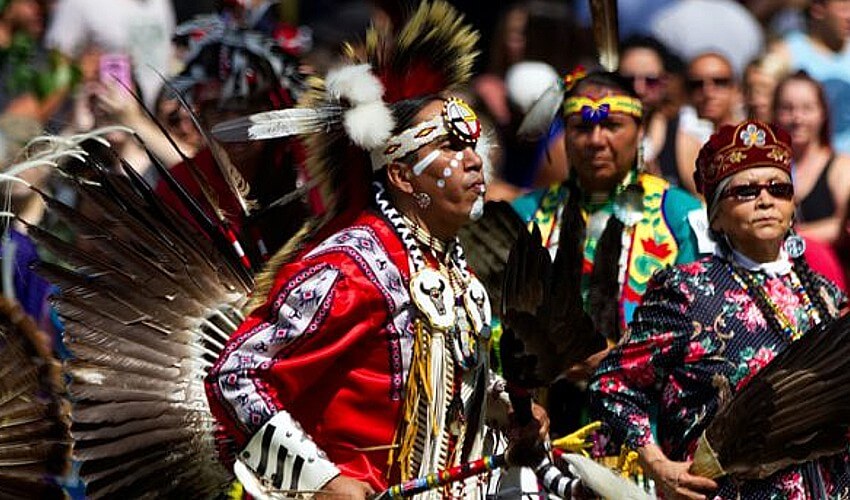
Five Places to Learn about Indigenous Culture in Ontario - CAA South Central Ontario
      Joe has several important statements in the poem that are important to her but others of different cultures can deeply connect with. One that can speak volumes is, “submission becoming my prison” this specific part from her poem is significant because of the reality of it. The reality of it is that submission or pleasing is a part of how people interact with each other, in this specific context not only is it part of how she interacts with others it’s also how her culture is like, they appeal to the elders or those older. In this poem Joe is able to relate to many while staying within a specific manner regarding her identity and her culture. 
     This poem is something I can relate to, something that spoke to me while I read and analyzed it. Joe has made a message with this poem of preserving culture and its importance to an individual. To me this is not an old topic, this is something prevalent in my life, I see this everyday. I have lost a sense of cultural identity, the example being not being able to communicate with my family, specifically my grandmother. My grandmother is very important in my life, she is like a ray of sunshine, but the thing is I am not able to communicate with her. I have lost all sense of identity and I am not in touch with my cultural identity. Before I was able to speak and understand what my grandmother and mother said, now I am not able to understand a lot and I only respond in a broken way of speaking. Stated in the poem it says, “submission becoming my prison,” this line in the poem is something that I can see in myself. Growing up learning English and my parents wanting to help me learn they also spoke english to me, I feel as though my submission is that I did not care to speak in my mothers language. This is something I regret, something that I wish never happened. Like the speaker and her spaces that were once free, I want to go back to those spaces and regain a new understanding and become enlightened by those who can teach me. To sum up, Joe’s well written poem has spoken to me and I am easily able to connect with it, I wish the message she spoke was seen sooner by me. 
      Ultimately, Joe has written “The Hidden Fence” with the ideas of culture and the importance of it in combination with identity. She speaks of how culture can be taken, but if the culture is important, just losing it will not be the reason for it becoming extinct, they will want to regain what was lost. Joe talks about the perseverance of all and how it affects their culture and its importance to them. “The Hidden Fence” is a great example of the perseverance of individuals whose culture is so important to them that they will not let it stop at one terrible occasion.

Unveiling the Invisible Bonds

Unveiling the Invisible Bonds

The Hidden Fence

Rita Joe

Once upon a time I was in spaces free
I trod the lane of the rainbow road
My identity my own
And all the earth and sky my friend
In barricaded fences of rescue
Submission becoming my prison
Now slowing to a trickle
My stride becoming a shuffle
The feathers hanging limp as I signed the X

The spaces are still there for me to follow
In the wide open range I teach you my culture
I want to teach you about me

Let me.

The poem’s title itself, “The Hidden Fence,” hints at the underlying theme of cultural boundaries and the struggle to preserve one’s heritage. Joe’s words are a lyrical reminder that fences are not always made of tangible materials; sometimes, they are constructed from the expectations, stereotypes, and prejudices imposed by society. Through her verses, Joe explores the concept of an invisible fence that separates Indigenous people from the mainstream, highlighting the ongoing challenges faced by Indigenous communities in maintaining their cultural identity.

One of the most powerful aspects of Rita Joe’s work is her ability to convey the pain and resilience of her people. She does not shy away from acknowledging the challenges and injustices faced by Indigenous communities but also celebrates their strength and determination. In “The Hidden Fence,” the speaker’s determination to “break the hidden fence” serves as a message of hope and empowerment. It is a call to action, urging readers to recognize and challenge the invisible barriers that divide us.

Another striking element of this poem is its evocative imagery. Joe’s vivid descriptions of limitations, like “My stride becoming a shuffle”. The author draws the readers into a world where the natural and the cultural are intertwined. These images create a sense of separation between culture and the people who call it home, emphasizing the idea that the land itself is a repository of cultural knowledge and history.

In conclusion, Rita Joe’s “The Hidden Fence” is a beautifully crafted poem that delves deep into the heart of cultural identity and the struggle to preserve it. Through evocative imagery and a powerful narrative voice, Joe invites readers to contemplate the invisible fences that separate us from our roots and challenge us to break free. Her words serve as a testament to the resilience of Indigenous communities and a call to embrace and celebrate our cultural heritage. It is a poem that leaves a lasting impact, reminding us of the importance of cultural preservation and the enduring bonds that connect us to our past.

Just like the Indigenous people in the poem, I have deep appreciation for the Vietnamese cultural heritage. The poem’s central theme of preserving one’s culture and identity that resonates with me as someone who has grown up with a strong connection to Vietnamese traditions, language, and customs. Being a second -generation Vietnamese person, I reflect on the ways in which my family has passed down cultural values and traditions across generations. The poem’s exploration of the intergenerational transmission of culture has prompted meto think about my own family’s experiences. While “The Hidden Fence” is specific to the Indigenous experience in North America, the broader themes of cultural preservation, identity, and the impact of societal expectations can resonate with individuals from various cultural backgrounds, including second-generation Vietnamese individuals like myself. It’s an opportunity to reflect on my own cultural journey and the ways in which I connect with and celebrate my heritage.

Bibliography

  • The National. (n.d.). Stunning opening ceremony kicks off delayed Southeast Asian games – in pictures. https://www.thenationalnews.com/sport/other-sport/2022/05/12/stunning-opening-ceremony-kicks-off-delayed-southeast-asian-games-in-pictures/
  • Tran, R. (2021, February 18). 20 best Vietnamese street food from north to south (& where to find them). Vietnam Discovery Travel. https://vietnamdiscovery.com/top-vietnam/best-vietnamese-street-food/
  • Festival, M. C. (2022, May 3). Every child matters. Vancouver International Children’s Festival Society. https://www.childrensfestival.ca/every-child-matters/
  • TVO Today: Current affairs journalism, documentaries and podcasts. TVO Today | Current Affairs Journalism, Documentaries and Podcasts. (n.d.). https://www.tvo.org/article/challenging-canadas-history-through-art
  • Numbered treaties. The Canadian Encyclopedia. (2016, August 3). https://www.thecanadianencyclopedia.ca/en/article/numbered-treaties