
The Song Of Immigrants

The Song Of Immigrants

“Siren Song” is a poem that speaks to the experience of being underestimated while simultaneously using that to your advantage. Margaret Atwood uses the image of a siren to lure the reader into the story and in the same way the fictional siren is luring the sailor.


To me though, the poem channels the idea of being unassuming while also being capable. The sailor goes to the siren because he sees her as unassuming, unable to harm him.


The siren on the other hand is using this mentality against him, she is capable and ready to kill him.


While I cannot relate this to my personal life, I believe it is important to see the necessary correlation to the real world.


As humans we are often tempted to see things as they are, rather than truly look beneath the surface and see them for all their reality. Something that Atwood is clearly critical of in Siren Song.


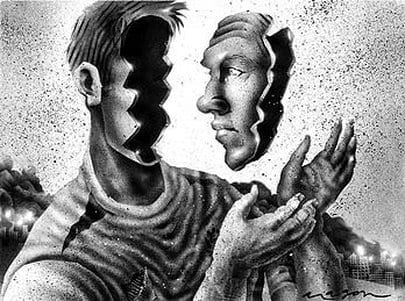
“Everyday We Get More Illegal” personally I really resonated with the poem, as it talks about the struggles that immigrants face. Within my own life, my family immigrated from Mexico to Canada, my parents left a life of relative luxury to come to Canada to be able to provide better opportunities for my brother and I.


My mother often speaks to the struggles she faced when first arriving here, she had to redo her computer science degree because the university she attended in Mexico was not recognized in Canada all while she was learning English.


She was also subjected to discrimination based on her race and her gender, she was never seen as enough to her white employers and as such had to work even harder to be able to provide for me and my brother.


To me it is inspirational that Juan Felipe Herrera was able to take a very common experience amongst immigrants and portray that to readers in a way that is authentic and beautiful, while being able to tell the truth of the hardships many new immigrants face.

Juan Felipe Unity Poem Fiesta

The Wolves That Motivate

The Wolves That Motivate

Tell the Wolves I’m Home, tells of the story of a young girl named June and her struggles within grieving the loss of her uncle. Her grief manifests in many ways but mainly through what she sees as “saving” her uncle’s boyfriend Toby. The novel follows the journey of both Toby and June and how they handle grief and inevitably finding peace in the storm. 

Toby and June are both case studies in handling the same task in different ways, both are told by Finn, June’s uncle, that they are to protect and take care of each other, a task that they both approach very differently.

June for example is reluctant but still willing to honor her uncle’s wish, she is determined to do activities that would get Toby out of the house and begins to take up things that he enjoys to gain him trust, such as smoking and drinking. 

Toby on the other hand is quiet in his approach, he tells June about Finn, in hopes to give her closure and gives her money. He is attempting to fill the gap left in June after Finn’s death by being June’s new Finn in a sense. 

Both of these characters are motivated to do Finn’s dying wish justice. They begin to put their own wellbeing or safety below their ultimate goal of protecting the other just as Finn would have wanted. 

In this way they are similar in their course of action, but different when it comes to the approach, even in the final chapters, while Toby is in a very critical spot physically, he still speaks to June and spends some of his last moments with her. Completing his own promise to Finn. 

The motivation of any character will inevitably push them towards their goal, but the path they choose to get there is ultimately up to them. 


image sources:

Jones, Nat. “Gothic Wolf Art.” Etsy, https://www.etsy.com/ca/listing/786897681/6-by-9-inch-wolf-print-wolf-wolves. Accessed 30 Nov. 2022.

Nelson, Gail B. a-z-Animals.com, 3 Oct. 2022, https://a-z-animals.com/blog/how-to-draw-a-wolf/. Accessed 30 Nov. 2022.

Cowie, James. “Two Schoolgirls .” Www.carolrifkabrunt.com, http://www.carolrifkabrunt.com/tell-the-wolves-im-home/. Accessed 30 Nov. 2022.

A Cathedral Drawing

A Cathedral Drawing

In the short story “Cathedral” by Raymond Carver, the author uses his minimalist style to convey a deep and important message about seeing vs understanding. Throughout the story we follow the narrator (the husband) on his journey of being able to look inside himself and beginning to understand himself and the people around him.


The narrator is then introduced to Robert, a friend of the narrator’s wife. Robert is blind, and while not an essential part of the story it comes up very frequently.

From the start the husband is very quick to create an “other” of Robert, the narrator shows extreme prejudice towards the blind man and says as much. 


Slowly throughout the course of “Cathedral” we learn about Robert’s life, he was happily married, he has friends, and he enjoys his job and the work he does.

All of these traits are aspects that the narrator is severely lacking in his own life which sparks insecurity in the husband. 


From here, the reader slowly watches a friendship between the narrator and Robert. While both men are watching the television, they stumble across a channel describing a cathedral. To which the blind man asks the narrator to explain cathedrals to him and finally to draw a cathedral.


It is here that we gain the strongest insight into the central theme of the short story. Blindness in “Cathedral” is depicted as less of a disability and more of a true way to see. 


Figuratively the narrator is blind, he is cynical about his life, he is discontent but he is comfortable so he makes no effort to seek personal fulfillment. But when the narrator closes his eyes to draw the cathedral, he begins to truly see.

It is this act of blindness, when the narrator is able to look past his insecurity and judgement of Robert and see the world in a different lens.


In this moment he finds empathy, understanding and he is truly able to look past himself and see the world for what it really is. 


 “It’s really something.”

The Cave Made With Two Hands

The Cave Made With Two Hands

A Cave In My Own Life,

When I was younger I always felt like I was an observer in my own life. I’m realizing as I’m writing this now how psychotic this sounds, but it’s how I felt. My memories would be shown to me, as if I was watching a movie, miles away from anything real. And if even my memories didn’t feel real how could I tell that they were, or that this life was even mine. I was lucky to never reach any extreme questioning, or spiral into what makes reality real, that may have been too much for me. I simply accepted that this was my own reality.


 Like in Plato’s Allegory of The Cave, I was stuck in what I saw as real, and I had no desire to change it or I didn’t know that I could. Looking back, I realize that what I experienced was probably a result of an overactive imagination and what I thought were memories, was simply something I imagined and absorbed into my subconscious. 


“Plato’s Cave” from Travelers to the East

But the feeling of existing outside of reality was very prominent in my life, it was something that I truly and deeply believed. I remember I spent a lot of my younger years trying to avoid people, I hated talking to anyone, I was glad to be alone and preferred it. My teachers and family saw it differently. They wanted me to make friends and be “normal.” They were my forced removal from my own personal cave, like the man who was dragged out of the cave into the sun, they took me to clubs, teams, social events all in the hope I would fix myself and be like every other child my age. Much to everyone’s dismay, you can not change unless you want to, and I did not want to. My life wasn’t my own so why would I waste time trying to make it my own.


This was a cave of my own making, I trapped myself from everyone because I had convinced myself my life wasn’t my own, I was temporary like everything else in the world.


 Very similar to the man who was freed from his own cave, I had a gradual shift back to normality. It was one of those things you don’t realize right away, you wake up one day and everything is different. 


One day I stopped and I thought, “I’m happy.” That’s when I realized, the life I thought was someone else’s, or that was given to me with borrowed time, was permanent, and it was slowly becoming my own. I think it is hard for me to pinpoint my enlightenment, because it wasn’t a specific day,event or person.


 It was myself realizing that I deserve the life I am living and I deserve happiness.

Cover image: “Caves with humans” from Time Out