
“Be a man.”
In his short fiction “Half A Day,” Naguib Mahfouz uses this metaphorical title to emphasize that a human’s lifetime is “half a day.” This allegorical work might be interpreted as a metaphor for the life we live as if it were an eternity spent in the classroom of life. Furthermore, this work speaks to the various periods of life, from adolescence through middle age, and finally to old age. In this blog, I will dissect this quote from the narrator’s father and delve deeper into how this story pertains to me to answer the question.
Why do we have to be a man in society’s eyes?
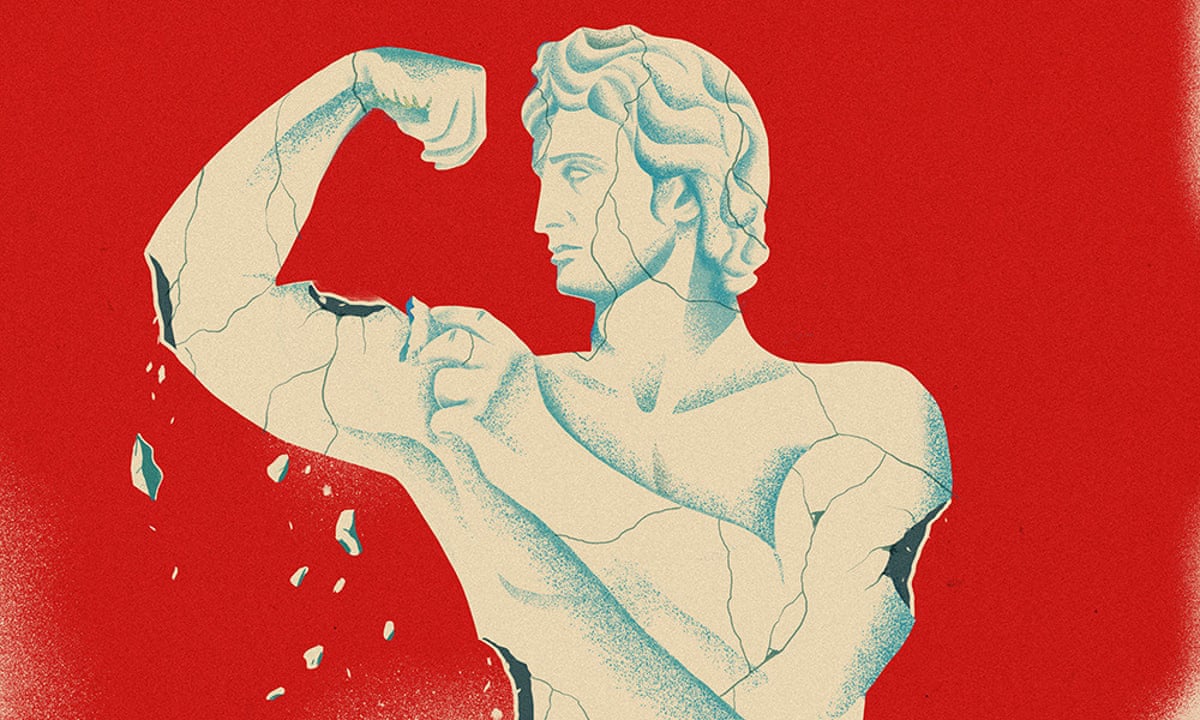
As he stands in front of the school, the narrator needs a little push from his father since he is anxious and hesitates. His father walks away as if handing him over to the school, with a gentle shove instructing him to “be a man.” The phrase “be a man” has a negative connotation, although it is a cultural standard. As young boys, we were taught to “suck it up,” meaning that sobbing or expressing how a person may feel weak or helpless was inappropriate. This is evident in the story when the narrator is nervous to enter the school, as previously stated he is urged to enter as it is distasteful to lose face in the presence of others. The narrator’s father is just trying to show him the societal normalities of man, and how weakness is not tolerated; this is quite sad because emotions should come naturally rather than being forced into a shell. With this, Mahfouz is making a statement on society, this small yet important act is a means to explain the conditions put on men and the expectations that follow.
I feel a strong connection with this quote as the problem of toxic masculinity is extremely eminent in social media, the workplace, or even at home. Similar to the narrator, growing up I was often told to be a man whether it was due to me crying when I lost or lacking faith in my abilities or even a sign of distasteful emotions. Being forced to hide behind a facade that encompasses the “ideal male” while trying to maintain proper physical/mental health is quite hard and emotionally straining. This pressure can only damage a human creating pain and suffering. Rather than become the perfect man, I think I realized that it is important to be one with yourself rather than what society wants you to be. Furthermore, becoming the ideal male is outdated, we should be looking towards becoming ideal humans who can cry, can be weak, and can look for help. The idea of masculinity is not necessarily important and should be removed from our lexicon; I want to be in control of my feelings without having to doubt whether I look manly enough. Being able to recognize our own shortcomings without being judged is a rare feat, but it shouldn’t have to be. I have seen too many times where someone has opened up about something that is hurting them just to be told off as if it doesn’t have meaning.
Citations
Guardian News and Media. (2020, November 13). What does it mean to be a man? Guardian readers respond. The Guardian. Retrieved December 3, 2021, from https://www.theguardian.com/lifeandstyle/2020/nov/13/what-does-it-mean-to-be-a-man-reader-responses.
Guardian News and Media. (2018, March 9). Men after #Metoo: ‘there’s a narrative that masculinity is fundamentally toxic’. The Guardian. Retrieved December 3, 2021, from https://www.theguardian.com/world/2018/mar/09/men-after-metoo-masculinity-fundamentally-toxic.

 In the end, she gives in to what her parents wish for her. Her desire shatters and she realizes that she can’t change what is happening. Although individuals can be discontent with their circumstances, it may be for the better if one looks at the conflict from another angle. Gulab Bibi accepts what is happening, and decides that she can’t marry Rafiq. Our realities are constantly being shaped by our actions and what we believe is the right course of action. The internal conflicts that arise from this may become a heavy burden, causing us to give into others expectations. In the end, we accept what is being laid out for us and decide to not make things worse than they already may be.