
 In the novel Obasan, the book touches upon a horrific event in Canada’s history that has never been fully resolved to this day. Obasan, by Joy Kogawa deals with the events of WWII in the battle in the pacific, between the United States, and Imperial Japan, and how Japanese Canadians were treated during these times of war. This book talks about a woman named Naomi who works as a teacher, however we are not told much about her as a person. However we know quite a lot about her family. Her family moved from Japan and immigrated to Canada on the West coast in British Columbia before the first Great War. Her mother had disappeared back to Japan to care for her Grandmother, so she lives with her aunt, or her obasan in Japanese. Sadly her uncle and father have passed away, and her brother travels the world and doesn’t get to see his family. While visiting her elderly aunt, she unlocks a trove of memories, a trove of memories best left forgotten, to prevent any more suffering. However, a wave of haunting memories from her past during and after WWII as to how she and other Japanese Canadians were treated as outcasts, as enemies.
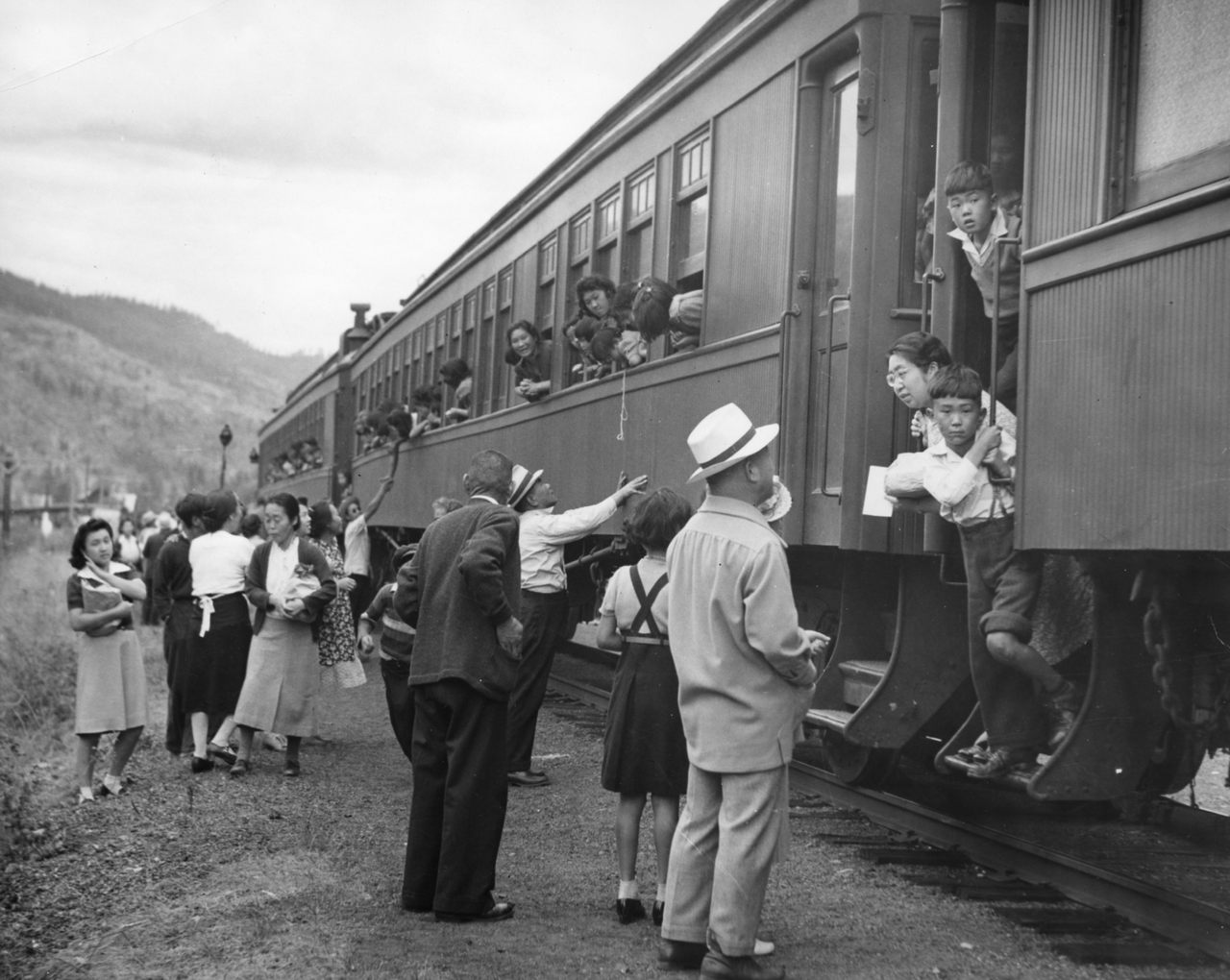
Inside of the novel, the idea of belonging is a prominent underlying theme in the novel. That theme is the need to belong, and what drives that need. A big driver is the difficulty to feel accepted in a society where all of a sudden, you were portrayed as the enemy. Their family always says that first and foremost, they are Canadians. However there is one group for belonging, and that was with other Japanese Canadians who had also experienced the harshness of internment. The internment and displacement itself was a motive to reconnect and find a place in which they can belong, for example, Naomi and her family moved away to a host town named Slocan, separated from others. Finally, the last big driver toward the idea of belonging is family. During the novel, many people are separated, in Naomi’s case, her father was left behind due to his illness, and eventually he passed away. Although this theme may be hard to realize at first, it is an incredibly important message about connection.
Although I am only half way through the novel, Joy Kogawa describes the hardships faced by Japanese Canadians in its full entirety. Not hiding anything, and being cut and dry with the horrible things done. She shows the difficulty of belonging, and what drives that fundamental human emotion.
https://www.penguinrandomhouse.ca/books/391033/obasan-by-joy-kogawa/9780735233706
https://www.atlasobscura.com/articles/japanese-canadian-internment-wwii
 The film “Pleasantville” is almost a direct depiction of Plato’s “Allegory of the cave,” through the people, the prisoners of Pleasantville being shown the light, and blinded, sha


