Pleasantville’s Journey to Enlightenment

Pleasantville’s Journey to Enlightenment

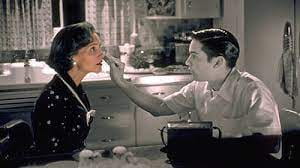
In Pleasantville,  the parallels to Plato’s Allegory of the Cave are extremely evident, as both stories explore the themes of enlightenment, liberation, and the power of knowledge. The town of Pleasantville is a world trapped in an unchanging state, with its inhabitants living in mundane black and white, symbolizing their shackles within the metaphorical cave. The townspeople are stuck in a limited and unchanging reality, with their lives following prescribed roles and routines. Firemen only save cats from trees, women are stuck cooking and cleaning, and marriage lacks any form of sexual expression. Similar to the prisoners in Plato’s cave who are bound to their shadows. When David and Jennifer suddenly find themselves transported into Pleasantville, they serve as the catalysts for the residents’ enlightenment, much like the freed people in Plato’s story. The first instance of transformation occurs with Skip, who is” dragged out of the cave” when he and Mary Sue engage in a sexual encounter at Lover’s Lane. This experience “enlightens” Skip, leading him to question his previously colorless existence and freeing him from his “intellectual darkness.” The shift from black and white to color in Pleasantville is not only a visual transformation but an internal one. It symbolizes the townspeople’s growing awareness and their journey toward enlightenment and self-discovery. As the story unfolds, we witness a series of events that greatly change the town’s status quo. For instance, Betty’s decision to leave the house for a few days disrupts the traditional gender roles as George is left without dinner, prompting him to question the roles they have been playing their whole lives. This shows the gradual realization that individuals are not limited to pre-assigned roles and that their lives can be filled with individuality and choice.

Allegory of the Cave by Shock-Socks on DeviantArt

The collective awakening of the residents of Pleasantville demonstrates the power of knowledge and the influence of external factors like David and Jennifer. Their presence sparks a chain reaction of enlightenment, challenging the established norms, and pushing the citizens of Pleasantville to emerge from their intellectual darkness. In this sense, “Pleasantville” serves as a modern allegory that reflects Plato’s concepts, displaying how enlightenment and the pursuit of knowledge can lead to a more authentic life.


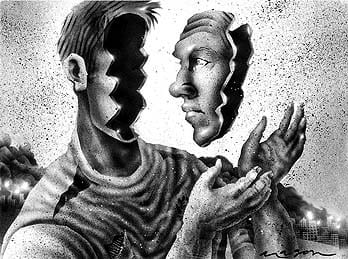
Featured image: Glowing-head.jpg (612×408) (edublogs.org)


First image: blog-2-1.jpeg (800×1200) (edublogs.org)


Second image: flat,1000×1000,075,f.jpg (1000×588) (redbubble.net)


The Caves In Pleasantville

The Caves In Pleasantville

In the film “Pleasantville,” the concept of “cave people” plays a pivotal role in illustrating the stark divide between the original townsfolk and the two main characters, Bud and Mary Sue. This distinction represents a fundamental aspect of the film’s narrative and thematic exploration. The “cave people” are those who live within the confines of their picturesque yet constrained world, Pleasantville, while Bud and Mary Sue break free from this limited existence through their awareness of the broader world beyond. Bud and Mary Sue’s distinction from the “cave people” hinges on their recognition that life is far more intricate and nuanced than the black-and-white simplicity that dominates Pleasantville. They understand that individuals, even in a seemingly perfect town, can have less-than-pleasant days, display a range of emotions, and defy the narrow stereotypes propagated within the town’s confines. This awareness sets them apart, exempting them from the label of “cave people.”The townsfolk of Pleasantville are metaphorically chained to their preconceived notions and the limited scope of their understanding, trapped within their own self-imposed cave, like in Plato’s Allegory of the Cave. This ignorance is maintained by their blissful conformity to the town’s monochromatic narrative.Commentary: Is it time for a second Age of Enlightenment? - The San Diego Union-Tribune

Bud and Mary Sue, however, shatter these metaphorical chains and venture beyond this limited cave through a series of transformative experiences. They become exposed to the colorful, complex, and challenging world outside of Pleasantville. The contrast between their expanded world and the cave-like existence of the townspeople is a powerful visual representation of the film’s core message. Betty, the mother of the two kids, exemplifies this transformative journey. Her character undergoes a significant evolution after the scene in the bathtub, breaking free from the constraints of her 1950s housewife persona. Betty’s transformation is pivotal, representing her escape from the cave that had confined her for so long. Her shifting perspective triggers not only her personal growth but also sparks a profound change in her relationship with Bill Johnson, the soda shop owner. This shift in their dynamic signifies the growing complexities and contradictions that characters face as they venture outside the boundaries of their former cave-like existence.

In essence, the “cave” in “Pleasantville” signifies both the limitations imposed by the town’s sheltered existence and the potential for growth and transformation that emerges as characters break free into the wider world. The concept evolves as the characters gain knowledge and understanding, allowing them to escape one cave only to find themselves in another – one of enlightenment. The film underscores the importance of embracing complexity, diversity, and the richness of life beyond the cave. It serves as a reminder that the pursuit of knowledge and the courage to step beyond the familiar can lead to a more vibrant and fulfilling existence. The characters in “Pleasantville” exemplify the transformative power of breaking free from the cave and embracing the full spectrum of human experience, reinforcing the film’s central message about the value of knowledge and the acceptance of life’s intricacies.


Featured Image: https://www.thoughtco.com/what-is-enlightenment-rhetoric-1690602


First Image: https://www.sandiegouniontribune.com/entertainment/theater/story/2021-09-05/commentary-is-it-time-for-a-second-age-of-enlightenment


Second Image: https://www.google.com/url?sa=i&url=https%3A%2F%2Fwww.alamy.com%2Fstock-photo%2Fross-parker.html%3Fpage%3D3&psig=AOvVaw0Kop3eOskfi61fDnm6YH7T&ust=1698615703486000&source=images&cd=vfe&opi=89978449&ved=0CBAQjRxqFwoTCKjSuujamYIDFQAAAAAdAAAAABAD

Prisoners Of Pleasantville

        The film “Pleasantville” is almost a direct depiction of Plato’s “Allegory of the cave,” through the people, the prisoners of Pleasantville being shown the light, and blinded, sharing it with others who refuse to believe them.  All the citizens know is the world created by shadows produced through a flame.  The guards who released the prisoners are the very people who were once prisoners.  When they were teleported into the world of perfection that is Pleasantville.  The first prisoner that his sister freed was none other than Skip, the first guy she took a liking to since being teleported to this new world.  She shows him the light through intercourse.  Skip was amazed and blinded by this new experience, bringing the first sign of colour to the world through a rose.  He then tells the rest of the basketball team who are thrown out of their usual routine and lose their first game ever, causing confusion among the citizens.  For a while skip is trapped in the pleasantries of this world as well, before breaking free due to seeing the depressing patterns and nature of the world, emphasized through Bill Johnson,  the owner of the soda shop.  Bill Johnson is shown the beauty of change, he loved every Christmas where he got to paint something different, so David showed him art, freeing him from his monotonous routine, inspiring change.  Until David and Jennifer, nobody in Pleasantville had seen the light.  They were in awe of the stories told from David about the world outside of Pleasantville and the truth of the blank books as they slowly were filled in.  As the prisoners were fried, they tried to tell the other of what they had heard and seen.  However when Bill had tried to show others of the beauty of colour, the people were mortified, vandalizing the soda shop, breaking windows, throwing tables, and breaking dishware.  They refuse to believe in the man, believing only the “pleasant” way of life that

they had known for years prior, just like the other prisoners.  Art then becomes banned by the towns committee, refusing to embrace the new ideas and change.  David and Bill attempt a final push to try and convey the people, only for it to backfire and themselves getting arrested.  In the courtroom however, David and Bill show the light to everybody in the courtroom, they no longer live to see only the shadows painted by others, they see the truth of the world around them, amazed by the light of their new home.  This is the major “cave” presented in the film, however there is a second underlying cave shown through David and Jennifer.  At the start of the film we see a glimpse into their roles as teenagers in their school life, and that being all they know.  The experience from their time trapped in Pleasantville has lead them to a greater understanding, with Jennifer learning the importance of being studious and not devoting herself to become .  David understands the importance of not wishing for a better family, but improving his current one through comforting his mother, freeing himself from his cave.

        Like in Pleasantville, life itself is its own cave.  Our entire childhoods we are babied and hidden away from the light that is the reality of our world. We are taught about the wonders in life, the shadows created by our parents and guardian figures.  The wonderfulness of life and believed for that to be all there is.  Then one day, the guard shows us the real world, the world that is corrupt and in a mess.  Murder runs rampant, drug deals and use is everywhere, theft and robbery is widespread.  Politicians are corrupt and drunk with power.  We are in shock. 

 Stunned at the atrocities that take place everyday that only few take a second glance at.  Yet there is so few that we can do but hope to be upstanding individuals, as we slowly become desensitized to the world around us.  Some choose to leave this world when they see reality.  Those shadows were there to protect us, the chains kept us from drifting into the light.  I used to believe in the beauty that is life, I then lost that innocence.  I felt the pressure of society and the fear from the world, trapping myself inside my own mind.  I was then shown a second light, a less dark and despairing light.

I met friends, found joy in sport, and somebody who was finally able to break through the walls of my own mind. Plato’s “Allegory of the cave” is a truly amazing piece of philosophical works.  Like in Pleasantville, it conveys the main idea perfectly, while making it simpler to understand and relate to life.  We are all often trapped in some form of a cave and shown warped false realities at one point or another.  Yet it is so important to be free, even though it may not be amazing in some cases.  Freedom is one of the greatest gifts only few have.  True freedom is something that we should strive for, it enlightens us, awakens us.

Sources:

https://stock.adobe.com/ca/search?k=polluted+earth&asset_id=556271021

www.reddit.com/r/MovieDetails/comments/8ek868/in_pleasantville_the_courtroom_of_the_public/

storiesthatreallymattered.wordpress.com/2009/09/24/pleasantville/

Caves Throughout the Literary Ages

Caves Throughout the Literary Ages

To those who know of the 1998 movie Pleasantville by Gary Ross what would you think of? Mostly likely the charming visuals, relatable characters, and heartwarming story of acceptance and finding oneself. On the other hand, take the literature piece “Allegory of the Cave” by the Ancient Greek philosopher Plato, an allegory to he presented to the republic of Greece to shed light in a more metaphorical sense the effects of education and enlightenment and the lack there of it in society and its peoples.

When comparing Peasantville by Gary Ross to Plato’s “Allegory of the Cave”, the two stories share more similarities at heart than differences. Although aspects such as setting, plot, and purpose are dramatically different, the points made by each overlap upon taking a deeper look at some of the key ideas and themes. “Allegory of the Cave” displays how important it is to immerse oneself in a profound understanding of reality and to consider new ideas along the way. Pleasantville is a movie all about discovering what life has to offer and how there isn’t a ‘right way’ of life to be lived. Both pieces explore themes of enlightenment and discovering reality.The symbolism derived from several of the characters and plot aspects in Plato’s “Allegory of the Cave” can be found within Pleasantville as well.

The residents of the town can be compared to the prisoners who are left none the wiser than the shadows on the wall allow them to be. The “Cave” the people of Pleasantville reside in is the fact that they are all “fictional characters”. Their lives and futures are all prefabricated. Everything a resident can do is scripted and meant to happen. Anything that isn’t meant to be in the show simply isn’t, like fires, thunderstorms, and books that aren’t just props. The entirety of Pleasantville lives in the illusion of being an ideal small American town in the ‘50s, with everyone having happy lives when they really only live out the same routine eternally until the show has an episode focusing on certain character(s).

When arriving at similarities between characters, David and Jennifer would fit a role reminiscent of the prisoner released from the cave, free to explore the world. They hold the truth as to how reality really is, its faults included amongst its beauty. Unlike the prisoners though, Pleasantville actually listens to the prospects of reality unfamiliar to them. Albeit skeptical initially, after enough time and evidence, the whole of the town slowly steps into the light outside their cave, and accepts the truth that not everything has to be the same. Some things can be silly or dangerous. Not everything has to be perfect, and that’s ok. There is no perfect way to live life. People simply need to get out into the world and work with what they can get the best they can.

In other perspectives, David and Jennifer also walk away from their own, more personal caves. By the end of the movie Jennifer and David are also vastly different people than who they were at the beginning of the film. Initially,David was willing to simply assume the identity of bud and live what in his mind was an ideal life. As things progress though, he gains a newfound sense of confidence and reassurance both about himself and his points of view on his actual life in the ‘90s. As for Jennifer, she was thriving in the way of the world before arriving in Pleasantville. This makes it all the more surprising when she chooses to stay behind rather than return home, opting for education and exploration rather than her original popularity and sexuality.

If there were to be only one conclusion that can be obtained from Pleasantville when stood up next to “Allegory of the Cave”, it would be that the ideas of enlightenment and reality presented centuries before hand can still be found in modern day media, working to spread similar messages as Plato did in Ancient Greece. As long as greater comprehension of the world and the knowledge it has to offer remains valuable, the themes these two literary pieces present will continue to be relevant and necessary to moving forward in modern society.


Caves of Fiction

Caves of Fiction

In the allegory of the cave, the cave people were those who did not change and those who did not want to realize that there was change. They were the ones who saw new things but were scared because it was not their norm. They liked their monotonous life. Those who were taken from the cave were those who embraced the change. And in Pleasantville, those who were taken out of the cave were those who embraced the colour like most of the teenagers, making out and going to lovers lane,or the students who wanted to learn about the new books in the library. Those afraid of colour and the imminent change in Pleasantville were the same slaves in the cave who were cowering in fear when the ones who left came back to tell the stories of the outside world instead of paying attention. They were scared. In Pleasantville, this would be the patriarchy, the mayor and the elderly who were not liking the change. The coloured people were the people who were freed from the shackles and embraced a new way of life outside of the cave. The cave of colour was a prevalent cave for those in Pleasantville.

Pleasantville Analysis by ajmaxriedel on emaze


Another cave that they were freed from was their cave to have sex and their sexual freedom. None knew what it was but they learned and cherished what it was. Those who engaged became free, free from that specific cave. For example, when Mary Sue was explaining to Betty about sex and self-pleasure she practiced it on herself and became enlightened she became free. Afterwards, she became coloured which further solidifies the idea of being freed from a cave by an external source. In this statement, it would be Mary Sue who freed Betty. Another example I would like to mention is when the kids were all coloured and making out, outside the soda shop. This is another example of becoming free. With the help of Mary Sue, she showed all these kids about sex and new sexual intent that was otherwise unwanted. The idea of caves in life doesn’t just apply to the film Pleasantville but also applies to anyone’s life. To be free is to be freed from the cave that is preventing you from becoming something better.


For everyone who reads this blog, I have one question. What cave is preventing you from becoming better or becoming a butterfly? 


Referances:

Nothing hits you harder than the process of Self Realization and Self Actualization…

https://www.emaze.com/@aqwcczfz/Pleasantville-Analysis

https://commons.wikimedia.org/wiki/File:An_Illustration_of_The_Allegory_of_the_Cave,_from_Plato%E2%80%99s_Republic.jpg

Life in Technicolour

Life in Technicolour

The movie Pleasantville, directed by Gary Ross, explores the struggle to keep up with societal norms and expectations of behavioursPicture of Pleasantville (1998) while also trying to be true to yourself. Being set in the 1950s, Pleasantville gives the appearance of a perfect life, with everything having a routine and nothing comes as a surprise to anybody… that is, until David and Jennifer suddenly enter Pleasantville. Having originally been from modern times, neither twin is used to the way of life of the small town. They introduce the civilians to certain desires, worldviews, and colours the town wasn’t used to; this initially happens as a result of Mary Sue engaging in promiscuous acts with Skip Martin, as well as her teaching her mother, Betty, on personal pleasure. Both individuals understand a new, more fundamental part of themselves that they weren’t aware of up until that point, and this leads to them finding personal desires within themselves. Initially, neither of them was interested in their new selves, now in colour, as they didn’t fit in with the rest of their peers, especially Betty, but the twins encourage them that other people’s opinions don’t matter as long as you know within yourself who you truly are. Betty learns to embrace her new self and fights back against the prejudice she receives, refusing to cover herself with her old, grey makeup and shows the world who she truly is.

Being a first generation Canadian, my whole life I have struggled with my identity. My entire family has either been born and lives in Romania, or has immigrated from there to Canada; I am the first member of my family to not be born in the homeland. Ever since I was a young girl, I didn’t know who I was as a European as I tried to understand my Romanian heritage. I would have people telling Mirror, Mirror on the wall, who's the fairest of them all? Make You ...me I am “100% Romanian blood, through and through” but also have my brother tell me that no, I am “Canadian because I wasn’t born there.”

Naturally, this led to confusion and still does. I tried to convince people that I truly am Romanian, despite being born here. I would look at people my age or even adults and compare myself to them solely on the fact that they were born in Romania or not, and I would cause myself unnecessary stress by thinking myself a fraud: I know the language of my ancestors, but I wasn’t born and raised in their country. I’ve only ever been there 4 times, after all, what do I have to prove myself.

Bringing this up with people I am close to, like my father, was a struggle as he couldn’t possibly understand my thought process and dilemma as he was never in my shoes to begin with. But he was understanding, and slowly, he began to acknowledge what I’ve been dealing with for a long time and helped me to come to terms with who I was. Yes, I wasn’t born in Romania, but that doesn’t make me any less of a Romanian the same way that someone born in Romania but moving away when theyRomanian Canadian Cultural Association of Calgary - Romanian ... were but months old to the Netherlands, for example, and having Dutch as a first language doesn’t make them any less of a Romanian.

Ever since then, my view of who I am and the way that I present myself has changed. Much like Betty, I came to accept who I am as a person instead of trying to fit some ideal mold catered to appease the eyes of others. By understanding that there isn’t a fixed criteria of who I am as a person concerning where I come from, and acknowledging that everyone is different, but very much the same when it comes to heritage, a weight was lifted off my shoulders. Being true to yourself doesn’t have to be a sacrifice, but a liberation, all you need to do is accept that freedom.


Citations for Images:

  1. Featured Image: https://helpx.adobe.com/content/dam/help/en/photoshop/how-to/black-and-white-with-color-photo/_jcr_content/main-pars/image8/black-and-white-with-color-photodone.jpg
  2. Betty and the Others: https://iv1.lisimg.com/image/3930806/733full-pleasantville-(1998)-screenshot.jpg
  3. Stock Image: https://media.istockphoto.com/vectors/mirror-who-am-i-woman-vector-id501651483?k=6&m=501651483&s=612×612&w=0&h=S3BAfg-qwt76S4XPa6I5leUPeUHa6JMQ8uSQwkepXjk=
  4. RCCAC Logo: https://static.heritageweb.com/img/dir/romanian-organizations/romanian-canadian-cultural-association-of-calgary-5913.png
  5. Woman Running Free: https://www.pinterest.ca/pin/315111305187004639/


We Are All ‘Cave People’

We Are All ‘Cave People’

While I watched the film Pleasantville, by Gary Ross, I was infatuated by the ‘cave people’ illustrated in this show. They are the ones who are the most stubborn, ignorant, and cowardly of all; in other words ‘cave people’ are human beings. This film is set in America in the 1990s, David and Jennifer, are twins who are opposites. They get sucked into the television show “Pleasantville” where they experience the daily lives of those within the show, which is set in the 1950s. Rebellious Jennifer exposes reality to their ‘perfect’ world and people start to see colour and encounter a change in their perceptions. Near the end, conflict is established between ‘coloured’ and the non-coloured people.
‘Cave people’ is the metaphoric word for the non-coloured people; resembling those who were not able to escape their caves and leave their comfort zones. Specific characters in the show resemble ‘cave people’. One is the mayor, Big Bob; he uses his power and status to civilize society by setting unrealistic expectations. When people’s lives take a shift due to the twins the mayor declares, “Up until now everything around here has been, well, pleasant. Recently certain things have become unpleasant. Now, it seems to me that the first thing we have to do is to separate out the things that are pleasant from the things that are unpleasant.” He wants to keep societal norms and stay “pleasant” which leads citizens of Pleasantville to repeat familiar routines to reduce conflicts. Simplistically he is afraid of change. This is the cave Big Bob can not escape. Another example is Whitey, Margaret’s soon-to-be boyfriend that got stolen by David’s appearance. His jealousy overcame dignity and turned him into a monster that discriminated against coloured individuals. “Your coloured girlfriend” exemplifies his discriminatory attitude, he unambiguously dislikes differences, and this is his cave.
People who are stuck in their caves have a limited ability to understand the world. They are ignorant, not enlightened and are not curious or willing to learn about the ‘outside world’. However, characters such as Bill and Jennifer were the pioneers of Pleasantville. Starting with Bill; he got sick of his daily routines, “grill the bun, flip the meat, melt the cheese. Never changes. It never gets any better or worse.” And discovers the love for art he contained in himself. Although using colours became illegal he decided to break the rules and regulations to pursue his purpose in life. Bill also envied the difference between individuals, as one can see from his line, “Must be awfully lucky to see colours like that. I’ll bet they don’t know how lucky they are.”
Jennifer, who fits in with society in their present life, was a contrasting individual in Pleasantville and brought enlightenment to them, nonetheless, she was never educated. One night she rejects Skip’s date and finishes a book, which causes her monotone skin to turn colourful.

Jennifer: “How come I’m still in black and white?”

David: “What?”

Jennifer: “I’ve had, like, ten times as much sex as the rest of these girls, and I still look like this. I mean, they spend, like, an hour in the back seat of some car and all of a sudden they’re in Technicolor?”

David: “I don’t know. Maybe it’s not just the sex.”

Hence, leaving comfort zones results in change, enlightenment and a different overall perspective; such as the change in her perception of the importance of education, as one can analyze from the lines, “This is the only book I’ve ever read in my whole life, and you’re not going to put it on that fire!”
Pleasantville is overall significant due to its social commentary and cultural reflection. Social commentary is shown through the unique concept of characters being trapped back in the 1950s and the gradual personal growth and change of an individual’s experience. It has a metaphorical meaning of the conformity and repression of the time, as well as the perceptions of individuality. Cultural reflection recalls the changing cultural and social norms. Explores themes such as gender roles, racial integration, and the broader shift towards a more open and progressive society.

Caves are common in individuals’ lives, and we tend to avoid them as best we can. For instance, in my life, I hold a cave of not being able to follow my dreams as I wish. I want to be on Broadway or become a singer one day; however, I let expectations and comments throw me down, in addition to this industry being a harsh world to live in, and realistically, this profession is an idiotic fantasy: I often find myself making up excuses, like said above, to give up on this dream. Regardless of how much I tell myself to not follow my dreams when I’m singing, I can spread happiness to my surroundings, and people get emotionally moved due to my art; this makes my life meaningful. Hence, singing is my passion and it would be my biggest achievement to pursue it in the future as a professional musician or a music teacher. My desire is for my profession to be my passion and where my heart belongs. Another cave in me is holding me back. It has always been difficult for me to voice my opinions, due to the lack of confidence I have in communication and the fear of judgment and perceptions others have on me. Yet when I’m singing I don’t care how people perceive me. I’m able to be vulnerable on the stage and others relate to the stories I sing about and can feel at home. I wish to continue that in the future. I hope to escape this cave in my life and be more honest with myself. I’m working on getting a music bachelor’s degree to become enlightened about music first and see where my life takes me from there.

Leaving comfort zones may feel daunting but it is an essential part of the human experience. Through this process, we can encounter new challenges, learn about ourselves, and become enlightened. Realizing the possibilities and worth one holds, can transform journeys toward a more fulfilling life. So, dare to find a way out of that cave, and you may discover a world of possibilities waiting just beyond your comfort zone.

sources:

https://www.gradesaver.com/pleasantville/study-guide/quotes

https://fineartamerica.com/featured/a-self-created-comfort-zone-ric-nagualero.html

http://www.placesoffancy.com/

https://jp.freepik.com/premium-photo/a-man-stands-in-a-dark-cave-with-the-light-shining-on-him_42968848.htm

https://www.iflscience.com/a-group-of-people-just-emerged-from-40-days-in-a-cave-with-no-daylight-or-clocks-59504

To Live In Truth

To Live In Truth

Speak your mind, even if your voice shakes.” —Unknown

Pleasantville, directed by Gary Ross, is a film that explores the conflict between living true to one’s self or choosing to obediently conform with the rest of society. One character who especially experiences this conflict is Bud’s mother, Betty Parker. When Better Parker reveals the color on her face to Bud, she expresses her fear and worries about being unable to appear the same way as the rest of society does. Bud comforts his mother from this thought by helping her apply makeup to her face to hide her true colors—to appear “normal” to society. It was only after her encounter with Bill Johnson, a man who works with Bud at the Soda shop, that she learned to accept her newfound sense of “self”. In proof of this, Betty refuses to hide her face away with makeup, refuses to conform with the ideal image society wants, and instead, openly exposes her true face to the world.

Pleasantville movie review & film summary (1998) | Roger Ebert

In my younger years, I struggled to accept myself for who I am. I never allowed myself to truthfully open up to people about my interests, opinions, hobbies, or anything regarding my personal life, in front of my classmates. Rather than opening up, I observed the way others my age would behave, how they reacted to certain topics, what things they despised, and what things they loved. Through these observations, I created a version of myself that would satisfy all of my peers and blend in with the rest. Call it being fake—but this was my way of protecting myself from getting hurt by the judgment and the criticism of others.

Living this way was severely exhausting, as one could imagine. For five whole days and seven hours straight, I would switch my personality to be liked by classmates and teachers. It would be a constant rinse and repeat for the next 12 months, maybe even further, in years. Breaking this cycle was difficult as it had become something I do naturally. However, when this cycle finally broke, I had already surrounded myself with wonderful friends that taught me that being true to myself isn’t as scary, or painful, as I had initially thought.Is it Judgement or Concern?

But now that I live life in truth to myself, I am more susceptible to being judged, criticized, and hurt by other people. It’s an inevitable truth that I had tried so hard to avoid as a young girl. However, similar to Betty and her close bond with Mr. Johnson, I learned that I can lean on trusted friends when I feel hurt, lost, or afraid, from conflicting interactions between my desire to conform and my desire to stay true to who I am.

It’s difficult to choose which side to live by. If you choose to live a life that obeys the ideal, you can interact with others freely; no need to worry if you’ll fit in, no need to worry if you’ll be alone, and no need to worry about being judged. Living life by the ideal gives so many benefits, in sacrifice for being unique, and living truly. In contrast, living a life where you feel true to yourself, comes at the price of potential judgment, pain, and loneliness. As you live uniquely, it will be much more difficult to find people who can relate with you and are willing to continue to interact with you. If I were to say something minor and harmless as an example, like: “I prefer cats over dogs”, people’s viewpoint toward me would change. There’s no doubt about that. Some people may have a strong preference for something, and will now avoid me after learning our preferences are significantly different. I may even be considered odd in their eyes, now. And this is especially true as, in our modern society, we have social media to circulate and spread world trends. But at least, by living as someone “real”, I can feel a sense of happiness, just by being true.

Taking into consideration both sides, I believe living a life of truth is far greater than living a life of conformity. By living a true life, you will at least feel liberated, just as Betty Parker feels when she accepts her true self.

Untitled | Freedom photography, Freedom pictures, Vision board photos


Cites:

  • https://www.pinterest.ca/pin/57069120252187106/
  • https://www.rogerebert.com/reviews/pleasantville-1998

Blog Assignment #2 – Writing Journal #10

Blog Assignment #2 – Writing Journal #10

Consider parallels to Plato’s “Allegory Of The Cave” in the film Pleasantville. Describe the cave people. Who is the first to be dragged out, and is there only one cave ?


In the film, the characters that represent the cave people are the citizens of Pleasantville. The people of Pleasantville are always perfectly happy , and have no worries or issues whatsoever, because they have never seen the real world or life in this case outside of the “cave.” The reason that Pleasantville represents the cave in this situation, is because it is not a real place, and it never actually existed. The first people to be dragged out of the modern world, and into the “cave” are Jennifer and David at the beginning of the film when they are fighting over the remote and they accidentally get teleported into the cave, or Pleasantville. What ideas does the director develop regarding the significance of idealism and truth in an individual’s life ? I think the director demonstrates this in the film by introducing us to Pleasantville and showing us as the audience that a life like this one, one that is so out of touch with reality, it is a very much more easy and convenient way to live, however it’s not real life, and it never will be. We mostly see this during the very beginning scene in the modern world, when David’s mom and dad are fighting over whose weekend it is to have the kids, because they are divorced and are experiencing a custody war.   


I hope you enjoyed my take on Pleasantville !!

Sincerely, Devon

Idealism Vs Realism

Idealism Vs Realism


In the film Pleasantville, two siblings are transported into a 1950s sitcom world called Pleasantville, where everything is perfect and everyone follows a strict set of rules

Similarly In Plato’s Allegory of the Cave, prisoners are chained to a wall in a cave and can only see shadows of objects cast on the wall in front of them. They believe these shadows to be the only reality, as they have never experienced anything else.

Both of these stories have the same concept around them. There is only one way of seeing things and one reality.

One day one of the prisoners are let out and they see the outside world for the first time. The prisoner is enlightened by what he see’s and goes to tell his friends. When the prisoner returns to the cave to tell his friends about the true reality, they are skeptical and resistant to his ideas. They cannot imagine a world beyond the shadows they have always known.

Similarly, Pleasantville explores the idea of discovering a new reality and breaking free from the limitations of one’s current perception. When color starts appearing and people start to change. However the people who haven’t been enlightened resist the changes and dislike them.

However, as the characters in both Pleasantville and the Allegory of the Cave begin to embrace their new reality, they become more accepting of change. They begin to see the world in a new lens .. This leads to significant changes in their values and attitudes.

Overall, the reactions to change in Pleasantville and the Allegory of the Cave highlight the power of new ideas and the importance of intellectual curiosity and freedom of expression. While change can be difficult and challenging, it can also lead to personal growth and a greater understanding of the world.


Images:

https://www.google.com/search?q=pleasantville&rlz=1C1UEAD_enCA1046CA1046&source=lnms&tbm=isch&sa=X&ved=2ahUKEwjPmYOk-af-AhXCIX0KHd1jBzIQ_AUoAXoECAEQAw&biw=1920&bih=969&dpr=1#imgrc=rqLFxp1aO9HM7M

https://www.studiobinder.com/blog/platos-allegory-of-the-cave/