Guilt in the Kite Runner

In “The Kite Runner,” Khaled Hosseini masterfully explores the multifaceted nature of human choices, crafting a narrative that weaves together personal morality, societal expectations, and the relentless pursuit of redemption. At the heart of the novel is the protagonist, Amir, whose life unfolds as a tapestry of decisions shaped by the haunting specter of guilt. Early in his childhood, Amir betrays his loyal friend and half-brother, Hassan, during a moment of vulnerability. The consequences of this betrayal reverberate throughout Amir’s life, becoming a driving force that propels him to make choices entwined with a fervent desire for redemption.


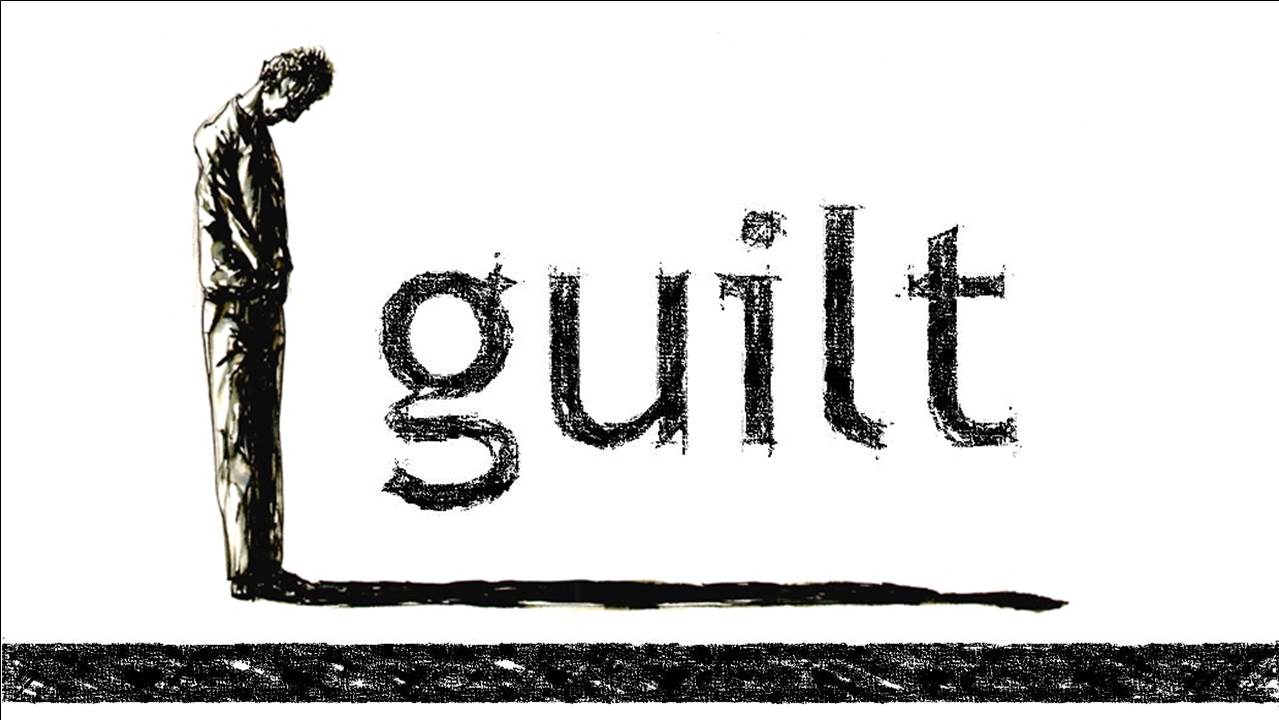
Guilt emerges as a powerful motivator, pushing Amir to grapple with the consequences of his past actions. Hosseini delves into the psychological complexities of guilt, portraying it as an ever-present force that colors Amir’s perceptions and influences his decision-making. Amir’s guilt is not a passive burden but an active agent that shapes his choices, from his internalized self-loathing to his external actions. His migration to the United States is, in part, an attempt to escape the shadows of his past, a geographical move that mirrors his quest for a clean slate. However, as the narrative unfolds, it becomes evident that physical distance alone cannot sever the ties to guilt. Hosseini suggests that redemption is an internal journey, a series of choices that require /courageous confrontations with one’s own conscience. In Amir’s case, this internal struggle manifests in the form of tangible actions, such as his decision to return to Afghanistan and rescue Hassan’s son, Sohrab, from the clutches of the Taliban.
The novel also delves into the interplay between individual moral dilemmas and the external pressures of societal expectations. Set against the backdrop of the political turmoil in Afghanistan, the characters in “The Kite Runner” navigate a complex tapestry of cultural norms and societal judgments. Amir’s choices are not solely shaped by his internal moral compass; they are also influenced by the societal expectations of honor, loyalty, and masculinity. The juxtaposition of Amir’s personal guilt and the societal expectations of his role as a son and friend creates a nuanced portrait of the intricate dance between personal conscience and external pressures. Hosseini suggests that individuals exist within a dynamic interplay of internal and external forces when making life-altering decisions.

Moreover, the novel underscores the cyclical nature of choices, as the repercussions of one’s decisions ripple through generations. The sins of the fathers are visited upon the sons, and the narrative unfolds as a testament to the inescapable legacy of choices. Amir’s journey for redemption extends beyond his personal salvation; it becomes a quest to break the cycle of betrayal and atone for the sins of the past. The choices made by the older generation cast long shadows over the lives of their progeny, illustrating how individual decisions reverberate through time, shaping the destinies of future generations. In this exploration of generational consequences, Hosseini prompts readers to reflect on the enduring impact of choices and the responsibility that comes with wielding the power to shape one’s destiny.


In conclusion, Khaled Hosseini’s “The Kite Runner” is a rich tapestry that delves into the intricate motivations driving individuals to make choices in their lives. Through the lens of Amir’s journey, the novel explores the pervasive influence of guilt, the interplay between personal morality and societal expectations, and the cyclical nature of choices. This narrative complexity serves as a mirror reflecting the universal truths about human nature and the intricate web of factors that contribute to the decisions individuals make. Ultimately, “The Kite Runner” invites readers to contemplate the profound implications of choices and the transformative power of redemption in the face of personal and societal adversity.

Plato’s allegory of the cave is a centuries-old philosophical discussion that has managed to stay relevant since the times of ancient civilizations. It’s message is still analyzed and held as one of the more important messages for society. The allegory is a tale which informs people how ignorance is like a ‘cave’ that is difficult to escape from, and how hard it is to accept new facts and knowledge. The original text is comprised of a conversation between Plato’s brother, Glaucon, and his mentor, Socrates. They discuss the nature of reality, and how one who has always known a false reality might react when confronted with the ‘real reality’.

Humans are designed to resist change, because a fixed system is perceived by our troglodytic brains as safe, and any deviation perceived as unsafe. Through thousands of years of evolution, this response has been ingrained in people’s brains as a survival tactic. Although people may know that they should learn more and that knowledge will ultimately improve their lives and the lives of others through things like technology, there exists a very powerful instinct to stay on the beaten path, and in this cognitive dissonance, the easiest idea to express is the one that comes to people instinctually. The progress of humanity is an uphill battle against this instinct, to create and explore new things. The jump out of apathy programmed into individuals is caused by hitting rock bottom. When the fixed system or ‘cave’ cannot get any worse, the survival instinct in one’s brain will push for a change, to get out of the ‘cave’ and discover something new, because it must be better than what the current situation is.

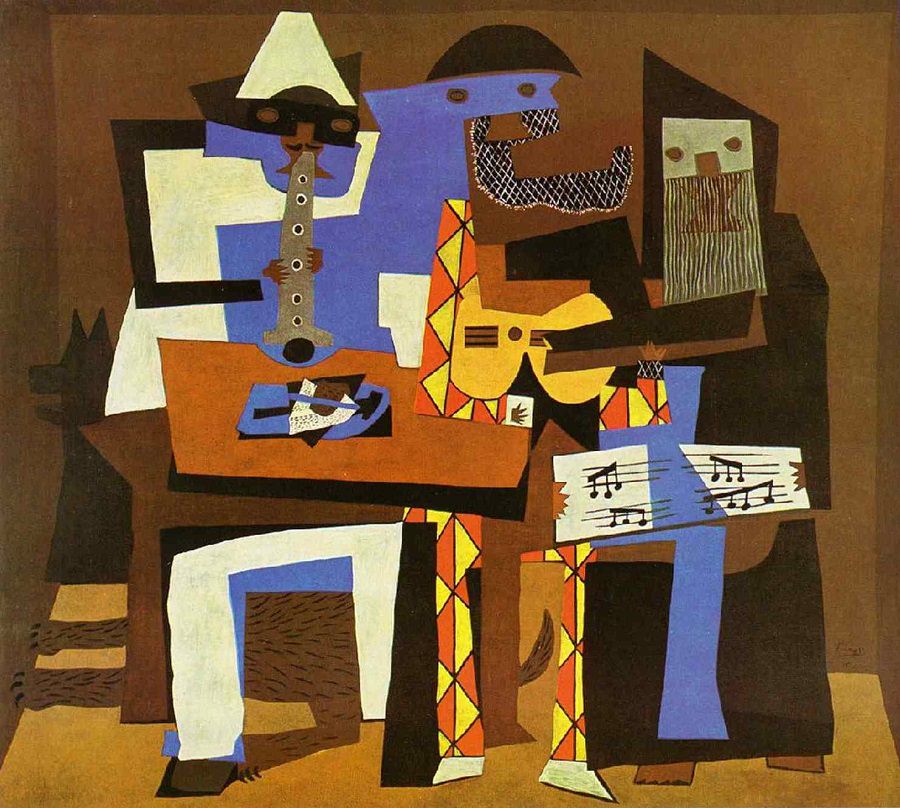
The Renaissance,  celebrated as one of the greatest periods of art, science, and technological advancement, came after the Dark Ages, in which the general treatment of people was awful, and most people had nothing. Although it took many decades, one survival instinct overcame the other, and people began to prosper. Examples of people finally overcoming their troglodytic brain in order to find progress is seen in every revolution in history, and many other places if one is willing to go looking. Many of the best poets and artists have produced what is considered to be their best works in their darkest of times. Picasso’s Blue Period is a famous example of this. Right after the Blue Period, in which he was depressed, Picasso started painting in his most well known style, cubism. These are the paintings he is most known for, because they were in a unique style. It was only after hitting rock bottom that the change was brought forth.

All of these examples go to show why Plato’s message continues to be so relevant. They are a reminder that change is good, and a call to ignore the mindset that would keep one trapped in the cave, and encourages one to seek truth and understanding. Even once one has read and understood the allegory, there is no guarantee that change will arise. The earlier mentioned cognitive dissonance will cause the desire to remain the same to prevail most times, and one cannot just con their own brain into working differently. The more this problem is talked about, the harder it is for the brain to outright dismiss change as something to be avoided, and the greater a chance for change to arise is.

A Limit of Academics

A Limit of Academics

For as long as I can remember, I have been a huge nerd. Even in my elementary years, I would watch MinutePhysics (a channel that broke down complex concepts quickly with simple drawings) videos that my dad would show me with such wonder and curiosity in my eyes. I would watch videos from The Game Theorists (a channel that analyzes games with math and science) and still some of my favorite youtube channels today are Veritaserum and Kurtzgesat, both science channels.  Luckily for me, my family and I went on hikes often as well, and I loved being in nature. I had a pretty well balanced life, and this was the time where I think I was the most carefree.

At some point in middle school, I can’t pinpoint exactly when, I stopped loving nature as much and disappeared more and more into books, games, and education, although perhaps it was a little less education and more games. Every time we went on a hike, I would no longer revel in nature and enjoy myself nearly as much. Up until very recently, this feeling of dissatisfaction with nature, and love for studious topics and escapes such as games persisted.


This summer, my cousins came to visit my family, and we went to Banff and Lake Louise to enjoy nature, and for the first time in years, I truly just sat there and basked in the warmth and comfort of nature and appreciated everything around me. For a minute there, everything around me disappeared as I gazed into the mountains and the river in between, and I had a moment of contentment with my life. It was truly an indescribable and transformative experience, and it led to me being just a little more careful and slow in my life; to appreciate the little things and stop being so single-minded. The view of that day is burned into my brain, and I hope that I never forget it.

15 Things to KNOW Before Visiting Peyto Lake Viewpoint

In the poem The Tables Turned by William Wordsworth, I recognized the simple ideas that I wish I could’ve told my younger self. The idea of nature being more important than academia resonated with me, especially after my experience this summer. Knowledge is important, but it can be gleaned from many places, and although nature generally is ignored for this, it is far from unimportant. Perhaps it is important to gain knowledge about life from books, but gaining wisdom about how to living comes from inspiration; from nature.

Up! up! my Friend, and quit your books;
Or surely you’ll grow double:
Up! up! my Friend, and clear your looks;
Why all this toil and trouble?
The sun above the mountain’s head,
A freshening lustre mellow
Through all the long green fields has spread,
His first sweet evening yellow.
Books! ’tis a dull and endless strife:
Come, hear the woodland linnet,
How sweet his music! on my life,
There’s more of wisdom in it.
And hark! how blithe the throstle sings!
He, too, is no mean preacher:
Come forth into the light of things,
Let Nature be your teacher.
She has a world of ready wealth,
Our minds and hearts to bless—
Spontaneous wisdom breathed by health,
Truth breathed by cheerfulness.
One impulse from a vernal wood
May teach you more of man,
Of moral evil and of good,
Than all the sages can.
Sweet is the lore which Nature brings;
Our meddling intellect
Mis-shapes the beauteous forms of things:—
We murder to dissect.
Enough of Science and of Art;
Close up those barren leaves;
Come forth, and bring with you a heart
That watches and receives.
Citations