Weathering the Storm

Weather

The poem, “Weather”, by Claudia Rankine, holds a great deal of relevance to our world today. In this poem, the author uses the weather as a metaphor for the political climate over the past couple of years and the history of systemic racism and police brutality. She filled the text with alliteration and consonance to create a rhythm of breath that acts a powerful form of resistance against the fact that breathing has been systematically denied and weaponized in communities of color. As a result, the poem, “Weather”, becomes a space to reflect and process the anger and heartbreak of living in a world plagued with destructive forces of violence, hate, and injustice.

Strategies to Boost Your Business Resilience and Weather the Storm

“I have forgotten my umbrella.” Claudia Rankine uses the umbrella as a symbol of protection; She states that “everyone is without one”, indicating that nobody is safe from society’s wrath and no-one can find shelter from the conflicts within our modern world. “We scramble in the drought of information” as we’ve been given minimal information regarding all aspects of our chaos: COVID-19, police brutality, systemic racism, political climates, etc. We’ve all been left to scavenge for whatever information we can grasp, leading to devastating rumors and mistruths left, right, and center. Despite our lack of knowledge, rules and regulations have been implemented “drop by drop”; These mandates for mandatory masking, social distancing, and constantly sanitizing simply showed up out of the blue. Citizens are expected to abide by these laws regardless of the fact that we are oblivious to the situation at hand. Personally, I have no problem respecting these rules and following them all, but I just wish I knew more about why these have been enforced; It hardly seems far to retain information from the people it affects most.

“Just us and the blues.” This line references the relationship between the black community and the police force; Claudia Rankine speaks to the fact that police are targeting people of colour and to the reality of police brutality. She states, “I can’t breath”, as a symbol of the death of George Floyd; the police knelt on his neck, blocking his airways. As a result, George Floyd suffocated due to this targeted police brutality.

Tracy K. Smith states that, “poems don’t just deliver truth, they nudge something already alive within us into consciousness.” Claudia Rankine writes: “We’re out/ to repair the future,” stirring us, as readers, to take part in rebuilding and fighting for a more just world.

Barbie Doll
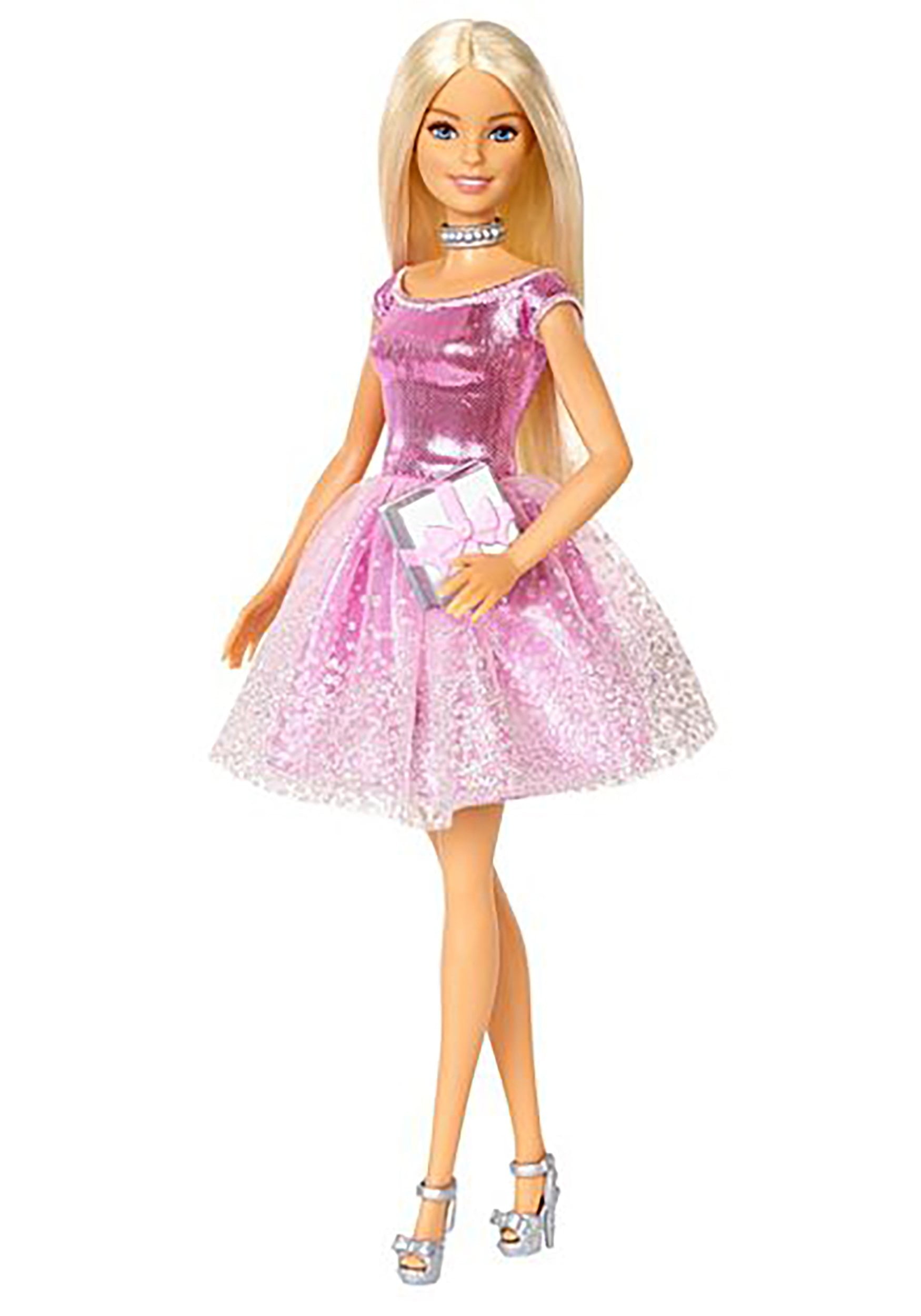
Happy Birthday Barbie Doll - Walmart.com

The poem, “Barbie Doll”, by Marge Piercy, states that an individual may be smart, strong, and kind, but society sees only one’s body; Physical flaws are noticed long before an beautiful personality. Society tells us that our appearance is the most important thing about us, when, in reality, it is the least interesting. As a result, so many people alter their perfect bodies simply to feel accepted. Both men and women suffer from body dysmorphia, however, as a female, I can only speak to what I know; women are supposed to be small and petite. They are supposed to have perfect skin, free of bruises, cuts, acne, moles, stretch marks. We are told to wear makeup to look presentable, but not too much, otherwise we’ll look fake. We must have long hair and soft legs, manicured nails and flat stomachs, strong arms and thin thighs, light voices and neat writing. All in all, women must be perfect; any little flaw will be noticed and they will be shamed for it. We all must be careful where we step because society is a landmine.

Sources

https://cornellsun.com/2021/04/23/perati-weathering-the-storm/

Openminded

Openminded

The expression, “don’t judge a book by its cover”, is a metaphorical phrase meaning an individual should not judge the worth or value of something by its outward appearance alone. This idiom is generally referred to when discussing equality as it is unfair to make assumptions about an individual based on only their exterior traits. To demonstrate equality, one must put forth their best effort to ensure that every individual, regardless of race, religion, disability, etc., has an equal opportunity to make the most of every situation. The theme of equality is apparent in the text, “The Cathedral”, by Flannery O’Connor. In this short story, the narrator assumes that all blind people are the same; As a result, he is consistently proven wrong. The narrator is continuously surprised by the blind man’s normalcy; the man has a beard, doesn’t wear dark sunglasses, smokes, and easily navigates his meals. Therefore, the narrator was extremely incorrect in regards to his stereotypical assumptions about his blind guest. By writing, “The Cathedral”, Flannery O’Connor disproved common stereotypes that are often associated with physical differences. Due to this, equality is a consistent theme throughout the piece as it demonstrates the fact that you can not make assumptions about people based on society’s stereotypes. Therefore, the main theme present in this short story is equality, as well as the open-mindedness to act in such a way.

CRACKED.com — Source material aside, did you find yourself...

The intention and impact of honesty on an individual’s life and the power an individual has to create a meaningful life are two prompts that connect to the short story, “The Cathedral”. The text tends to circulate around how false ideas and assumptions affect an individual’s point of view and suggests that we all must make the best of every situation. This is demonstrated through the narrator’s constant bewilderment regarding the blind man’s way of life as it is not necessarily the stereotypical life of a blind person. Despite his disability, the blind man lives a happy and fulfilled life, looking at every situation with an optimistic perspective. He says things such as, “I’ve got ears”, when asking people to describe physical things to him. The blind man has such a positive outlook on life that the story becomes ironic in the sense that the man who can see learns things from the man who can not. The narrator learns the importance of being open minded and inclusive despite the outward appearance of someone or something; he learns that true joy exists within making the most of any situation. The intention of honesty is a crucial thing for all circumstances as truth is what allows us the ability to build connections with one another. Although honesty with others is very important, honesty with ourselves should be a priority as we are unable to be open minded without being truthful with ourselves. Being honest with oneself is more complicated than it may seem, as an individual rarely resists the temptation to fall victim to believing society’s stereotypes, tainting one’s view of the world around them; instead, an individual must ignore stereotypes and vouch for themselves. Once an individual has achieved the talent of open-mindedness, they’ll have the ability to set their mind to anything and live their desired life. Everyone has the power to create a meaningful life for themselves, it simply comes down to being open minded and honest. The blind man demonstrates this to the reader through his honesty with himself as he has come to peace with the fact that he is without the ability to see, instead, he makes the best of his situation and relies on his other senses to live his life; regardless of his disability, the blind man has lived a happy and fulfilled life.

Therefore, equality is a consistent theme throughout the short story, “The Cathedral”, as the text describes the narrator’s initial surprise at the lack of applicable stereotypes in regards to his blind guest.  Throughout the story, the blind man teaches the narrator the importance of being honest and open minded, ultimately teaching him how to create a meaningful life. The narrator’s originally biased perspective is altered as a result of meeting a blind man who doesn’t fit into the standard stereotypes regarding disabled people. As a result, he learns the very important lesson of open-mindedness.

Growth

Growth

Those who stumble upon harsh and unforgiving obstacles must act with resilience and determination to prevent succumbing to darkness, as life is only possible once they grow stronger and accept their new reality.

“The oak fought the wind and was broken, the willow bent when it must and survived.”

– Robert Jordan

The above quote is an extremely powerful example of what it means to be resilient. Robert Jordan states that those who fight reality and avoid the truth will greatly suffer, while those who accept their new realities and take the opportunity to grow will ultimately survive anything. This goes to show that resilience is the key to strength within one’s life. Without the ability to adapt after traumatic events, an individual moves towards inescapable darkness. When people cling to their pasts they miss the opportunity to practice resilience and are therefore more damaged than they’re prepared for. Thus, an individual must act with resilience if they wish to avoid entering dark places. They must understand that life will indeed continue, it may just be slightly different.

Napoleon Hill states that without determination, an individual may never reach their goal. Giving up has never worked, nor will it ever work. The happiest and most successful people in life had a difficult past; they worked hard to overcome their own obstacles in order to gain true happiness. People who simply give up will never make it out of their difficult situations and will forever be devastated and hopeless. Therefore, one must continue fighting through the hardships if they wish to see the light again. When things get tough, the only way they will ever improve is if an individual gets through those challenges; obstacles don’t just disappear. When, and only when, a person accepts the fact that life is difficult and pushes through the obstacles, will they ever be truly content and satisfied with themselves and their lives. Determination is an absolute must if success is desired.

As someone who has undergone my fair share of hardship, I can confidently speak to the fact that without acceptance and growth, obstacles will be nearly impossible to overcome. People die, mental illness is ignored, parents separate, friends drift apart; these things happen. In fact, some may say these things are inevitable. Extreme obstacles are unavoidable, therefore, people have no choice but to face them. If you are lucky, obstacles do not occur very often, but in the case of many, myself included, they are rather common. As a result, you must choose to strengthen yourself and learn to be resilient, or you choose to give into the darkness that so many innocent people have already fallen victim to. Determination is key to pursuing one’s true desires and overcoming the obstacles that stand in the way. Without resilience and determination, what chance does a person have in this unforgiving world?

My illustration depicts a bridge over a river and a pathway separating two sides, the dark and terrifying side, and the bright and joyful side. The raging river represents an obstacle in life, whereas the bridge represents resilience and determination, therefore, getting you over the obstacle. The path beyond the bridge represents the fine line between darkness and light, the forest and the fog symbolizing what the result is if you choose to deny resilience and strength. The bright side of the path is where life continues after you’ve grown as a person and accepted your new reality. The moral of my theme statement and my image is that everyone meets obstacles, but we all react differently. Simply, in my experience, resilience is the best option.

Therefore, I stand by my statement: Those who stumble upon harsh and unforgiving obstacles must act with resilience and determination to prevent succumbing to darkness, as life is only possible once they grow stronger and accept their new reality.