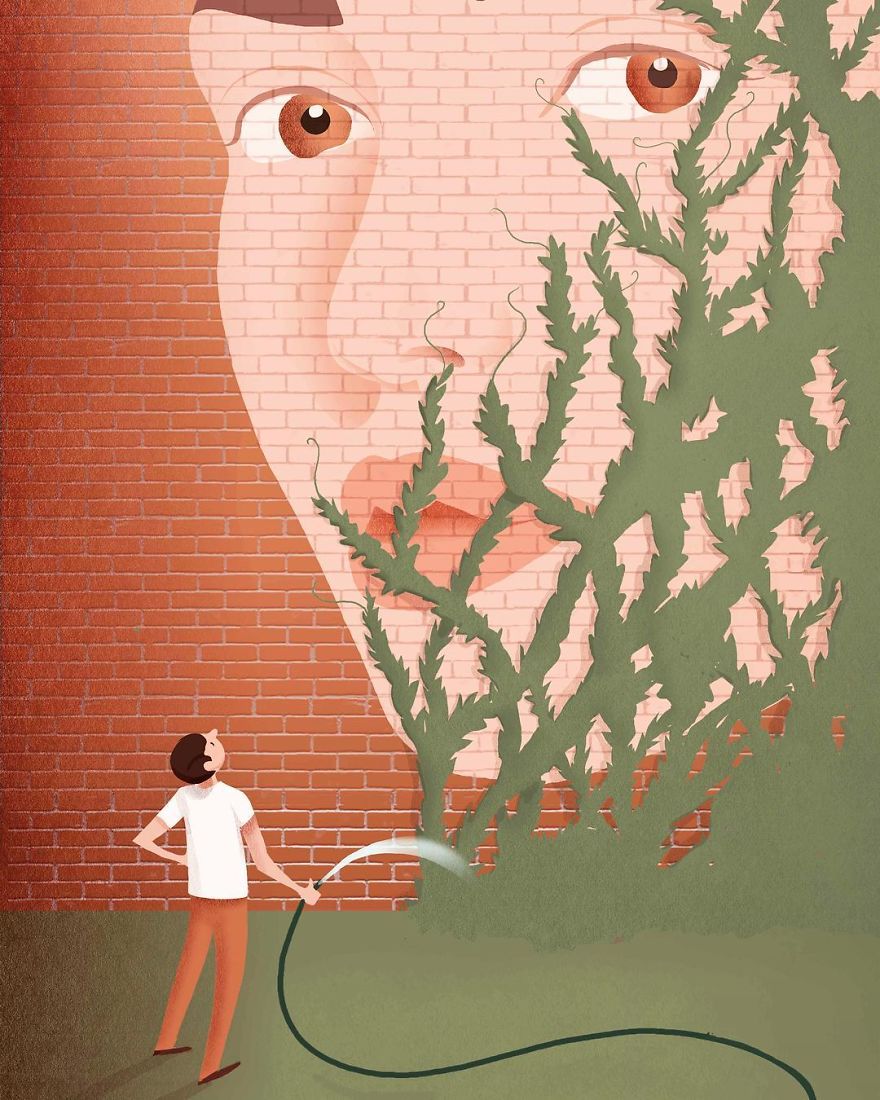

The affinity behind perceiving what truth can be is founded upon what reality is, sensed by the beholder. Although establishing truth compels individuals to rely on facts their environmental awareness identifies, truth perception distinguishes our views of reality. Philosophers commonly define reality as a substance in an external world; to exist without the need to be proven to live is to be real.

Therefore, if an individual’s truth is what they solely perceive and believe, it soon becomes their reality. With this logic in mind, human beings in society choose blindness and cannot comprehend the fullest of reality as their insight into reality is based on what they perceive, which holds true in their life. This creates the whole aspect of ignorance, as it is created by the unwillingness to be open-minded.
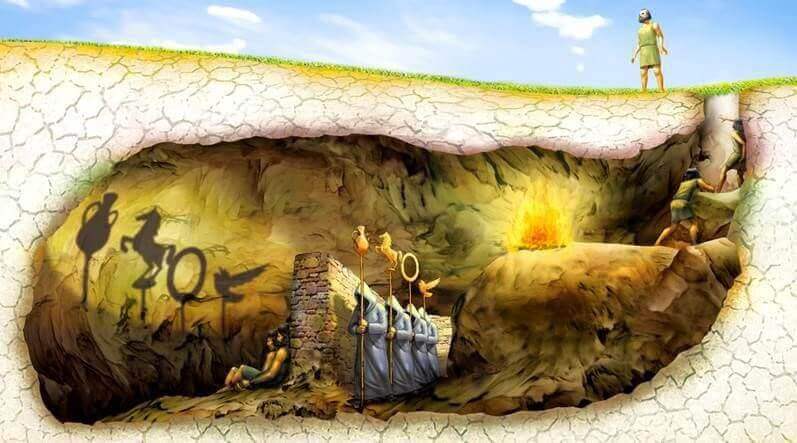
In the dialogue, Allegory of the Cave, Greek philosopher Plato writes a story about people existing in a cave between a conversation between two characters, Socrates and his follower Glaucon, which serves as an allegory for human society. He writes about prisoners chained up to a rock wall deep within a cave, with light illuminating. With the inability to turn their heads or bodies, they cannot see the light source and are forced to perceive solely what is in front of them. This leads to other individuals waving puppets on sticks above their heads on top of the wall where the prisoner’s backs face, reflecting shadows on the walls of what the prisoners see.

As their perception of the cave wall is what they deem as accurate, it becomes their sense of reality. If one were to unshackle the society of people and lead them out of the cave, they would refuse to believe the outer world as authentic in the form of ignorance, as their eyes cannot adjust to the brightness of the world immediately. However, if one is open-minded to the world and alters their perspective (letting their eyes adjust to the brightness of the outside world compared to the luster of the cave), they will eventually see absolute truth.
Throughout the dialogue, Socrates and Glaucon have a back-to-back discussion about people existing in a cave, and the idea of unshackling individuals and guiding them away from the cave is introduced. Socrates conveys the concept by stating, “Under that light, would his eyes not be nearly blinded, unable to discern any of those things that we call real?” In this quote, Socrates suggests that individuals who achieve the truth behind the existence of another perceived reality by seeing the world around them will be unable to do so as the sun would be too bright. Furthermore, this implies that they would be unable to properly observe the world around them, which can symbolize ignorance in individuals. That said, that would indicate how individuals will choose blindness in society as they are so used to the world that they see it as the “truth.” For example, compared to a normal-sighted individual, color-blinded individuals could not correctly understand how to visualize colors as they had never seen them before. All they could adequately do was portray them with their conception of what it looks like. It would be impossible to shape their perception to see the complete truth.
In conclusion, what individuals portray themselves to see can determine what clear truth is. Perception shapes what has deemed the truth to be interpreted based on the beholder. With this in mind, human beings choose blindness as they cannot come to terms with solid truth as they are too used to their perceived reality. This intern shapes what is defined as ignorance in society.
Citations:
http://thirdmonk.net/knowledge/plato-allegory-cave-animation-analysis.html
https://www.thoughtco.com/the-allegory-of-the-cave-120330
https://heartofashepherd.com/2014/09/30/proverbs-3017-the-eye-is-the-window-to-the-soul/


 to Plato’s story and led me to my conclusion on one reason why people will believe falsehoods. It is the people responsible for raising us. Guidance is what the young need, and their guardians are there to provide that. We are shaped by the things we learn and e

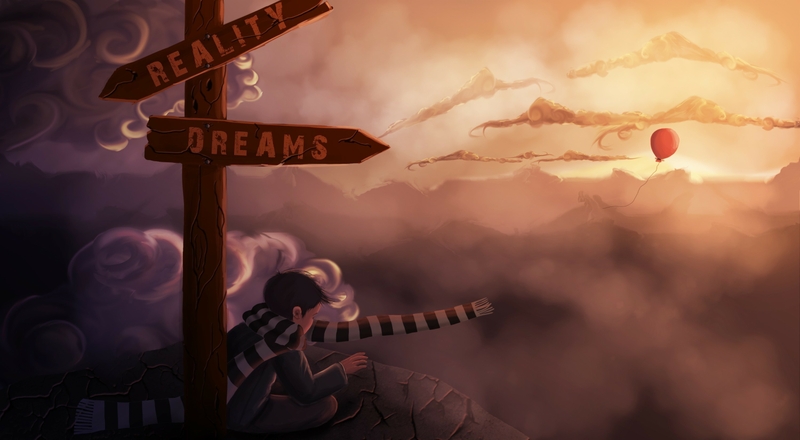



 This explains why he doesn’t really know his wife. Robert, in comparison, has a much deeper meaning to the use of seeing even with the conflict of not physically being able to. Robert better understands the narrator’s wife despite the fact that he has never seen her. This is because he has a greater sense of value and understanding of life. The irony of the short story reflects on how even people with eye sight or understanding may not be able to get a full grasp of what’s going on whereas people who may not be as privileged will because they don’t assume like the ones before. The narrator reflects a man of monotony as the story reflects that he has no meaning in life and judges a person based on physical characteristics. Reflecting on more relatable examples, this individual is the one who goes about their day with no emotional status, leading them to become dull and bland. On the other hand an individual like Robert is one that senses emotion through personality traits and seeks to find a person’s true self through in depth relationship building and creating strong bonds.