
You Know I’m No Good, written by author Jessie Ann Foley, is a detailed analysis on problems and struggles that people may face in modern society. The novel presents an extremely thought provoking narrative that strongly resonates with complexities and stigmas in modern society. Its exploration of the impact of labels, societal expectations, and general teen struggles offers valuable insights into the challenges that young teens may come to face in today’s world. As readers indulge in the piece, they may discover that they relate to any, if not all to some degree, of the characters the novel focuses on
On Teenage Problems and Issues
You Know I’m No Good portrays the tempestuous journey of Mia Dempsey, a young girl struggling with issues such as sexuality, drug abuse, and self identity. Throughout the piece, each issue is explored through her inner monologue. These themes are highly prevalent in modern society, where individuals are faced with constant pressure, confusion, and a never-ending need to find their own identities. Mia and her peers at school each demonstrate these struggles with incredible amounts of realism, sometimes to points where it may make the book’s audience uncomfortable. An engaging example of realistic turmoil is Mia’s battle with substance abuse. She turns to drugs and alcohol as a coping mechanism, seeking brief bursts of relief from the challenges she faces. This struggle mirrors the unfortunate lives of many individuals who find consolation in substances, demonstrating the pervasiveness of addiction in society. Mia’s journey through this struggle supplies the audience with valuable insight into addiction and its impact on people’s lives. In reading this, the audience may gain a better understanding and sense of empathy for people who are struggling with substance abuse in real life. Though that’s only one instance of how the book might educate its readers. Drugs and alcohol are merely one example of turmoil that teens and adults may face, and the novel tackles other issues wonderfully.
On Gender Roles and Expectations

Gender roles are an extremely divisive topic in modern society, even with how often it’s discussed. Unfortunately, male misbehavior is often pinned on young women, causing large sums of unnecessary harm. Mia’s experience with relationships in You Know I’m No Good highlights the intense need for society to question traditional gender roles and double standards. In the novel, Mia’s thoughts and monologues on the way she’s treated in contrast to boys exemplifies this wonderfully. Mia sleeps with with more people than the average teen. Society shames her for this, and shuns her behavior, saying it’s “unwomanly”. However, if a man does this, he’s applauded by his peers. The novel also alludes to the fact that Mia surrounds herself with boys just as much as she does with women. In doing so, she challenges the role of women in society, where they are expected to exclusively associate with other girls. In behaving this way, Mia challenges the notion of homogeneity among different genders and sexes, and embraces diverse social circles. The book serves as a great critique on the role of different genders and double standards in modern society. It highlights the importance of building a more inclusive society among all groups, where people aren’t held back by a multitude of inflexible gender expectations.
On Labels

You Know I’m No Good also tackles the negative effect of labels on individuals, using Mia as a prime example. Like many people in society, Mia is judged by the label given to her. The book asks readers to look back on the consequences of assigning labels to individuals, as well as how it can confine their identity and the way it may make them feel. Throughout the novel, Mia challenges the idea of labels. She’s said by society to be “troubled”, but she doesn’t believe that it fully encapsulates who she is as a person. This label causes her peers, typically those older than her, to treat her differently from other teens. On the contrary to others’ perspectives on her, Mia’s thoughts throughout the story demonstrate that she’s more than just the word assigned to her. Her character serves as a wonderful reminder that humans are multifaceted rather than one-sided. The novel highlights how important it is to approach other individuals with nuance and compassion, rather than looking at how others have defined them. Human’s lives are all filled to the brim with different choices and struggles, so it takes time to fully understand a person. You Know I’m No Good encourages readers to look past the words and labels assigned to others. In doing so, individuals in society can be allowed to connect further with each other and redefine who they are in the eyes of others.
Overall, You Know I’m No Good by Jessie Ann Foley gives readers insight into real life problems that teens may face in life. Through its realistic approach to themes such as labels, gender expectations, and teenage struggles, the novel manages to simultaneously entertain and educate its audience. Alongside this, Foley’s work serves as a poignant reminder of how important it is to show empathy and understanding to others. In conclusion, the novel encourages readers to consider the complexities of other people and their experiences, hopefully leading to society bettering itself through inclusivity and the acceptance of others.
Image Sources
Book Cover – https://www.amazon.ca/You-Know-Im-No-Good/dp/0062957082
Labels – https://www.joemull.com/blog/enough-stop-labeling-your-difficult-people
Gender Roles – https://www.pinterest.ca/pin/324892560588208920/


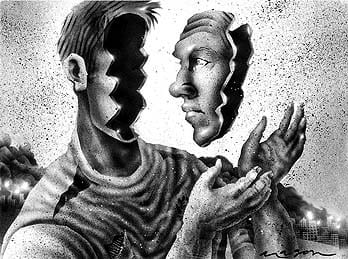

 about this new discovery. However, when he re-enters the cave, he is blinded by its darkness as he has gotten used to the natural sunlight. The chained prisoners see this blindness and believe they too will be harmed if they attempt to leave the cave. Ultimately, the Allegory of the Cave by Plato serves as a powerful metaphor for the journey of conformity, enlightenment, and the importance of questioning the limits of our perception.
  there were moments when I questioned the world of social media. Similar to the prisoner who glimpses a world of truth, I began to realize the reality of the digital realm. The carefully crafted reels and the constant need for validation made me want to match the near to impossible ideas shown online. This can be tied to the shadows in the cave, holding the prisoners back. As my eyes adjusted to beyond just the screen’s glare, just like the prisoner exposed to the sunlight, I realized how genuine and imperfect the nature of the world is.
 In Plato’s Allegory of the Cave, Plato describes a group of individuals chained in a cave, facing a wall. They have been there since birth and are oblivious to the world outside the cave. Behind them is a fire, and between the fire and the prisoners, objects are moved, casting shadows on the cave wall. Due to their restrictions, the prisoners perceive these shadows as reality because they have never seen the outside factors/objects causing them to appear. The core message of Plato’s allegory underscores the notion that our perception of reality is often limited and distorted by our beliefs, experiences, and the information we receive. True understanding, according to Plato, is attained by breaking free from these constraints, turning towards the light (representative of knowledge and enlightenment), and facing the external world, thereby transcending the illusions of the cave.
 As for myself, several years ago, I found myself entangled in a routine that I refused to change, and I didn’t know there were exciting things waiting for me outside of it. It’s like I was in a mental cave because I was scared and unsure of trying new things. In other words, I didn’t realize how much I was missing. I spent countless hours gratifying myself with video games and television, constantly reminding myself that this is what made me comfortable. However, One day, my family had been invited to travel to a different country. And to say the least, it was like stepping into a world of color. At first, I was unsure about going because I knew that everything was going to be so different. But a family friend encouraged me to take a chance. When I arrived at the new place, it was like a light had been turned on. Everything was exciting and different. I got to try new foods, and experience new activities. Every day brought something new, and I felt like I was learning and growing. Just like in the story, it wasn’t always easy. Sometimes, I wanted to go back to my old, safe routine as a result of being homesick. But I kept going because I loved the adventure of learning and trying new things. And in the end, my journey was a lot like the message in the story of the cave and Pleasantville. It taught me that learning new things and trying new experiences can make life so much more exciting and interesting. Just like the characters in the movie, I found that going from not knowing much to understanding more about the world is an amazing journey.

:max_bytes(150000):strip_icc()/GettyImages-11410491702-07f03ccd0eb54d36a9b62212cd2f55a1.jpg) I believe that education relates to the cave Plato talks about in the
I believe that education relates to the cave Plato talks about in the  In school, we are confined to learning specific things determined by our teachers, the curriculum, and our grade level. We do not get the opportunity to explore our interests does not come until we are “released.” Even if we have no interest in a particular subject, we still need specific grades to fulfill our academic desires. For example, I am required to get a high mark in social studies even though my passion is in math and science. The knowledge I gain is limited to what my teachers present. I cannot even ask any questions and am just forced to believe what they are telling me is true. They teach me my reality.
:max_bytes(150000):strip_icc()/graduates-throwing-caps-1066324992-2000-c66181da679b46dab1f62f4b2fbe3e84.jpg)