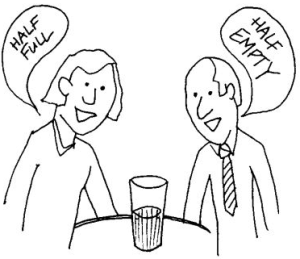
Being Trapped in a Digital and Social Cave

Being Trapped in a Digital and Social Cave

Plato’s allegory of the cave illustrates the difference between the world of appearance vs. reality. The text depicts prisoners enclosed in a dark cave, facing a wall where shadows are cast by a fire behind them. These prisoners mistake the shadows for reality as they have never experienced the external view of the world. Plato portrays a prisoner to be freed from the cave and is exposed to the world outside the cave. The individual is disoriented and blinded by the newfound sunlight. As time passes, the individual gains more insight of the external world and has a greater understanding of reality. The freed prisoner realizes the fire and shadows were not the real world. Inspired by this, he decided to tell his fellow prisoners who were unaware of the natural worldPlato's Allegory of the Cave: A Simple Intro. & Interpretation - Arts of  Thought about this new discovery. However, when he re-enters the cave, he is blinded by its darkness as he has gotten used to the natural sunlight. The chained prisoners see this blindness and believe they too will be harmed if they attempt to leave the cave. Ultimately, the Allegory of the Cave by Plato serves as a powerful metaphor for the journey of conformity, enlightenment, and the importance of questioning the limits of our perception. 


I can deeply relate to this text as I have been liberated from the darkness of the several caves before. In society, we often find ourselves trapped in what can be described as a digital cave, dominated by the era of the internet. From my own life, I recall the days spent submerged in social media, scrolling through seemingly perfect images and filtered moments. Each photo on social media created a new shadow on the wall, creating a false need for me to achieve an unnatural level of perfection and belonging. Despite this,Trapped in a digital world. Nomophobia is defined as the fear of… | by  Emily Prosser | Digital Society | Medium there were moments when I questioned the world of social media. Similar to the prisoner who glimpses a world of truth, I began to realize the reality of the digital realm. The carefully crafted reels and the constant need for validation made me want to match the near to impossible ideas shown online. This can be tied to the shadows in the cave, holding the prisoners back. As my eyes adjusted to beyond just the screen’s glare, just like the prisoner exposed to the sunlight, I realized how genuine and imperfect the nature of the world is.


I recall a specific instance where a friend of mine posted her luxurious vacation to Mexico on Instagram. Even though I was doing well earlier that day, seeing her post made me insecure about my own life. Being in Calgary that day made me wish I was in Mexico also vacationing like her. Rather than appreciate the beautiful day in my own city, I was envisioning myself spending time somewhere else simply due to something a friend had shared on social media. To my surprise, when my friend came back from her trip she said she hated it. She told me she was only posting to let people know she was gone. This allowed me to realize that young people of this generation are so hardwired to post on social media for external validation. They seek happiness from the likes and comments their peers give them and often forget to truly live in the moment and appreciate what they have. 


Customer Perception is Reality (For Your Customers) - J&E Media Corp

We often have a preconceived notion surrounding particular hobbies or interests. Oftentimes we do not realize what we have been missing out on until we actually get the opportunity to try it. For instance, growing up I would see my grandmother knit all the time. I used to think that what she was doing was quite boring. As a consequence, I had this negative idea that knitting was only associated with elderly people and would not be something I would enjoy. However, one day I had to try knitting for an elementary school activity. Initially hesitant I slowly realized that I actually loved knitting. I enjoyed the tranquility and peacefulness of the process. This made me realize the importance of trying new things at least once. It is often impossible to know whether we will enjoy or hate something without actually experiencing it. Since then, I have been significantly more open-minded towards new hobbies and interests, even if they do not seem appealing at first.


Similar to Plato’s cave, humans can often find themselves limited to their own cave of comforts. Without the desire to leave this cave and try new things, we are limited in our worldview and perspectives. Uncomfort is often associated with negativity, however, without experiencing it we can never be certain of what we will gain. In conclusion, I have found myself trapped in a digital and social cave. By leaving these dark spaces, I was able to gain a broader understanding of life. It taught me to truly appreciate everything the world had to offer and to expand my horizons in terms of innovative ideas and knowledge. 


Citations

Plato’s Allegory of the Cave: A Simple Intro. & Interpretation

https://medium.com/digital-society/trapped-in-a-digital-world-ca8772315624

https://www.jemediacorp.com/customer-perception-is-reality/

How To Use PR To Change Perceptions


Perceived Reality

Perceived Reality

          The affinity behind perceiving what truth can be is founded upon what reality is, sensed by the beholder. Although establishing truth compels individuals to rely on facts their environmental awareness identifies, truth perception distinguishes our views of reality. Philosophers commonly define reality as a substance in an external world; to exist without the need to be proven to live is to be real.

          Therefore, if an individual’s truth is what they solely perceive and believe, it soon becomes their reality. With this logic in mind, human beings in society choose blindness and cannot comprehend the fullest of reality as their insight into reality is based on what they perceive, which holds true in their life. This creates the whole aspect of ignorance, as it is created by the unwillingness to be open-minded.

          In the dialogue, Allegory of the Cave, Greek philosopher Plato writes a story about people existing in a cave between a conversation between two characters, Socrates and his follower Glaucon, which serves as an allegory for human society. He writes about prisoners chained up to a rock wall deep within a cave, with light illuminating. With the inability to turn their heads or bodies, they cannot see the light source and are forced to perceive solely what is in front of them. This leads to other individuals waving puppets on sticks above their heads on top of the wall where the prisoner’s backs face, reflecting shadows on the walls of what the prisoners see.


          As their perception of the cave wall is what they deem as accurate, it becomes their sense of reality. If one were to unshackle the society of people and lead them out of the cave, they would refuse to believe the outer world as authentic in the form of ignorance, as their eyes cannot adjust to the brightness of the world immediately. However, if one is open-minded to the world and alters their perspective (letting their eyes adjust to the brightness of the outside world compared to the luster of the cave), they will eventually see absolute truth.

           Throughout the dialogue, Socrates and Glaucon have a back-to-back discussion about people existing in a cave, and the idea of unshackling individuals and guiding them away from the cave is introduced. Socrates conveys the concept by stating, “Under that light, would his eyes not be nearly blinded, unable to discern any of those things that we call real?” In this quote, Socrates suggests that individuals who achieve the truth behind the existence of another perceived reality by seeing the world around them will be unable to do so as the sun would be too bright. Furthermore, this implies that they would be unable to properly observe the world around them, which can symbolize ignorance in individuals. That said, that would indicate how individuals will choose blindness in society as they are so used to the world that they see it as the “truth.” For example, compared to a normal-sighted individual, color-blinded individuals could not correctly understand how to visualize colors as they had never seen them before. All they could adequately do was portray them with their conception of what it looks like. It would be impossible to shape their perception to see the complete truth. 

          In conclusion, what individuals portray themselves to see can determine what clear truth is. Perception shapes what has deemed the truth to be interpreted based on the beholder. With this in mind, human beings choose blindness as they cannot come to terms with solid truth as they are too used to their perceived reality. This intern shapes what is defined as ignorance in society.


Citations: 

http://thirdmonk.net/knowledge/plato-allegory-cave-animation-analysis.html

https://www.thoughtco.com/the-allegory-of-the-cave-120330

https://heartofashepherd.com/2014/09/30/proverbs-3017-the-eye-is-the-window-to-the-soul/

Veils in the Shadows

Veils in the Shadows

Perception; a way of regarding, understanding, or interpreting something. Everybody has different perceptions about the world and the things within. I, for one, see the world as something magnificent, and something that I will never be able to fully comprehend all aspects of. People also have different perceptions about others, and themselves. How do you perceive the world, or yourself? Are you happy with this perception? Within the two poems that I have chosen to respond to, the theme of perception is evident.


The Child Before a Mirror of Strangers, a poem about childhood and ignorance. The author, Wole Soyinka, wrote this poem to showcase how people often forget their past and chose to ignore who they once were. People can be quick to neglect their childhood, often because they don’t want to relive bad memories, but sometimes because they simply don’t remember how important it was. Our childhoods are what start to shape who we are as people. Wole wanted to remind adults that they too were once a child, even if they don’t remember, or don’t want to acknowledge that part of them. For me, this poem was like a warning. A warning to slow down and enjoy my last year before adulthood. Children and teens, too often, desperately want to grow up and leave behind their childish behavior and innocence. I think this poem shows why it is important to not let this happen. When we force ourselves or younger kids to grow up faster, we are taking away one of the key parts of life. Our childhood is the time when we can make mistakes without judgment, frolic in the world, and chase our shadows on the sidewalk. Why do we want to put an end to this simplicity so soon? Why are we so willing to forget? Wole Soyinka repeats the words “as if” many times throughout the poem. They are used in an accusatory tone to the readers, attempting to make the readers realize that they too had a childhood, that they too started up at the clouds and found shapes within. “As if You never chased or raced to leave your shadow. As if you never waved to shapes of folklore Monsters, heroes, morphing in the clouds”. This quote serves to show how important it is that we don’t allow ourselves to ignore our childhood. Pretending that we didn’t have a childhood is only a veil, something we use to cover and disguise ourselves, and our memories.


I have been guilty of using a veil to conceal parts of my younger self. When I was thirteen I was diagnosed with two kinds of anxiety; social, and general. I remember being so confused as to where this was coming from. I couldn’t remember feeling this way my whole life. Surely it was something that had just started, right? I couldn’t have been more wrong. I realized, after I had come to terms with my diagnosis, that I had been showing signs of anxiety my whole life. I had simply ignored it, however, as I didn’t want to remember or acknowledge that part of me. Suddenly, all sorts of memories came flowing back to me when I allowed myself to remember.

When I was eight years old I auditioned for the first time to be a part of my dance studios competitive team. I was extraordinarily nervous. I didn’t want to make a fool of myself, or not make the team. I remember sitting in my moms van in the parking lot, staring at the door. I wanted to go in, say hi to my friends, and dance my heart out. But I was so scared. That was the first anxiety attack I remember having, though I’m aware there may have been more preceding this day. I remember feeling like I couldn’t breathe, and feeling tears on my cheeks. Eventually I pushed myself to the doors of the studio and danced. I made the team and I remember laughing at how scared I was.

I remember when I was seven, the first day of grade two. I remember being scared because my best friend was in a different class, though I had a good friend in mine. I was worried about being around almost an entirely new group of kids. What if I don’t make any friends? I remember asking my mom that question. This was the first time I can remember feeling true social anxiety. The pit in my stomach, nausea, the way my heart dangerously slowed, the feeling of not being able to breathe. I thought I was catching a cold. It wasn’t until I was thirteen that I would think of this day again. It made sense to me then. Those feelings are all feelings I still get to this day. It was weird, suddenly remembering these moments in my life that I seemed to ignore and block out. I did it, I suppose out of self preservation. This poem reminds me of how important it is not to forget our childhood and our experiences. Though I can still vividly remember playing in the sand, staring at the clouds in the sky, and watching my shadow, I am acutely aware of how possible it is that I will one day choose to forget these memories too. A Child Before a Mirror of Strangers serves as a reminder for me to choose to remember them instead.


Hiding one’s true self and feelings of helplessness are two themes evident in the poem Siren Song, by Margaret Atwood. The poem follows the story of a siren, and her truth of not wanting to be a siren anymore. She speaks of her desire to be saved and tells the readers that the siren song is really a cry for help. This poem shows how easily people can put on a veil or facade, and the rest of the world will believe it. The poem in itself is ironic. The siren speaks of not wanting to be a siren any longer, yet the poem is like a luring song. It draws the reader in until the last breath, much like the song sirens sing to lure sailors to their death. I believe this particular siren is using her role as a veil for her true feelings. She hides behind her job, not letting people see her true emotions or feelings, until this poem. This poem also discusses ideas of isolation and deception. The mask that the siren is constantly using has isolated her from those around her. When people don’t show their true personality, it can create a barrier between themselves and those in their life. Deception is a powerful force. Like I mentioned at the beginning, everyone perceives things differently. That being said, differences in perception of people can be caused by the person themselves. In this case, the siren is deceiving because she sings a song that lures people in, and at first glance there is nothing wrong with it. Until you realize the song is a tactic to kill men. She is also deceptive because she isn’t showing her true self or the reality of the song, until the end of the poem.


I will admit that I have experienced the need to conceal myself and my emotions with a veil. I have always been the person that my friends turn to in their time of need. I listen to their struggles and heartaches and attempt to offer them comfort and my open heart. Due to this, I don’t like my friends to see my struggles. I have created a veil of being an emotionally stable friend who doesn’t need help from others. In some ways I suppose this is good, my friends see me as strong and happy. Yet, in many other ways, this is negative. I am oftentimes unable to ask for help when I need it as I don’t want to be a burden, and have gotten used to not being someone people have to worry about. I mask my feelings and emotions to spare my friends and family. Much like the siren in the poem, I struggle to ask for help in a clear way. Also like the siren, I use other means to create my veil. In the siren’s case, she uses her song to mask her true self. Although the song is a cry for help, you wouldn’t know that by just listening once. I used to use dance as a veil. I would take on another personality when I danced, feeling free to express myself and all my feelings, yet to anyone who asked, it was just a story made up in my head to make it come across as authentic. I once had a contemporary routine where my teacher told my group to think of something in our lives that connected to the piece, and to use that every time we performed. “What if we don’t have anything to connect it to?” one of my friends asked. She said we could use inspiration from the media, or books and movies we had seen. I used my experiences with anxiety, yet I told my friends I was pretending to be a character from a movie I just watched. I didn’t want my friends to worry about me. I understand why people hide themselves from others’ watchful eyes. It’s easier to pretend to be okay than to ask for help. Yet, this poem reminds me why it’s important to be yourself. I have used a veil to hide my personality in front of new people, scared they wouldn’t like me. I realize now how damaging this is, and how it will only continue to make me feel trapped and misunderstood. 

Both poems discuss ideas of hiding yourself or your memories from other people. I have fallen victim to both these things. Perception is an interesting topic. How do you want to be perceived? I often think it’s better to use a veil in order to be seen as a better version of myself. Then again, I’m afraid that would make me forget who I truly am and all that I have experienced. Both of these poems teach me to be myself, and how important it is to own my life. While using a veil can give a sense of security to a person, in the end it only does more harm. 


Photo Sources:
https://www.creducation.net/resources/perception_checking/
https://www.psychologyhub.co.uk/student-resources/paper-1-memory/proactive-and-retroactive-interference/
https://stock.adobe.com/images/my-shadow-waving-on-shale-background/141374782
https://unsplash.com/photos/POd35V_uE4k
http://greekmythologicalcreatures.blogspot.com/2014/02/echidna.html
https://thecarletonian.com/2022/01/21/jazz-and-contemporary-dance-company/
https://www.deviantart.com/milanjohnson/art/Hiding-Your-True-Self-491616178

A Bliss of Perception

A Bliss of Perception

Thesis

When an individual encounters a struggle to understand things, they step out of their comfort zone, allowing them to break their internal limitations. The struggle that revolves around a lack of understanding is defined as an individual’s limited perception and vision. A limited perception is where an individual doesn’t see the true understanding of elements in life. Such individuals show ignorance, and in time, will ignite them to step outside their comfort zone. This is caused by unexpected circumstances, causing them to change their thoughts and feelings about a subject matter and trying something new. Such examples may include trying out for a sport, socializing with people, or facing old fears and trauma. This happens as humans are innate to adapt to changes and do new things. This rare phenomena allows them to break their own internal limitations and by observing something based on their own perception. In addition, it will also change their initial behavior and expand their internal boundaries beyond their limits.

Cathedral by Raymond Carver | Goodreads

Such a theme is well demonstrated in the short story, Cathedral, by Raymond Carver through the use of the narrator’s ignorance and lack of empathy. The theme lives within the text when the narrator is prejudiced against the blind man, by judging him off stereotypical  characteristics. Then, the narrator is asked to describe a cathedral to the blind man, a request he finds difficult to deliver. Afterwards, the narrator is asked to draw a cathedral, in which he finally sees the true beauty of it. Therefore, when a person encounters a struggle of perception, it eventually leads them to step out of their comfort zone, breaking their internal boundaries. 


Initially

44,131 Observation Cliparts, Stock Vector and Royalty Free Observation  IllustrationsIndividuals experience a struggle to interpret and understand when they base their own perceptions on external observations. More often than not, the impact of ignorant individuals who judge people base their perceptions on stereotypes which are mostly false. In these cases, individuals do not understand the world they “see” based on their own observations, but external ones. As individuals are solely reliant on the observations of others, they have difficulty forming their own opinions. This is how they become prejudiced.

In the short story by Raymond Carver, Cathedral, the narrator judges a blind man named Robert based on what he previously read in some article. Initially, when the narrator comes across Robert, he is bewildered by the man’s unique appearance. For example, he wasn’t wearing the stereotypical dark glasses, like he thought a blind person would have. He then watches Robert smoke a cigarette, and is perplexed on the assumption that blind men don’t smoke due to the lack of vision. This is best described in the quote, “I remembered having read somewhere that the blind didn’t smoke because, as speculation had it, they couldn’t see the smoke they exhaled. I thought I knew that much and that much only about blind people.” Evidently, the narrator displays his prejudice in the way he is irritated by the blind man for no reason. This quote also exemplifies how the narrator bases his core understanding off of something he read somewhere in the past. It is an uneducated understanding of a marginalized group of people. Carver uses repetition through his use of the word “blind” to emphasize the narrator’s attitude towards blind people. The tone of the narrator reveals his judgemental behavior as he feels discomfort around blind people. By using an external source, “I remembered having read somewhere that the blind didn’t smoke because, as speculation had it, they couldn’t see the smoke they exhaled…” the narrator exposes his own ignorance in attempting to understand things. Therefore, Carver shows that people who struggle to understand the world often base their perceptions off of uneducated observations, and unknowingly are prejudiced.

Then

7 Benefits From Stepping Outside Your Comfort Zone

When an individual is confronted by a situation that goes against their understanding, they engage by stepping out of their comfort zone. Usually, individuals accept a new understanding of things when they are confronted by a primary source of information. In this case, a man, whose only understanding of blind people came from an article he read in the past, came across a legitimate blind person for the first time. The curiosity of most people in such situations would motivate them to step out of their comfort zone to learn more.

This human experience is exhibited in Carver’s short story, Cathedral, when the narrator is forced to describe a cathedral on the television to Robert, the blind man. He then thinks, “I stared hard at the shot of the cathedral on the TV. How could I even begin to describe it? But say my life depended on it. Say my life was being threatened by an insane guy who said I had to do it or else.” Ironically, this reveals the narrator’s inability to see himself. He is perplexed on how to describe a cathedral. The same way he is perplexed by his misperception of blind people. Carver uses hyperbole to show the discomfort the narrator experiences when he states, “Say my life was being threatened by an insane guy who said I had to do it or else.” This quote shows how the narrator exaggerated the circumstances to show how he is unable to form his own perception and put it into words. The hyperbole also emphasizes the narrator’s dilemma as he is challenged in making his own observations opposed to relying on alternative sources. The narrator’s discomfort and how he was approached with an unexpected circumstance caused him to step out of his comfort zone. Therefore, a person who is confronted by a primary source of information when stepping out of their comfort zone, they come to a new understanding, regardless of them feeling uncomfortable. 

Finally

Breakthrough business boundary or limit, breaking the wall to see new work  opportunities or career challenge concept, superpower businessman crack or  breaking the wall with hammer to see light outside 2167657 VectorThe effect of stepping out of one’s comfort zone often leads to breaking away from their internal limitations. When one goes through such behavioral changes they often have an epiphany that helps them realize their misleading perceptions. By using an external observation to help justify their perception, they become too reliant and encounter adversity to “see” the true beauty of many things. The continuous struggle causes them to embrace changes in their perception, allowing them to step out of their comfort zone. Essentially, people are able to break away from their initial limitations and correct them. For example, a man from a small town in Idaho who has never traveled outside of his own county and has never seen an Indian in person, is going to be limited by their lack of knowledge about Indian people. If all he knew about India was the bad things he read in the newspaper about scammers from India, hypothetically, he would more than likely have some level of prejudice towards Indians. That is, until the man’s car breaks down one day and an Indian man stops to help him without asking for anything in return.

This is precisely the message that Raymond Carver was trying to portray in Cathedral, when the narrator draws a cathedral from the television and encounters an epiphany when he says, “My eyes were still closed. I was in my house. I knew that. But I didn’t feel like I was inside anything. “It’s really something,” I said, ” This demonstrates how the narrator is enlightened by the fact that his previous misconceptions of blind people were wrong. Carver uses irony to show that the narrator can “see” the true beauty of the cathedral although his eyes are physically closed. When Robert asks him to draw, he pays close attention to the details of the cathedral, allowing him to see its true beauty without tarnishing it with his pessimism. This use of irony shows how the character comes to realize his flaws, which allows him to break away from his internal limitations. Initially, the narrator struggled with his own prejudices and could not understand certain things without resorting to a stereotypically uneducated source. In a moment of insightfulness, the narrator was able to leave his prejudiced views behind him by focusing on the object and all of its details. In doing so, he had an epiphany that changed his thinking. People always have epiphanies. Whether it is a man from a small town in Idaho who has never seen an Indian, or a man who has never met a blind person, epiphanies have the ability to make revolutionary changes not only on the individual level, but across the world. Therefore, Carver effectively demonstrates how leaving one’s comfort zone allows one to have an epiphany that ultimately breaks their former subconscious limitations. 

Conclusion

When an individual struggles to observe and understand something they have little previous knowledge about, they will often make a choice to confront or learn more. An individual who struggles to understand something will often rely on external sources of information that may not be educated or accurate. In turn, this has the potential to cultivate biased or prejudiced opinions of things that people have never seen or experienced themselves. When that time comes, they are often forced to leave their comfort zone, as they are confronted with an unexpected situation that changes their thinking. Carver explicitly demonstrates this in his short story, Cathedral, through the use of the narrator’s epiphany, which showed him how flawed his previous perception of blind people was. Initially, the narrator judges the blind man through the use of an article he reads and the stereotypical characteristics it illustrates. This uneducated source of information is what originally tarnishes his perception of blind people, which grows into prejudice. Then, upon meeting a blind man in person for the first time, the narrator is puzzled to learn that what he previously thought of blind people was wrong. He is challenged further, when the blind man asks him to describe a cathedral, which reveals his inability to “see”. Finally, the narrator draws the cathedral and has an epiphany, which allows him to see his initial flaws and finally break free of his previously misleading perceptions. Indeed, the message of this story goes beyond the stereotypes towards blind people. It reveals how uneducated sources of information can be harmful to society when they are read by uneducated people who are susceptible to prejudice. If everyone in society educated themselves with information from primary sources and immersed themselves into cultures or societies different from their own, perhaps more people would have the ability to truly “see”. 

The cathedral, side, Cologne, the Rhine, Germany] | Library of Congress


Sources:

Feature Image

Picture 1

Picture 2

Picture 3

Picture 4

Picture 5
Basing Inferences on True Perceptions

Basing Inferences on True Perceptions

Introduction

When an individual encounters a struggle to understand things, they step out of their comfort zone, allowing them to break their internal limitations. The struggle that revolves around a lack of understanding is defined as an individual’s limited perception and vision. A limited perception is where an individual doesn’t see the true understanding of elements in life. Such individuals show ignorance, and in time, will ignite them to step outside their comfort zone. This is caused by unexpected circumstances, causing them to change their thoughts and feelings about a subject matter and trying something new. Such examples may include trying out for a sport, socializing with people, or facing old fears and trauma. This happens as humans are innate to adapt to changes and do new things. This rare phenomena allows them to break their own internal limitations and by observing something based on their own perception. In addition, it will also change their initial behavior and expand their internal boundaries beyond their limits. Such a theme is well demonstrated in the short story, Cathedral, by Raymond Carver through the use of the narrator’s ignorance and lack of empathy. The theme lives within the text when the narrator is prejudiced against the blind man, by judging him off stereotypical  characteristics. Then, the narrator is asked to describe a cathedral to the blind man, a request he finds difficult to deliver. Afterwards, the narrator is asked to draw a cathedral, in which he finally sees the true beauty of it. Therefore, when a person encounters a struggle of perception, it eventually leads them to step out of their comfort zone, breaking their internal boundaries. 

Stairways to heaven: England's top 10 cathedrals | Architecture | The Guardian

Experience

Individuals experience a struggle to interpret and understand when they base their own perceptions on external observations. More often than not, the impact of ignorant individuals who judge people base their perceptions on stereotypes which are mostly false. In these cases, individuals do not understand the world they “see” based on their own observations, but external ones. As individuals are solely reliant on the observations of others, they have difficulty forming their own opinions. This is how they become prejudiced. In the short story by Raymond Carver, Cathedral, the narrator judges a blind man named Robert based on what he previously read in some article. Initially, when the narrator comes across Robert, he is bewildered by the man’s unique appearance. For example, he wasn’t wearing the stereotypical dark glasses, like he thought a blind person would have. He then watches Robert smoke a cigarette, and is perplexed on the assumption that blind men don’t smoke due to the lack of vision. This is best described in the quote, “I remembered having read somewhere that the blind didn’t smoke because, as speculation had it, they couldn’t see the smoke they exhaled. I thought I knew that much and that much only about blind people.” Evidently, the narrator displays his prejudice in the way he is irritated by the blind man for no reason. This quote also exemplifies how the narrator bases his core understanding off of something he read somewhere in the past. It is an uneducated understanding of a marginalized group of people. Carver uses repetition through his use of the word “blind” to emphasize the narrator’s attitude towards blind people. The tone of the narrator reveals his judgmental behavior as he feels discomfort around blind people. By using an external source, “I remembered having read somewhere that the blind didn’t smoke because, as speculation had it, they couldn’t see the smoke they exhaled…” the narrator exposes his own ignorance in attempting to understand things. Therefore, Carver shows that people who struggle to understand the world often base their perceptions off of uneducated observations, and unknowingly are prejudiced. 

Engage

Mental Illness and the Feng Shui Influence | Feng Shui TodayWhen an individual is confronted by a situation that goes against their understanding, they engage by stepping out of their comfort zone. Usually, individuals accept a new understanding of things when they are confronted by a primary source of information. In this case, a man, whose only understanding of blind people came from an article he read in the past, came across a legitimate blind person for the first time. The curiosity of most people in such situations would motivate them to step out of their comfort zone to learn more. This human experience is exhibited in Carver’s short story, Cathedral, when the narrator is forced to describe a cathedral on the television to Robert, the blind man. He then thinks, “I stared hard at the shot of the cathedral on the TV. How could I even begin to describe it? But say my life depended on it. Say my life was being threatened by an insane guy who said I had to do it or else.” Ironically, this reveals the narrator’s inability to see himself. He is perplexed on how to describe a cathedral. The same way he is perplexed by his misperception of blind people. Carver uses hyperbole to show the discomfort the narrator experiences when he states, “Say my life was being threatened by an insane guy who said I had to do it or else.” This quote shows how the narrator exaggerated the circumstances to show how he is unable to form his own perception and put it into words. The hyperbole also emphasizes the narrator’s dilemma as he is challenged in making his own observations opposed to relying on alternative sources. The narrator’s discomfort and how he was approached with an unexpected circumstance caused him to step out of his comfort zone. Therefore, a person who is confronted by a primary source of information when stepping out of their comfort zone, they come to a new understanding, regardless of them feeling uncomfortable. 

Effect

Cathedral by Raymond Carver (Response) | Defining "Jerica"

The effect of stepping out of one’s comfort zone often leads to breaking away from their internal limitations. When one goes through such behavioral changes they often have an epiphany that helps them realize their misleading perceptions. By using an external observation to help justify their perception, they become too reliant and encounter adversity to “see” the true beauty of many things. The continuous struggle causes them to embrace changes in their perception, allowing them to step out of their comfort zone. Essentially, people are able to break away from their initial limitations and correct them. For example, a man from a small town in Idaho who has never travelled outside of his own county and has never seen an Indian in person, is going to be limited by their lack of knowledge about Indian people. If all he knew about India was the bad things he read in the newspaper about scammers from India, hypothetically, he would more than likely have some level of prejudice towards Indians. That is, until the man’s car breaks down one day and an Indian man stops to help him without asking for anything in return. This is precisely the message that Raymond Carver was trying to portray in Cathedral, when the narrator draws a cathedral from the television and encounters an epiphany when he says, “My eyes were still closed. I was in my house. I knew that. But I didn’t feel like I was inside anything. “It’s really something,” I said, ” This demonstrates how the narrator is enlightened by the fact that his previous misconceptions of blind people were wrong. Carver uses irony to show that the narrator can “see” the true beauty of the cathedral although his eyes are physically closed. When Robert asks him to draw, he pays close attention to the details of the cathedral, allowing him to see its true beauty without tarnishing it with his pessimism. This use of irony shows how the character comes to realise his flaws, which allows him to break away from his internal limitations. Initially, the narrator struggled with his own prejudices and could not understand certain things without resorting to a stereotypically uneducated source. In a moment of insightfulness, the narrator was able to leave his prejudiced views behind him by focusing on the object and all of its details. In doing so, he had an epiphany that changed his thinking. People always have epiphanies. Whether it is a man from a small town in Idaho who has never seen an Indian, or a man who has never met a blind person, epiphanies have the ability to make revolutionary changes not only on the individual level, but across the world. Therefore, Carver effectively demonstrates how leaving one’s comfort zone allows one to have an epiphany that ultimately breaks their former subconscious limitations. 

Conclusion

When an individual struggles to observe and understand something they have little previous knowledge about, they will often make a choice to confront or learn more. An individual who struggles to understand something will often rely on external sources of information that may not be educated or accurate. In turn, this has the potential to cultivate biassed or prejudiced opinions of things that people have never seen or experienced themselves. When that time comes, they are often forced to leave their comfort zone, as they are confronted with an unexpected situation that changes their thinking. Carver explicitly demonstrates this in his short story, Cathedral, through the use of the narrator’s epiphany, which showed him how flawed his previous perception of blind people was. Initially, the narrator judges the blind man through the use of an article he reads and the stereotypical characteristics it illustrates. This uneducated source of information is what originally tarnishes his perception of blind people, which grows into prejudice. Then, upon meeting a blind man in person for the first time, the narrator is puzzled to learn that what he previously thought of blind people was wrong. He is challenged further, when the blind man asks him to describe a cathedral, which reveals his inability to “see”. Finally, the narrator draws the cathedral and has an epiphany, which allows him to see his initial flaws and finally break free of his previously misleading perceptions. Indeed, the message of this story goes beyond the stereotypes towards blind people. It reveals how uneducated sources of information can be harmful to society when they are read by uneducated people who are susceptible to prejudice. If everyone in society educated themselves with information from primary sources and immersed themselves into cultures or societies different from their own, perhaps more people would have the ability to truly “see”. 

Sources:
Feature Image
Picture 1
Picture 2
Picture 3

Plato’s Allegory of caves

Plato’s Allegory of the Cave, is a plain yet fluent description of how human perception can be viewed differently from alternate perspectives. With the idea of human perception it also exemplifies enlightenment with the ‘main’ protagonist of the story. With the idea of “being enlightened” Plato talks about reasoning and how we as humans only see things as they are and never go beyond that. Although these theoretical allegations have been studied over time, we still follow its path till today. An entry within my journal explains how a misconception people still have are black holes being a wormhole in disguise. This is a common misconception that most people are believing because of what they are witnessing online and from what other non-officials are saying too. However, that doesn’t mean that everything you say or do will be right, or at least have a point. In the end, the ideology one can carry about something or someone is completely up to them. As it can either help us and how we analyze certain problems and scenarios or it could be a waste of time.