The Looming Fear of Failure

The Looming Fear of Failure

When individuals who lack resolve are faced with adversity, they tend to question their own skills and capabilities due to the fear that comes with the failure of the task at hand.


The real fear in fear of failure: Part iii. Dr. Jim Taylor. (2020, October 5). Retrieved September 14, 2021, from https://www.drjimtaylor.com/4.0/the-real-fear-in-fear-of-failure-part-iii-2/.

In society today, the pressure that comes with adversity pushes individuals to question their skills and what they are capable of. This is evident as many individuals stop themselves from reaching their full potential because they are scared of the possibility of failure. The fear of failure is something that limits individuals, whether it urges individuals to avoid something or causes them to not even try it is a fear that holds back. Growing up around many successful individuals seeing them push the limits of society trying to become engraved in the minds of many it is almost disheartening to individuals who lack resolve because they feel as though they can not fair up to the successful individuals. Thus limiting their ability to follow through with their goals because they can’t trust themselves and what they can produce. The fear of failure can spur from many different variables some being the want to impress, meeting expectations, or even proving one’s self. It leads to excess anxiety within individuals who lack the resolve to push past this blockade and see that failure is the pathway to growth, furthermore, it also causes individuals to question whether or not they can do a certain task. Sometimes the panic that comes from the thought of failure can push individuals to lose their witt, this is relatable to many as society has branded perfection as the standard. Whether it is school, beauty, or even work, people tend to look towards the ones that are excelling, thus, pushing the standard at which should be met even higher than standards for oneself. This increases the fear that less determined individuals feel.


In my life I have had many situations where adversity has occurred that have caused me to question my skill, I often would find myself asking questions such as, “Can I do this, Am I good enough, or Am I close to what they achieved?” These questions stemmed from the looming fear of failure when I was put to the test in school or sports. I have always had unrealistic expectations for myself which often led to me being overly worried about the outcome of the tasks I was doing. I found some of these worries coming from the ones around me like my sister and friends. Oftentimes I would compare myself to them and what they had achieved and it sparked a sense of nervousness within me while I was doing something. Whether it was to live up to the bar my sister set within the family regarding academics, achievements, or even simple day-to-day tasks. The overwhelming bar that almost feels necessary to reach is often a damper that causes me to lose confidence in myself thus the fear of failure takes over limiting my chances to try. I feel as though there is a voice saying that I will not be as good at something and there will always be someone better than me. This voice that resides in my consciousness reminds me that the skills that are necessary for perfection are just out of reach of my hands, and it ignites fear. Failure is something that I hate, although it helps individuals grow, facing failure is tough as it means that you could not live up to the task at hand.


Cover photo Citing: Turner, L. (2021, March 17). Overcoming anxiety: 3 proven steps to changing your life. The Art of Being Happy. Retrieved September 15, 2021, from https://the-art-of-being-happy.com/overcoming-anxiety-3-proven-steps-to-changing-your-life/.
Only We Can Control Our Lives

“When ambitious individuals envision their future, they believe that their actions are under their own control, motivating them to enact change for the better in their lives.”

To me, fate is the idea that every action we take is determined beforehand. Free will is the opposite of that, the idea that we have control over our actions and that nothing is set in stone.

I believe in free will and value it due to the freedom it guarantees. Nobody can have a say over what I say or do. Fate means that there is a lack of free choice. If we don’t have free choice, we have no control over our lives and therefore, it would be hard to call our lives our own. I feel as fate tends to become our reason for not trying. People who are unmotivated accept a mindset where they believe a path they are headed on is the path they have to take; regardless of whether or not the path is a positive or a negative one for them. I believe that we tend to rely on fate because we want to believe things will end up for the better if we go with the flow.

However, I also believe that passive change is not possible. If you want something, you need to take action to get it. I love free will because it means we can change and we’re always welcome to go out and chase the future we want. I believe in free will because no matter what happened in our past, we can always choose to chase better. Choice is important in our lives. In fact, I don’t really believe that fate is real. To me, fate is a creation of the human mind. Of course, you have your right to argue otherwise but I think it is our way of trying to rationalize not making efforts to do anything. It is our excuse for not trying because fate supposedly has a path for us.

My visual piece.

The stickman is meant to represent an individual. Any individual. I did not choose to put any defining features because this is a universal concept no matter who you are. Regardless of any of your characteristics, we are influenced by the ideas of fate and free will. 

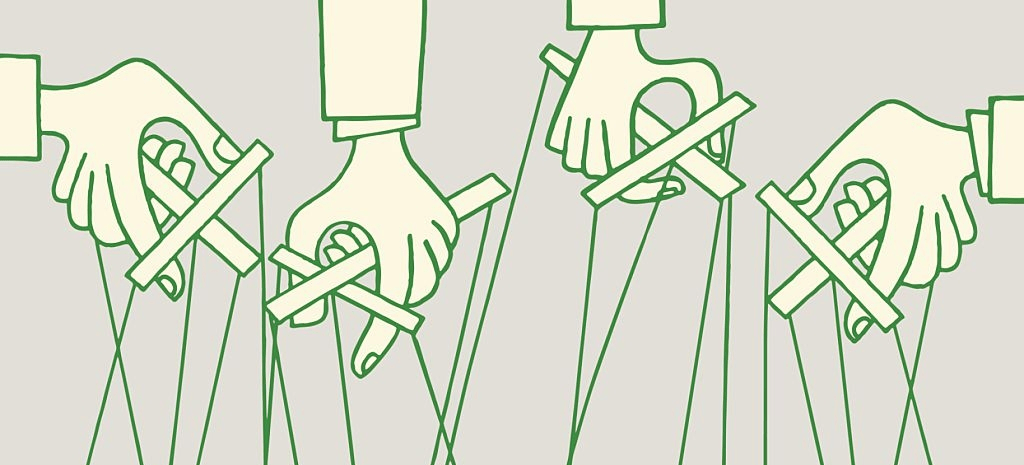
I tried to make it seem like the person had been restrained by strings and was being used as a puppet. The idea of a person being used as a puppet is meant to represent the influence of “fate”. You cannot see the puppeteer or a sign of who it is because fate implies that an otherworldly or unknown force is what forces us to do certain things and walk certain paths. 

The wooden stock is supposed to represent being stuck in the same situation even if you are unhappy with it. If the stickman got trapped in the stocks, it would be stuck in this dark room that doesn’t look too pleasant to stay in. I tried to make the room look cold and empty. The stick person is attempting to escape and is beginning to cut off its restraints; even if the puppeteer is trying to pull him back to the stocks. It reaches towards the open door and the bright and colourful field outside of it. Even if it is not completely aware of what is outside, it knows it is better than where it is currently. With its free will, it chooses to pursue that brighter and better landscape.

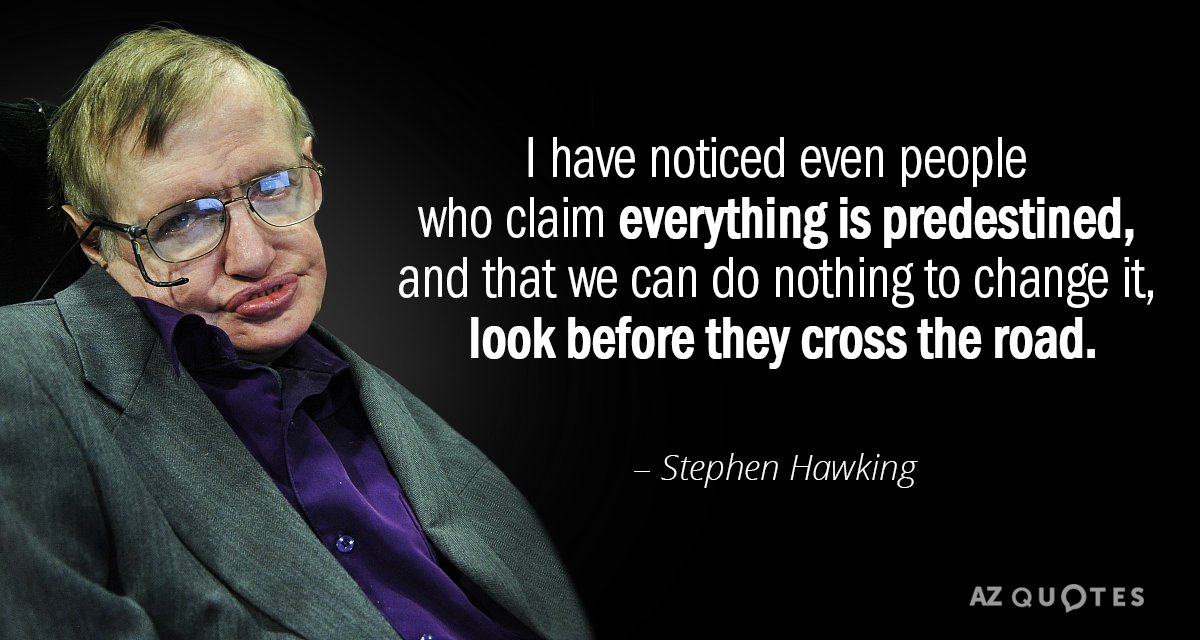
Stephen Hawking quote: I have noticed even people who claim everything is  predestined...

People need to realize that we need to make the conscious choice to chase a more successful future. Fate cannot lead people toward a better path. Individuals can only go towards better things by deciding to go there on their own volition. Results are a product of action people take towards those results, and choices are made by our own will and not by some intangible force that binds us to an unchanging and inescapable predetermined path. We are the masters of our own lives and we can use that to change ourselves for the better.

THE FEAR OF FAILURE

THE FEAR OF FAILURE

In challenging situations, the fear of failing can lead an individual with the need for flawlessness to lose confidence in their ability to overcome obstacles, resulting in a lack of motivation from that individual.

atychiphobia by punnyredpanda27 on DeviantArt

For most of us, this feeling can arise from not meeting expectations and standards that are set for us as high school students and teenagers. For example when the time comes to apply for universities we have to achieve certain grades such as getting 75 in ELA or 80 in Social, these criterias that we have to meet can make failing an unacceptable thing. That fear of letting ourselves down or seeing the looks of disappointment on our parents face can take a toll on our self-esteem.  I relate to this thesis on a personal level because of my need for perfectionism. If I were to analyze myself, I would say I have this constant demand to always be exemplary in every single thing that I do. This is created from the high standards that I set for myself to never make errors. I am the type of person who will rip out a page in my notebook if I make a mistake and redo it until it looks the way that I want. I believe that imperfection is such a bad thing that when I start to fail or feel that I have fallen short, it causes me doubt my problem-solving abilities.

An article written by Theo Tsaousides states that, “The fear of failure is the intense worry you experience when you imagine all the horrible things that could happen if you failed to achieve a goal. The intense worry increases the odds of holding back or giving up.”

I relate to what is written in this article through my experience with math back in grade 9. When I first transitioned into high school, I told myself that I was going to be perfect at every lesson and ace every test. At the beginning it started off well but we got to a unit that I didn’t understand. As hard as I tried I began to get confused and I stumbled on all the lessons. This was challenging for me because it was not something I had faced before; I was always good at math. Referring to my visual, instead of hitting the yellow section on the dart board; I was hitting the red. In the midst of all of this I started to lose the faith I had to fix this obstacle. Instead of going in for extra help or watching videos, I told myself things like, “I am terrible at math,” or “I am always going to fail.” This fear of failure and letting down this perfectionist side of myself resulted in me putting in less work. I raised my hand less in class, I didn’t try in the lessons and spent less time practicing at home. In the end my need to be flawless led me to act this way. When it became clear to me that I was messing up, it was all that I could think about so it clouded my mind. It made me lose sight of what I could do and what I could conquer. Instead all I thought about was my challenges and where I went wrong which then slowly led me to give up.