The Tragic Downfall of Shakespeare’s Macbeth

The Tragic Downfall of Shakespeare’s Macbeth

      Shakespeare’s play Macbeth focuses on the interplay between the forces of good and evil leading to Macbeth’s tragedy. The play was written as a way to appeal to the current king’s paranoia on witches and the destruction they brought with them, or to make light of the situation, mocking him. For future context, Shakespeare’s Macbeth differs from the real one. The historical figure of Macbeth was the King of Scotland after Duncan’s assassination at aged 38, he ruled Scotland into peace and stability, being beloved by many of the people for 17 years. Nevertheless, Shakespeare’s story takes a darker approach, telling a story of tragedy due to ambition. In this blog, Macbeth’s internal conflicts and changing morals throughout the story will be discussed to give further context into the idea of how people become victims to themselves.

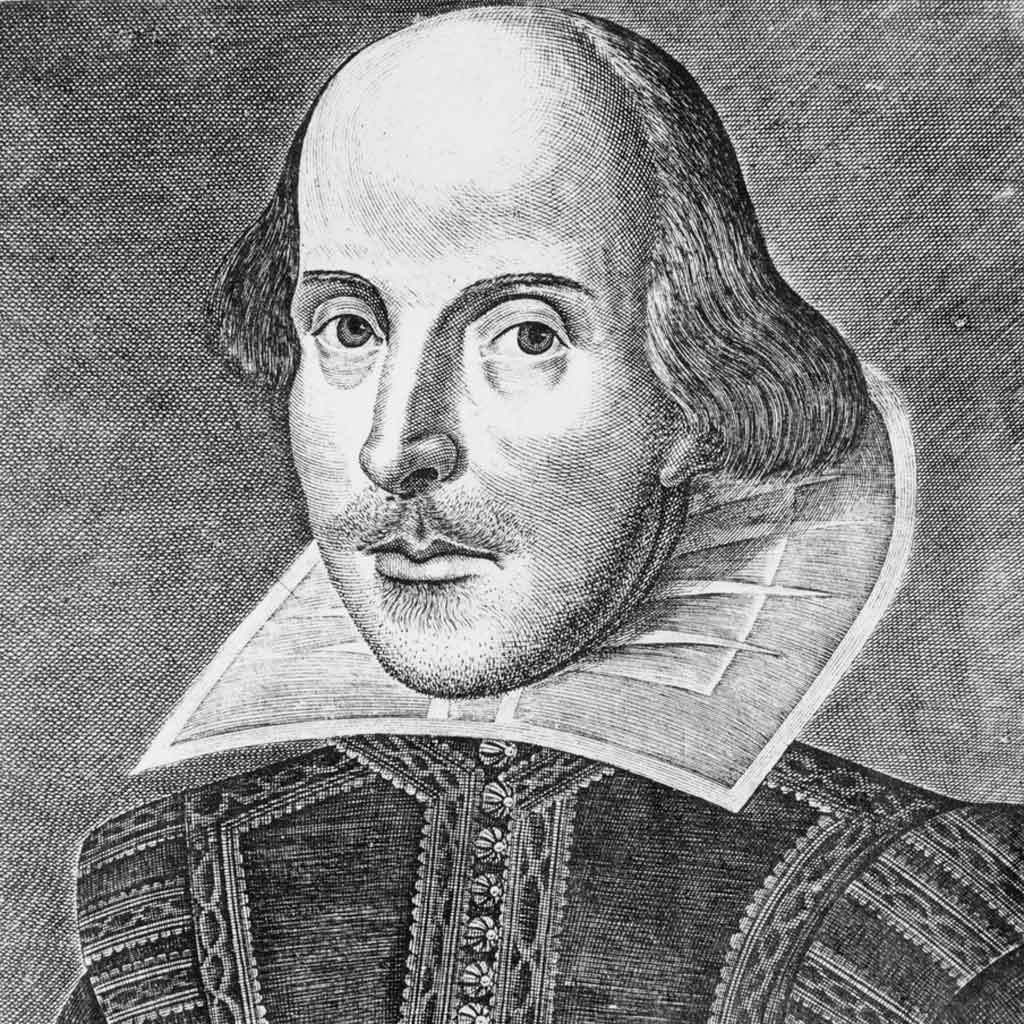
Macbeth - King - BiographyThe Facts Behind the Fiction · The Real Macbeth

The seven bloodiest battles in Scottish history | The Scotsman


     At the start of the story, Macbeth is merely mentioned. As an audience we pick up clues of his character and roles through the witches’ discussion and phrases such as,

“when the battle is lost and won, and, “there to meet with Macbeth.(I. 1. 4,7)

     These quotes represent his importance in the story, and how he will win a battle currently being fought; foreshadowing his gallant nature. We then mainly learn of his qualities through a sergeant’s report of the battle to King Duncan. The sergeant says,

“For brave Macbeth–well he deserves that name—”

and Duncan says, O’Valiant cousin! Worthy gentleman! (I. 2.18,26)

     These quotes reflect specific qualities of Macbeth such as: chivalrous, courageous, brave, and honourable. It also depicts his status and value; how he is loyal to the crown, and is beloved and trusted by everyone around him.
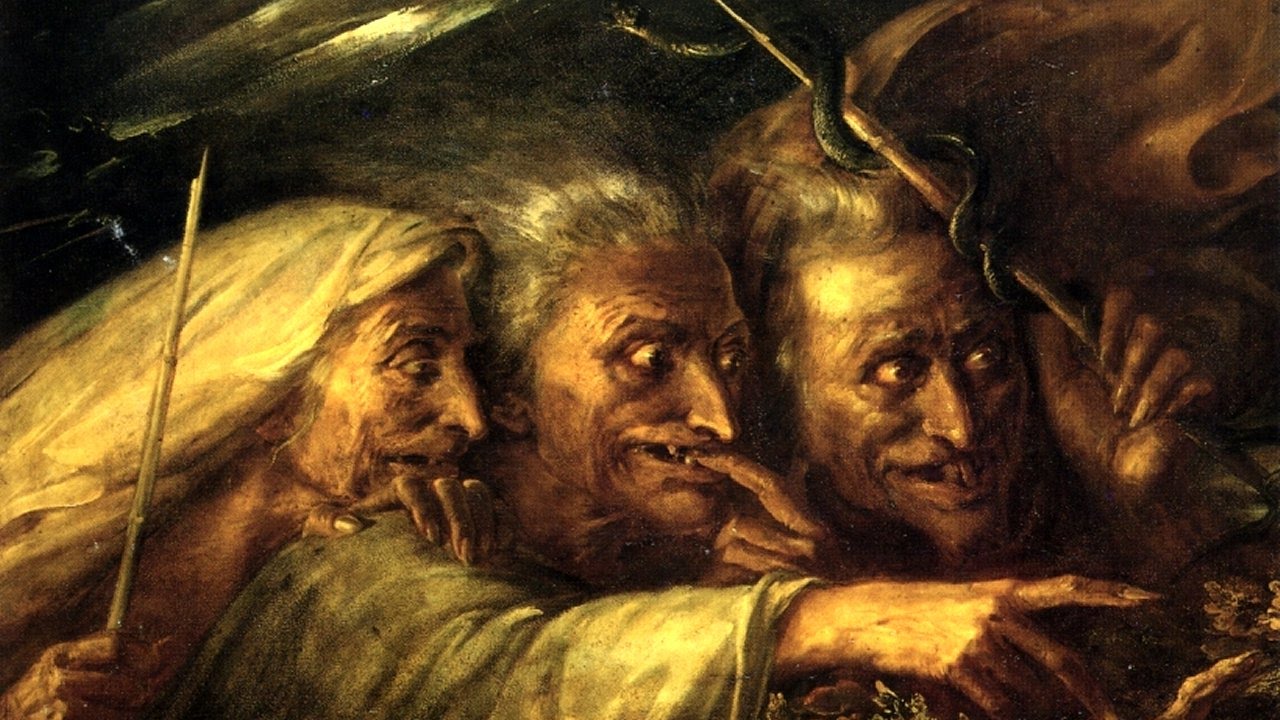
The Witches' Spell from Macbeth by William Shakespeare (read by Tom  O'Bedlam) - YouTubeMACBETH: Who's Who? – Will Power

      Towards the middle of the story, Macbeth’s intentions and morals begin to waver. After hearing the prophecy that he will become King, he immediately thinks of killing Duncan. As appalling as he may have found it, it shows how those actions are not out of his reach. Throughout the middle, he struggles between: his ambitions to become king and quickening the prophecies, and wanting to uphold his righteous morals correlating to his duty to protect Duncan. However, through Lady Macbeth’s manipulation and ridicule of his manliness when he decides not to kill Duncan, it ultimately forces him to commit the crime. Moreover, near the start of Duncan’s murder, Macbeth begins to represent the motif “appearances vs. reality” where he sees a floating dagger. This symbolizes and foreshadows his descent into insanity and greed.Is this a dagger dangling before me? Staging the strange world of Macbeth |  Theatre | The Guardian
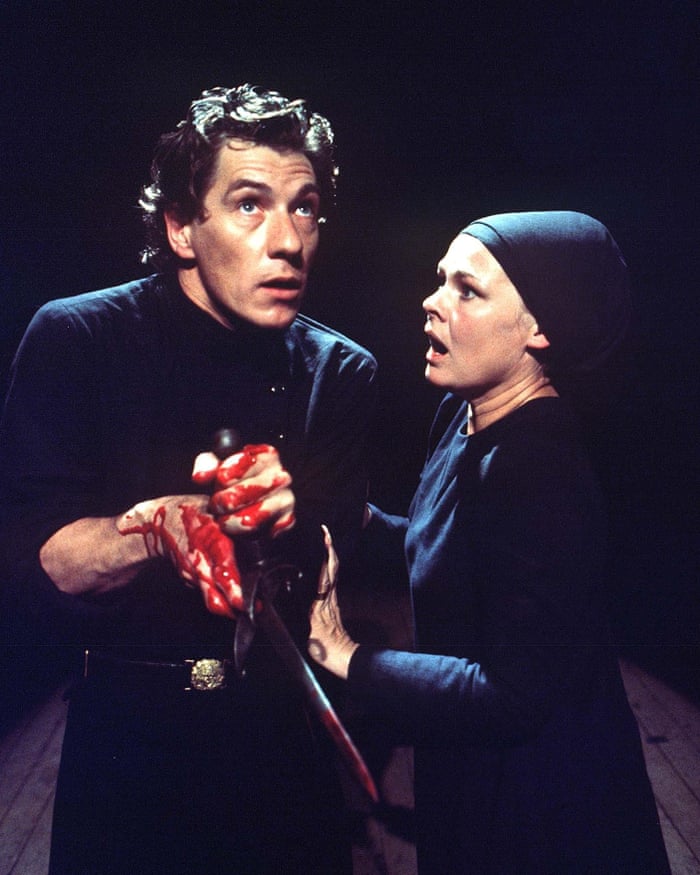
      Macbeth’s final change in emotions includes both guilt and paranoia. He becomes consumed in his greed, striving to stay king forever. He lacks relationships around him, trusting only himself. His paranoia builds to the point where he murders anything threatening him, such as the witches prophecies to beware of Macduff; Macbeth then sends orders for his family to be killed. He is at the point of no return, with him stating,

“I am in blood / Stepped in so far, that, should I wade no more, / Returning were as tedious as go o’er” (III. 4.136–8).

     This essentially means he has committed so many evil acts that his reputation and morals are poisoned; he3,564 Evil Heart Stock Photos, Pictures & Royalty-Free Images - iStockhas solidified his fate of going to ‘hell’ instead of ‘heaven’. He goes from someone working with fate, to someone working against it, trying to change the natural order. His final moments enforce the true meaning behind a tragic hero.

      In conclusion, Macbeth depicts the tragedy of Macbeth. A man once regarded as honourable and loyal, turned into a tyrant full of greed by his own ambition. The guilt and blur between good and evil potent within him, eventually making him insane and paranoid. His confident nature due to the witches’ prophecies betrays him; therefore, leading him to be manipulated and pessimistic at the end. However, it begs the question, was Macbeth’s true downfall the act of his own self-ambition? Or the works of unnatural forces such as the witches?

An Analysis of Macbeth's Ambition

Bibliography

Kevron. Istockphoto.com. 2017. Evil Heart Stock Photos, Pictures & Royalty-Free Images – iStock. [online] Available at: <https://www.istockphoto.com/search/2/image?phrase=evil+heart> [Accessed 31 May 2022].

Katherine. Will Power. 2017. MACBETH: Who’s Who?. [online] Available at: <https://ohmyshakespeare.wordpress.com/2017/05/09/macbeth-whos-who/> [Accessed 31 May 2022].

Andrew Dickson. The Guardian. 2018. Is this a dagger dangling before me? Staging the strange world of Macbeth. [online] Available at: <https://www.theguardian.com/stage/2018/feb/26/dagger-macbeth-scene-christopher-eccleston-rory-kinnear> [Accessed 31 May 2022].

Bard Dev. The Real Macbeth. 2015. The Facts Behind the Fiction · The Real Macbeth. [online] Available at: <https://therealmacbeth.com/king-macbeth/fictional-macbeth/> [Accessed 31 May 2022].

Unknown. Biography.com Editors. Biography. 2014. Macbeth. [online] Available at: <https://www.biography.com/royalty/macbeth> [Accessed 31 May 2022].

The Battle of Culloden, 1746. Picture: Wikimedia Commons. Scotsman.com. 2017. The seven bloodiest battles in Scottish history. [online] Available at: <https://www.scotsman.com/arts-and-culture/seven-bloodiest-battles-scottish-history-1435345> [Accessed 31 May 2022].

Known. I.ytimg.com. n.d. [online] Available at: <https://i.ytimg.com/vi/s1xL83kATbw/maxresdefault.jpg> [Accessed 31 May 2022].

Venus. Pinterest. n.d. Castle | Character aesthetic, Crown aesthetic, Aesthetic. [online] Available at: <https://www.pinterest.ca/pin/castle–1031887333342717669/> [Accessed 31 May 2022]. 


Written by : Nicole

Barbed Shields

Barbed Shields

The Child Before a Mirror of Strangers, by Wole Soyinka

The title of this poem alone is enough to hint at the purpose behind it – that being the commemoration of the 30th anniversary of the Convention on the Rights of the Child. In so naming the poem,  Soyinka rather brazenly undermines the tenets of the 1989 treaty. A child, after all, will suffer more detriment than any other, should they find themselves ‘before a mirror of strangers’.

Children, young as they are, have the greatest need of the comfort that is familiarity; the presence of strangers leaves them without protection against the pressures of the world, for children are, in their youthfulness, fluid of disposition, having yet to form beliefs that would soon set in stone their mindsets. They’re easily warped, consequently, by everything they come to perceive.

The poem’s title serves to preface Soyinka’s mention of once-innocents in the poem – as if to say that this first displacement ‘before strangers’ was and always will be the instigator of a loss of innocence. Without familiarity, there is no certainty; if unsure of what will grant one safety, will not they turn to the first point thought safe?

Will not such a shift guarantee the loss of the uniqueness with which a child is born? Uniqueness serves the purpose of creating for oneself a niche – in its absence, there remains nothing but a stagnant, most empty decline. The opposite, as stated by Soyinka in the poem’s earlier stanzas, is the wonder present in a life of innocence; innocence, after all, will remain only so long as the unknown remains wholly unknown. With a true introduction to these previous sources of wonderment, the uncertainty found therein will be enough to redirect one’s trajectory, and make moot any past wonders.

______________________________________________________

He was young, he knew. Not 25 years of age; even so, many things were lost to him in his supposed youth. Hence his weariness. It was inexorable, in hindsight, given his earlier innocence.

My struggles against jadedness are as nothing, for we’re all as muscles, aren’t we? All bound to feel strain, and, eventually, tears. Attached to each of us are joints – the truths that give reason to move. Therein lies the system’s fallacy; pure, innocent calcium can do naught but crumble before the weight of the world’s experiences.

All reasons lose their potency to time, and what then? A forced, sudden scramble with two outcomes. The tearing of muscles, or the forming of unnatural, impure joints that can stand to match a world that has moved far beyond nature’s limits. To which of the two, I wonder, do I turn… no… the die’s been cast long since. To which of the two have I turned? 

How aptly paralleled, he thought, the cynical cast of his mind clear, resounding as only statements of finality could. And still his thoughts flew on, unabated in their flow.

Impurity – both product of and armor against an impure world. It is the joint pushed to grow; the shield held aloft. The joint, alas, is deformed; the shield riddled with barbs that can but puncture the very skin that holds it high. Flock, all you children, to safety – it hurts, does it not? The world’s ceaseless pound against your defenseless selves; pulsating, growing ever stronger. Find in impurity an abrupt, indeed desperate, shelter, and watch once more as its walls close in – crushing to dust the little that remained of your once-innocent bones and joints and ligaments and muscles.

Watch, children, for you can do naught but. 

Ruins and Roses

Ruins and Roses

The ruins are the talk of the town. No one who has gone there has come back. Rumours spread. Some say they hear screaming, others insist they hear whispering amongst the crumbling walls. Perhaps it’s just the wind blowing through, rocks falling. But why does there have to be a logical explanation? Maybe the ruins are haunted. Maybe ghosts don’t exist; but maybe they do. Who’s to say? Regardless, people steer clear of the ruins. They whisper that they’re ruins peopled by ghosts who dwell there to taunt us.

Medieval Castle Eltz | Castle, Beautiful castles, Medieval castleA long time ago, the ruins were a magnificent palace. The princess used to live there with the man she had married until she ran away with the local witch. There were rumours about that too. Perhaps he abused her or perhaps she never truly loved him. After all, love works in strange ways. And it’s not as though she had much of a choice to begin with; her destiny was written long before she was born. Marry some fancy prince either for an alliance or for money. She never had the choice of loving another. Until she ran away.
No one really knows when the castle was abandoned. Most likely the princess’s husband left and never returned after she ran away. Then again, maybe he died there and it is his and his servant’s ghosts haunting the ruins. The only thing that was certain was that the ruins remained outside our town. And no one ever returned from them.

Or so the townsfolk think.

There is one person who decided to go to the ruins one day. She was bored of living the same monotonous life day after day after day. What was the point of life if not to explore and take risks?

Not to mention that her parents had her future all planned out. Finish school, marry “that nice boy down the street,” work in the fields and tend to the house, eventually become a mother in order to provide them with grandkids to spoil rotten. And, at the end of it all, Death would be waiting with his scythe in hand.

Of course, she had heard the stories. The streets of the towns were full of whispers; there was no escaping them. As a child, her parents had told her cautionary tales. Children are curious creatures by nature and the ruins pose a challenge, something new. A place to explore. But the cautionary tales worked, for children are also very impressionable. 

But as a teen, she was struck by a desire to know everything. The world seemed so vast and the town seemed so small and how was she supposed to find all the answers if she was stuck in the town? And the ruins were so close by. The rest of the world could wait; the ruins were a logical place to start. Perhaps she believed she could write her own destiny. Escape the chains of fate.

So she left.

There wasn’t one clear path to the ruins. Very few people had ever gone there, after all. The adventurer had to force her way through bushes, jump over puddles. She had thought that walking to the ruins wouldn’t take long because they were so close to the town, but it took hours. Perhaps it was some sort of enchantment; maybe the ruins didn’t want to be explored. Or maybe it was just a bad estimation of time. It’s hard to account for the obstacles that you can’t see at the beginning of the journey.

Eventually, though, she made it there. The sun was just starting to set, and it was the kind of sunset that made people stop in their tracks and look up at the sky with wonder, whispering to themselves or the people around them, “Wow, look how beautiful the sky is.” 

The ruins were right there.

They looked so much bigger up close than she could have ever imagined. It made sense, since the ruins had once been a castle, but the stories and whispers never really mentioned their size, leaving that to the imagination. What would’ve been the first floor of the castle seemed to be mostly intact, although there seemed to be some cracks and holes in the wall. Vines clung to the stone, as though they were the only thing holding up what was left of the castle. The pieces lying around the clearing where the ruins stood must have, at one point, been the upper floors and towers.

The adventurer walked up to one of these piles, feeling excited yet apprehensive. She couldn’t yet hear any screams or other noises that would indicate the presence of ghosts, but she wasn’t sure if this made her feel better or worse. In the pile of rubble, there were some pieces of metal and some pieces of stone that once upon a time had been intricately decorated. All that was left of these details were ghosts of markings. Since there was nothing really interesting in the pile, the only next logical thing to explore were the ruins themselves.

She walked into the ruins.

The room she walked into must have been grand, a long time ago. High ceilings, beautiful columns, intricate details along the walls. At one point there must have been art and carpets and a myriad of lovely things, but they were no longer there. Stunned, she stood for a few minutes, trying to take it all in. Never before had she seen something so huge. It seemed that the whole town could fit in this one room and there would still be space.

Then, the whispers started. Indiscernible, but it was clear that they wanted something. The adventurer was drawn from her trance, and, shaking her head slightly, decided to continue exploring. The whispers seemed to be coming from within, so she headed towards the door on the opposite side of the room. 

As she walked, the whispers got louder. They seemed to be speaking in a different language, though. Was this part of some sort of trap? Or were they whispering warnings? Who knows. The language of the olden days was long gone.

Indigo Rose Wallpaper | Blue roses, Blue flowers, Beautiful flowers

The next room contained a small table. Unlike the rest of the castle, this table was in pristine condition. Dust had not covered it and neither had vines. It was made out of some sort of wood and intricately carved. Bordering the table top were what seemed to be words, not words that the adventurer knew though. On top of the table, there was a vase, containing a single rose.

The rose was absolutely stunning. It was a gorgeous shade of blue, like the night sky had been captured and infused into the petals. The stem and leaves were almost an unnatural shade of green, but on the rose it looked stunning. Small water droplets covered its surface and its scent filled the whole room, reminding her of the flower fields in the spring. 

The whispers had gotten louder, almost deafening.

But the rose was gorgeous and she was curious, so she reached out and grabbed the rose. Immediately, she sank to her knees, limbs shaking, a scream emitting from her throat. Her vision filled with images. A man sobbing as he stabbed his wife. A woman crying at the table after finding out her husband had cheated on her. A child being slapped by his mother. More and more images flashed faster and faster. There was no escape.

It seemed as though all the agony and pain that had ever existed in this wretched world had been stored in this one blue rose.

Eventually, after what might have been minutes, or might have been years, the images slowed, and then stopped completely. The adventurer’s voice was hoarse from all the screaming and she lay on the floor, crying. When she realized that she was still clutching the blue rose, she threw it as far away as she could and, using the little energy she had left, started crawling away.

The whispers came back, filling her head, forcing her to stand up, for she couldn’t stand the noise. She wanted to run, far away from this place and from the terrible rose but all she could do was put one foot in front of the other. Slowly, oh so slowly, she walked out of the palace.

Night had overtaken the world, and the only light was that of the moon. Even in the darkness though, the adventurer immediately noticed the unmistakable blue roses that now covered the ground. The scent of the roses filled the air and she screamed. She tried to run, she really did, tried to get away from these cursed roses. But as she ran, the ruins didn’t get any further nor the town any closer. It was as though she was trapped. 

It would’ve been so easy to stop.

But she didn’t stop. And eventually, whatever enchantment had kept her running in one place seemed to give in. The town grew closer, the ruins farther. Yet even as she ran, the scent of roses remained. The adventurer looked back and saw that the bushes that had been empty on the way to the ruins were now filled with blue roses. She sobbed and ran faster. 

There was no escape from the scent, from the colour, from the perfect petals.

She made it home, somehow. No longer did she want to explore the world. It was a cruel place, what more was there to know? Perhaps fate had played this cruel trick, making it seem as though there was an escape, when in reality, there was only one life for a townsperson. Finish school, marry “that nice boy down the street,” work in the fields and tend to the house, eventually become a mother in order to provide her parents with grandkids to spoil rotten. And, at the end of it all, Death would be waiting with his scythe in hand.

At home, it seemed that almost no time had passed. No one had noticed that a person had left and came back. And it would stay that way. There wasn’t any reason to tell anyone about the ruins. The townsfolk wouldn’t have believed it anyways. So, once again, destiny had won.

To this day, I can’t stand the sight of blue roses. For I was the one who went to the ruins.

Image Sources:

featured image

castle

blue rose

Only We Can Control Our Lives

“When ambitious individuals envision their future, they believe that their actions are under their own control, motivating them to enact change for the better in their lives.”

To me, fate is the idea that every action we take is determined beforehand. Free will is the opposite of that, the idea that we have control over our actions and that nothing is set in stone.

I believe in free will and value it due to the freedom it guarantees. Nobody can have a say over what I say or do. Fate means that there is a lack of free choice. If we don’t have free choice, we have no control over our lives and therefore, it would be hard to call our lives our own. I feel as fate tends to become our reason for not trying. People who are unmotivated accept a mindset where they believe a path they are headed on is the path they have to take; regardless of whether or not the path is a positive or a negative one for them. I believe that we tend to rely on fate because we want to believe things will end up for the better if we go with the flow.

However, I also believe that passive change is not possible. If you want something, you need to take action to get it. I love free will because it means we can change and we’re always welcome to go out and chase the future we want. I believe in free will because no matter what happened in our past, we can always choose to chase better. Choice is important in our lives. In fact, I don’t really believe that fate is real. To me, fate is a creation of the human mind. Of course, you have your right to argue otherwise but I think it is our way of trying to rationalize not making efforts to do anything. It is our excuse for not trying because fate supposedly has a path for us.

My visual piece.

The stickman is meant to represent an individual. Any individual. I did not choose to put any defining features because this is a universal concept no matter who you are. Regardless of any of your characteristics, we are influenced by the ideas of fate and free will. 

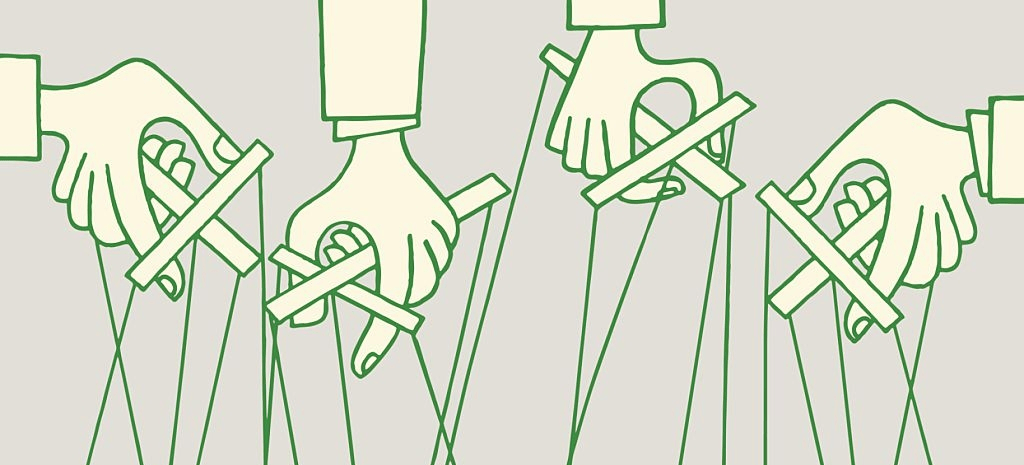
I tried to make it seem like the person had been restrained by strings and was being used as a puppet. The idea of a person being used as a puppet is meant to represent the influence of “fate”. You cannot see the puppeteer or a sign of who it is because fate implies that an otherworldly or unknown force is what forces us to do certain things and walk certain paths. 

The wooden stock is supposed to represent being stuck in the same situation even if you are unhappy with it. If the stickman got trapped in the stocks, it would be stuck in this dark room that doesn’t look too pleasant to stay in. I tried to make the room look cold and empty. The stick person is attempting to escape and is beginning to cut off its restraints; even if the puppeteer is trying to pull him back to the stocks. It reaches towards the open door and the bright and colourful field outside of it. Even if it is not completely aware of what is outside, it knows it is better than where it is currently. With its free will, it chooses to pursue that brighter and better landscape.

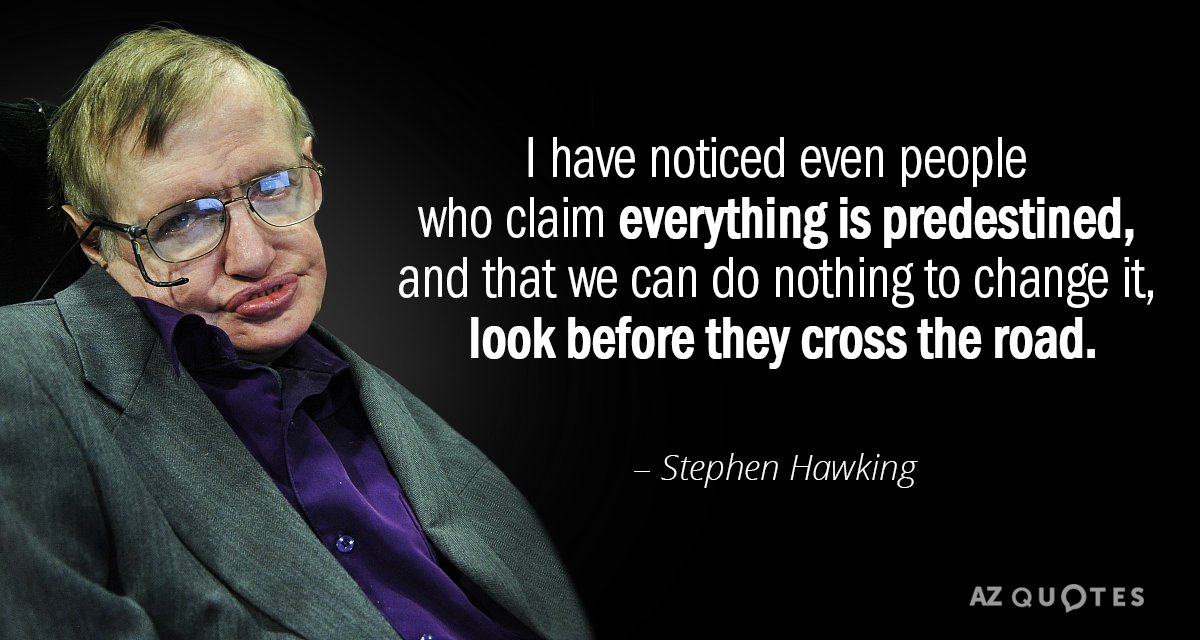
Stephen Hawking quote: I have noticed even people who claim everything is  predestined...

People need to realize that we need to make the conscious choice to chase a more successful future. Fate cannot lead people toward a better path. Individuals can only go towards better things by deciding to go there on their own volition. Results are a product of action people take towards those results, and choices are made by our own will and not by some intangible force that binds us to an unchanging and inescapable predetermined path. We are the masters of our own lives and we can use that to change ourselves for the better.