We Can Be Better / Burn the Strings

We Can Be Better / Burn the Strings

A response to “In This Place (An American Lyric)

Residential School

Residential School

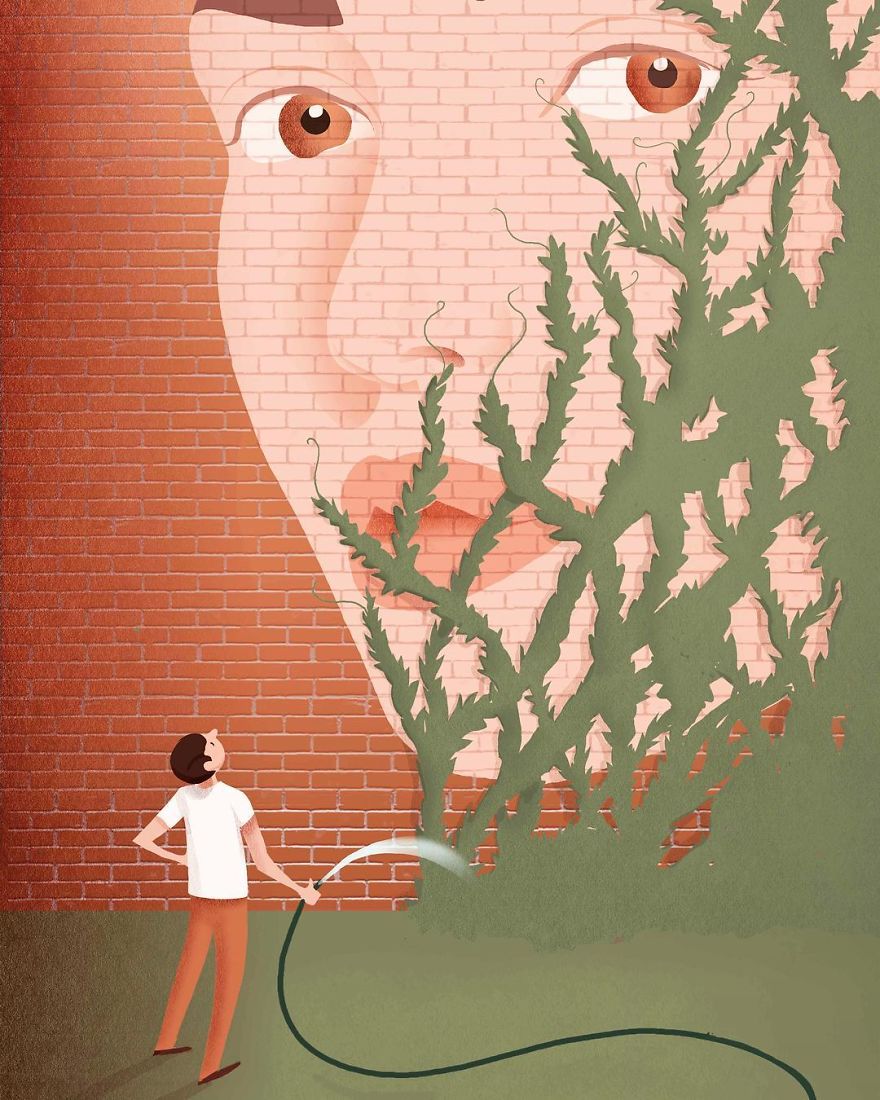
The horrors they witnessed are unimaginable. Their strength and will were continuously tested to the point of no return. The few that managed to make it to see the light at the end of it were irreparably scarred. Those that managed to escape with all their limbs intact had failed to realize that their insanity was already cracked and splintered. The scars that they will harbor for the remainder of their lives will cut deep and burden their conscience with no reprieve. More than 150 000 children were failed at the hands of our country. The inhumane treatment and abuse they faced at the hands of individuals, who had advertised false promises,  will irrevocably become intertwined within their future generations. These facts are difficult to acknowledge but are the truth nonetheless. With this truth, we are faced with the choice of what to do next. On what we can do to ensure that history isn’t repeated. Our voices are interlaced with a strength that most are unaware of. We carry power in our words, which in turn, spurs action. As a collective, we are a formidable force. We are equipped with the humility to inspire a change in our country. Our country belongs to the people, and it is within us to ensure that it is a place of acceptance and constant growth. We owe it to all the children, men, women, and families who had to suffer to make us understand our flaws. We are capable of change. We can be better.

A response to “Barbie Doll”

Marionette Puppet

Her limbs twitched

a meager effort

against a greater force

trying to convey the turmoil

  ripping her apart from within


Streaky makeup distorted her face

reapplied at the slightest sign of fading

she was prepared to be paraded along all day,

jerky movements that went against her primal instincts,

and everything she yearned for


The circus neared its end

she was left on the stage

deemed no longer useful

discarded by the puppeteer.

Her arms were raised above,

a sign of defeat.

Reminders of her trapped life strewn around


Oh how she wished to burn

to burn the strings attached to her

to burn the stage she was chained to

to burn every boundary that held her captive.

Only then she could be free


Time Warp

Time Warp

This free choice blog response is an excerpt from a short story that I wrote called ‘Time Warp’. It follows the journey of twins, Elliot and Alexandra, as they attempt to navigate an underground system of tunnels that are holding them hostage. Pressure is added when they realize that time passes much quicker down there than it does on the surface.



tunnel image

Frantic breaths punctuate the stale air in the cavern where Elliot and Alexandra now stood. Looming ahead of them stood yet another obstacle that could be added to the series of impossible decisions they have been forced to make in the past few minutes (or hours, as it’s been made apparent that time passes on its own schedule down here). The tunnel splits off in two opposite directions, where foreboding darkness is the only indicator of what lies on each end. Glancing at each other, the twins seek reassurance on the other face but instead are met with equally distressed looks.


“Well come on Alex, what should we do?” whispered Elliot, as if afraid that speaking any louder would disturb the unknown specimens lurking around, surely waiting for the perfect moment to attack.


Alex chewed on her lip as she desperately attempted to rationalize the situation. Usually, she reveled in her position as the cleverer one out of the pair, but the mounting pressure to constantly make the right decision with both their lives at stake was slowly becoming too much for her sanity.

“I feel like Mom would want us to stick to the right, especially after we have been going left during the past few turns,” she hesitantly replied. At the mention of their level-headed mother, Elliot’s face instantly fell at the sobering reminder of what was going to be lost if they didn’t navigate out of the mess of this labyrinth in time.


Straightening their shoulders and gathering what bit of resolve they had left, the twins plunged headfirst into the dark depths of the right corridor. Their heavy footfalls reverberated through the tunnel as the imaginary ticking of the clock chased in pursuit. 


Alex was lost in her thoughts while running, silently marking the more distinctive-looking crevices in case they needed to retrace their steps when a sudden yelp of surprise came from her left. Skidding to a stop, she scanned the crumpled form of her brother sprawled across the floor.


“I must have tripped on something,” he groaned, rubbing at his now bruised elbow.


Squinting her eyes behind him, Alex could barely make out the vague outline of what looked like a pile of sticks. She moved closer to better examine the obstruction when it finally registered what she was looking at. A scream tore out of her, muffled halfway as her hands flew up to cover her face. Staggering a few steps back in shock, she hit Elliot’s chest who caught her without hesitation.


“Wha- oh my god,” Elliot grimaced as he finally caught sight of what tripped him. Lying in front of them were the remnants of an unfortunate traveler who had apparently met their untimely demise. The person, surely filled with hopes and dreams of their own, was reduced to a mere pile of rotting bones. It was slumped forward, and the twins could almost feel the despair and anguish reminiscent of what the skeleton must have felt in its final moments alive. It was a clear warning of what was to become of them if they didn’t find a way out of these damned tunnels in time.


Not wanting to stare at what was clearly going to be her future, Alex turned away but not before she caught sight of a familiar glint on the skeleton’s neck. Every nerve in her body was commanding otherwise, but morbid curiosity won as she inched closer to get a closer look.


“No…it can’t be possible,” she murmured in shock. 


“Alex? What are you doing?’’


“It’s grandma’s necklace.” There was absolutely no denying the fact that the necklace draped across the skeleton’s neck was identical to the one that their grandma had religiously adorned. From the intricately woven pearls to the trademark diamond in the center, it was an exact replica of the one Alex was accustomed to seeing hanging on her grandma’s neck until she had abruptly stopped her visits.


There were too many questions that couldn’t be answered, strange time anomalies that couldn’t be explained, and to top it off, a labyrinth that was apparently holding them captive. Alex could feel herself standing precariously near the edge of a cliff, unable to keep the balance for much longer. 


“Whatever that’s going on, Alex, you need to figure it out soon because you’re wasting precious minutes.” Elliot tapped on his wristwatch, the only thing allowing them to keep track of the time passing on the surface. 


That tipped Alex off the edge.


“That’s enough! I just can’t take it anymore! I’m trying to focus but all I can hear is this clock in my head going tick tick TICK.  That stupid clock has been plaguing us ever since we got lost in these wretched tunnels. Don’t you think I know by now that every second we waste down here translates into minutes on the surface? I have regretted our decision to explore these tunnels at least 50 times by now, especially since I’m now realizing that we probably won’t make it out alive. Not to mention, I just discovered that somehow our beloved grandma didn’t go off to live a reclusive and peaceful life in Nevada, but instead rotted away in the same tunnels that we’re now coincidentally trapped in! Have you ever thought about that, Elliot? Huh? That we’re probably going to end up like her all because YOU were bored and wanted a new adventure!”


“It’s terrifying to constantly think that these decrepit walls and decaying corpses are the only company that we’ll have for the rest of our lives. I don’t know what’s suffocating me more, this moldy air or the fact that I’m the only one capable of getting us out of these tunnels before everyone we love passes away on the surface. I usually take pride in the fact that I’m always the first to answer the questions; the twin that everyone approaches first for help because they know that they can rely on me. But down here? It’s too much. I can’t handle the responsibility of taking care of both our lives. And I especially can’t handle that you keep looking at me to solve our problems. Every time something equally crazy and terrifying happens, you get the luxury of being afraid while I immediately have to find a solution, without having even a moment to process my emotions. All I just want to do right now is to see the peeling paint on our back porch and lie down on the prickly grass that we thought we hated. But most of all, I just want to get out of here!” 


At that last outburst, Alex kicked the wall with all her pent-up frustration and gasped when her foot went straight through. With a heavy silence, the twins peered into the newly made hole in the wall and widened their eyes at what was laying on the other side.

Idealism Versus the Truth

Idealism Versus the Truth

Journal Prompt: Discuss the significance of idealism and truth in an individual’s life


Having established a perpetual sense of comfort and security is considered to be the pinnacle of achievement in one’s life. An individual experiences a watered-down version of these sentiments whilst pursuing an idealized version of their given reality. During this pursuit, they avoid the truth for the fear of losing the hope that has provided them with the, albeit false, feelings of fulfillment in their life. Within the short story “Two Kinds”,  Amy Tan presents the idea that when an individual forces their idealistic aspirations upon others, feelings of resentment may emerge, which will eventually culminate into a harsh awakening into reality when the truth is finally revealed. 

Losing grasp of idealistic dreams 

Hope is a powerful factor that can motivate individuals to make impressive accomplishments unless it is followed blindly. It can become dangerous when individuals use it to help create an idealized version of a future, without fully accepting the possibility of failure. “My mother believed you could be anything you wanted to be in America.”  This is the opening line of the short story and is stated by the narrator, Jing-mei. As an immigrant carrying the burden of providing for their family, Jing-mei’s mother views America as their savior of some sort. She is driven by the same “American Dream”, that has been proven to be futile to countless others before her. Due to these fallacious expectations, she has already immersed herself in an idealized world. Within her perceived reality, she envisions Jing-Mei automatically excelling at life due to having access to opportunities that weren’t available to herself. She begins to exert these expectations onto Jing-Mei’s life, urging her to become a prodigy simply because she deemed it possible. Her aspirations for Jing-Mei’s future don’t accommodate her daughter’s own true feelings towards the matter, as she views her daughter as a mere vessel to fulfill the ambitions that she was unable to pursue herself. “She would look through them all, searching for stories about remarkable children.” This statement displays the true motives of Jing Mei’s mother, as it becomes clear that she doesn’t value the unique qualities that Jing-Mei may possess, but instead the potential of molding her into another one of those headlines.  An individual who displays blatant disregard to the personal well-being of others, in favor of upholding their own deluded desires, will often be more vulnerable when the truth is finally revealed. 


Erasing prior views once the truth is revealed

Idealism is defined by its unrealistic thinking, as it is often incompatible with the truth found in reality. An individual who is immersed within an idealistic mindset often remains unaware when feelings of resentment emerge within others that are affected by their actions.  Although Jing-Mei initially shows enthusiasm at the prospect of becoming a prodigy, her confidence is shattered when she continuously falls short of her expectations. Her self-worth continuously deteriorates as she is unable to grasp the unattainable ideals that her mother has placed upon her. “…. and I saw only my face staring back – and understood that it would always be this ordinary face – I began to cry. Such a sad, ugly girl!”  Jing-Mei has a difficult time reconciling her desires for mediocrity -her true identity- with her mother’s unwavering desire of having a prodigy daughter. After a period of quick contemplation, Jing-Mei finally understands the futility of trying to appease her mother’s unrealistic ambitions, as it contradicts the truth of her individuality. Having declared this shift in attitude, the first seeds of bitterness are planted within Jing-Mei, as she asserts that she won’t bend to the will of her unrelenting mother. “I won’t let her change me, I promised myself. I won’t be what I’m not.”   Although choosing to behave in an idealistic mindset may provide some semblance of comfort to an individual, those who are forced to face the brunt of their unrealistic thinking are expected to find extreme displeasure in being pressured to fulfill some faulty fantasy. It becomes difficult to explore one’s true identity and find happiness within when the irrational desires of somebody else are constantly looming over them.

The Two Sides

It’s inevitable that an individual will reach their breaking point and no longer find any interest in entertaining someone else’s warped perception of the world. Their idealistic beliefs clash with the truth, consequentially affecting the quality of both their lives. One is stuck in a stage of denial, where they desperately try to cling onto whatever dying hopes that still provide them with some remnants of comfort. The other is prevented from staying true to their identity and becoming at peace with themself. Jing-Mei yearns for her mother’s approval of her, even without meeting her unreasonable expectations, and hopes that the failed piano recital will finally make her realize that she is unwilling to be who she wants her to be.  Unfortunately, her mom still doesn’t understand, causing Jing-Mei to lash out with years of pent-up resentment spilling out. Although Jing-Mei did manage to live a life that was truthful to who she was, her mom had to grapple with the jarring reality after having spent years believing otherwise. The truth will inevitably prove to be incompatible with one’s ideals, and understanding how to reconcile the two will help prevent future sources of conflict.


The Risks of Isolation

The Risks of Isolation

“When isolating to escape from external factors such as societal obligations, an individual who craves safety within oneself may be deprived of necessary human interactions, which can be detrimental to the mental well-being of that individual. “


Loneliness has been a common occurrence among most individuals since the beginning of time. This feeling can envelop an individual’s life due to a plethora of reasons, such as moving to a new place or grieving the loss of a loved one. However, dangers are bound to arise when this loneliness becomes chronic and the individual begins to isolate themselves to regress into a realm where they’re perceived to be safe from external factors. Instead of being cherished moments of human connection, an individual may view social interactions in a negative light. They’re likely to experience social anxiety when dealing with unfamiliar people or easily become overwhelmed at the idea of having to actively maintain relationships when all they truly crave is to be by themselves. In the process of disregarding any social relationships, an individual can also end up emotionally distancing themself from others. An individual who decides to isolate themselves both socially and emotionally effectively cuts off any potential sources of support available to them.

Solitude vivifies; isolation kills – Joseph Roux

An individual seeking to spend time in solitude is inherently different than isolating themselves. Solitude can be a refreshing experience, as it can allow time to refocus on certain goals. Isolation, on the other hand, is the lack of social relationships and emotional support. Those who decide to isolate themselves are prone to experience a decline in their mental health. By deciding to sever all relationships present in their lives, an individual is essentially left alone to their own thoughts, which can easily lead to the development of unhealthy habits in the absence of love and support from others. Humans are meant to be sociable beings to some extent, as we thrive off of the company of others. Without having a net to fall back on in times of need, an individual can easily spiral into an unhealthy mindset that can have serious impacts on the quality of their life.

isolation affecting mental health

When the pandemic erased all normalcy present in our world by sending millions into isolation, I found myself struggling at the sudden disconnect from all my support systems that existed outside my house. Although I wasn’t truly alone as I had shared the house with my family, I still felt like I was, due to my only form of communication with the outside world being my phone. Soon, one missed text led to a few missed calls and soon enough, I was essentially ignoring everyone that cared for me with just one click of the button. It was so easy to just sit alone in the safety of my room and disregard all the relationships I’ve built in life while the days merged together during the months we spent in quarantine. However, while I spent that time in isolation, I began to notice how my mental well-being took a turn for the worst. I felt truly alone and found myself craving the presence of other people in my life to lean on and seek support. My time alone helped me realize that it was alright to need some time just for yourself, but it was also important to maintain relationships as life could be made much easier by knowing that there are people who are willing to provide unconditional love and support.

reaching out to others to prevent self-isolation