
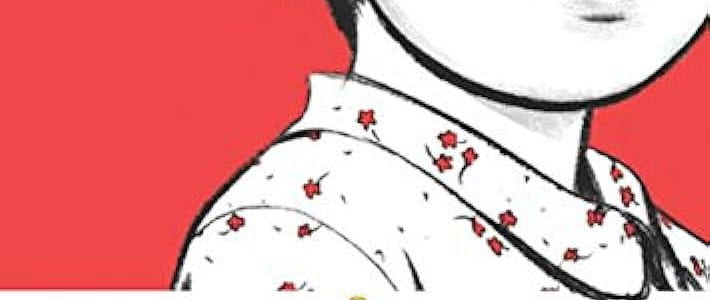
Obasan, written by Joy Kogawa, is an insightful novel into the horrors the Canadian-Japanese experienced during the Second World War, and how the history still shapes many of their lives years later.


The story follows Megumi Naomi Nakane, who as a young girl experiences the internment of the Japanese-Canadians first hand and how she grew up throughout such a harsh period of time. The story is told through a handful of Naomi’s perspectives starting the story off in 1972 with her uncle Isamu. Her uncle soon passes away and Naomi drives out to visit her Obasan (aunt/uncle’s wife). After a few chapters with Obasan the story then transitions to being told through a series of old letters and flashbacks. It is here where we are given the full story from Naomi’s perspective piece by piece until we return to the 70s for the final few chapters, still pondering the past events.
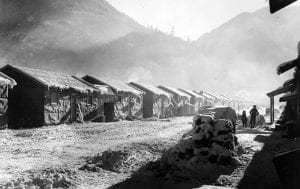
Though an important perspective and a powerful story, the novel can feel very run-on and unnecessary at times especially during the first half of the book. This is due to the writing style which the author has chosen to use. Throughout the story Kogawa writes in extreme and precise detail, outlining every aspect of the scene she’s describing. While useful for laying down exactly what the author wants the reader to know and picture, Kogawa tends to do this somewhat erratically, choosing to focus on some of the most mundane or insignificant aspects of a scene. This can be anything from a full page exclusively about the clutter of a kitchen fridge, to the patterning on a set of dishes used once in a single chapter. While one could look at this from a literary standpoint and say it shows the contrast of different ways Naomi and her family lived throughout the years, this unique usage of description can turn a reader away from the story due to how frustratingly time consuming it can be. The novel can feel slow and verge on boring thanks to Kogawa’s writing, which can be quite bothersome when trying to read a novel that tackles such a complex and painful subject. The use of flashbacks can also feel rather jarring at times, due to not always being certain as to where and when an event is taking place unless explicitly stated (which it often is fortunately). However, I did find that the impact certain points or ideas had would not be felt the same if the story were to be told in a linear fashion.
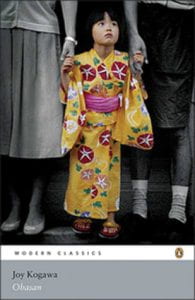
Though a tough read at times due to the author’s methodology, Obasan is an important story working to understand about how to live with oneself after an atrocity like the internment camps during WWII. In the end, I enjoyed this book, even if it isn’t for everyone. I would recommend it to any and all looking for a historical-fiction that delves deep into the personal and emotional aspects of how war changes even those not directly involved in it.
-Image links-
https://www.project44.ca/japanese-canadian-internment
https://fvcurrent.com/p/tashme-museum/

 The residents learn about sex literature, color, art, self pleasure, love and many more emotions. In the Allegory of the Cave it mentions that when one slave escaped from his chains and got outside he was in serious pain as his eyes adjusted to the sunlight. This emphasizes the point that enlightenment will be painful at first, but eventually we adapt. This is very true for the case of Pleasantville. There is a massive split between those who have already been enlightened and those who refuse to accept their already changing worldview. It goes so far that the separation between those two types of people turns into segregation. There are book burnings in the streets, vandalism of shops and just general aggression towards the enlightened people. In the end though, everyone’s eyes metaphorically adjust to the light. They accept their completely altered mindsets and realize how much better their lives are now that they have been enlightened. Overall Allegory of the cave and Pleasantville have some minor differences, but most of their main points can be translated between both pieces of written works.
-screenshot.jpg) while also trying to be true to yourself. Being set in the 1950s, Pleasantville gives the appearance of a perfect life, with everything having a routine and nothing comes as a surprise to anybody… that is, until David and Jennifer suddenly enter Pleasantville. Having originally been from modern times, neither twin is used to the way of life of the small town. They introduce the civilians to certain desires, worldviews, and colours the town wasn’t used to; this initially happens as a result of Mary Sue engaging in promiscuous acts with Skip Martin, as well as her teaching her mother, Betty, on personal pleasure. Both individuals understand a new, more fundamental part of themselves that they weren’t aware of up until that point, and this leads to them finding personal desires within themselves. Initially, neither of them was interested in their new selves, now in colour, as they didn’t fit in with the rest of their peers, especially Betty, but the twins encourage them that other people’s opinions don’t matter as long as you know within yourself who you truly are. Betty learns to embrace her new self and fights back against the prejudice she receives, refusing to cover herself with her old, grey makeup and shows the world who she truly is.
while also trying to be true to yourself. Being set in the 1950s, Pleasantville gives the appearance of a perfect life, with everything having a routine and nothing comes as a surprise to anybody… that is, until David and Jennifer suddenly enter Pleasantville. Having originally been from modern times, neither twin is used to the way of life of the small town. They introduce the civilians to certain desires, worldviews, and colours the town wasn’t used to; this initially happens as a result of Mary Sue engaging in promiscuous acts with Skip Martin, as well as her teaching her mother, Betty, on personal pleasure. Both individuals understand a new, more fundamental part of themselves that they weren’t aware of up until that point, and this leads to them finding personal desires within themselves. Initially, neither of them was interested in their new selves, now in colour, as they didn’t fit in with the rest of their peers, especially Betty, but the twins encourage them that other people’s opinions don’t matter as long as you know within yourself who you truly are. Betty learns to embrace her new self and fights back against the prejudice she receives, refusing to cover herself with her old, grey makeup and shows the world who she truly is. me I am “100% Romanian blood, through and through” but also have my brother tell me that no, I am “Canadian because I wasn’t born there.”
 were but months old to the Netherlands, for example, and having Dutch as a first language doesn’t make them any less of a Romanian.








 I find myself relating to the


 The people of Pleasantville live in this idyllic world, where the basketball team always wins, the sun never stops shining, and
:max_bytes(150000):strip_icc()/GettyImages-11410491702-07f03ccd0eb54d36a9b62212cd2f55a1.jpg)

 as I had to have permission to leave the province from the parent that wasn’t accompanying me. That summer, I was supposed to visit one of my best friends in Kelowna, I was super excited as we didn’t see each other often, and this was the first time we would see each other two years in a row! My dad, a mere few days before my mom and I were supposed to depart, decided to prohibit me from going- even when the trip had been planned for months. I took this instance as a one-off, as my father hadn’t acted like this before.
  He was always sweet and kind to me, but around the start of high school, I found out I was one of the few people he treated this way. I was shocked, as although I knew he had fights with others, I believed this to be extremely rare. I knew I didn’t want to surround myself with people who only acted kind to a few people instead of almost everyone. After nearly two years of enlightenment, I made a challenging decision to leave his house and not talk to him.


