The poem “Everyday We Get More Illegal” by Juan Felipe Herrera captures the struggles, complexities, and humanity of individuals grappling with the realities of immigration, challenging the legitimacy of the immigration laws in the United States. The poem uses a powerful metaphor of a peach tree, rising and falling with fruit while sparrows fight over it. This metaphor symbolizes the resilience of life, even in the face of adversity and struggle. Herrera draws attention to the harsh realities faced by immigrants in the United States, where laws and detention cells become oppressive forces that separate families and marginalized communities. The poet’s carefully selected language infuses the poem with urgency and momentum.Read more
A true freedom that lasts. A freedom that matters.
From the mountaintop to the big city
From the Great Plains to great rivers
Regardless of culture, race, or colour
From the rich to the poor
An America where everyone can be free. That is all I ask for.
This is a poem responding to the poem “Let America Be America Again” by Langston Hughes. My response starts off by introducing this notion of America being the land of the free. However, without naming a particular group, the narrator starts introducing the idea that it is not truly free. Much like the poem I was responding to, I decided to not assign an ethnicity or minority to the narrator in order to keep it relatable for all of the oppressed.
“The Same” – Response to We Shoot Children Too, Don’t We by Dan Almagor
The difference is we’re better simply because we are
We have the right, it’s our duty.
But what divine being gave us the right,
who, what, gave us the right
to laugh at their shrieks, to their screams,
are we really defending when we do these things?
Why do we raise our weapons against the weaponless?
This is not right.
And now we teach children to take up our fight.
Is this right? Is it not wrong?
That we teach ours to shoot theirs for singing their nation’s song?
Why do we teach them to throw stones and bombs at others?
They should throw stones to skip along the river
where now blood flows, human crimson streams
which carry their dead’s broken dreams
The dead; men, women, and children who lived.
Do you think our actions can be forgived?
When people die, children cry
but why don’t we cry when children die?
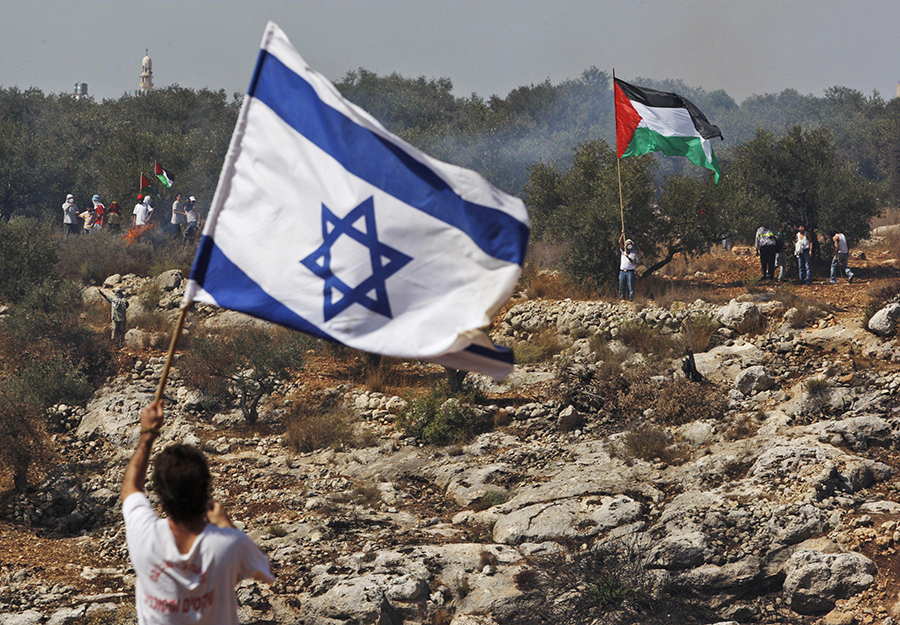
This is a poem responding to the poem “We Shoot Children Too, Don’t We”. This was a very impactful poem showing the sense of humanity lost in the conflict ensuing between Israel and Palestine. Criticizing Israel’s actions against the people of Palestine, the poet demonstrates that we are all human. Through my poem, I attempt to encapsulate the same basic principle; we are all human and deserve to be treated as such.
Everyone saw a fat nose on thick legs. She had finally sought to start afresh, Cutting off all her insecurities, And her once soft flesh.
She smiled in her pain; However she saw a new chance, With a new lovely face and body, A time for perhaps romance.
But everyone laughed and mocked, For how could one be so fake. Little did they know these words stook, And caused her to break.
Personal Response to the Poem Barbie Doll By: Marge Piercy
In the poem, Caged Bird, the readers can assume that the poet, Maya Angelou, depicts herself by juxtaposing the two kinds of birds: one is caged and the other is free. By delineating the actions of both of these birds, Maya Angelou portrays to her readers how she feels – since she considers herself as caged – which is depicted through the free bird. In a sense, she dreams about freedom and so the entire poem can be seen through that lens. In the opening stanza of the poem, Maya Angelou uses words such as ‘leaps’, ‘dips’, ‘dares’, ‘claims’, and ‘floats’ in order to explain to the reader the characteristics of a free bird and what that bird is capable of doing and achieving. The readers can feel a sense of longing through these words and structure, as if Maya Angelou aspires to be that bird one day, to leap through the tyrannical society, through their customs and their rules, and to ‘claim the sky’. In this sense, one can understand that the ‘sky’ here would allude to the sense of freedom; a place with no sort of boundaries, cages, or restrictions. Moving on, when Maya Angelou describes the caged bird, she uses words such as ‘bars’ of ‘rage’, ‘clipped’, and ‘tied’ to express the predicament of the caged bird.
Here the readers are easily capable of discerning that Maya Angelou is clearly referring to her situation by this and to the condition of the Black Community. That they are confined within the ‘bars’ of the discriminating society, and that their wings of dreams are constantly being ‘clipped’ by the elites of that society while every day their hands and legs are being ‘tied’ up in constraints and jurisdictions and new unnecessary laws. Since their entire body – as in the entire group of African Americans – is tied up, they have no other choice but to open their ‘throats’ and ‘sing’. In a sense, this poem can relate to the current circumstances that have been addressed in society today. The movement of Black Lives Matter can represent the cage bird singing, as it is the only action the caged bird can do despite being restrained in every other way. People in society may believe BLM is a movement with underlying negative intentions, but truly the movement was brought up to finally express the injustices the Black Community has been facing for many generations.
Citations:
Image 1 – https://www.theguardian.com/lifeandstyle/2016/mar/06/the-ugly-truth-about-body-dysmorphia Thomas Northcut and GNM Imaging