Uncontrollable Events

Uncontrollable Events

Quote Assignment


The Hitchhiker’s Guide to the Galaxy, by Douglas Adams follows the journey of Arthur Dent who narrowly escapes the destruction of Earth. He is warned by his friend, Ford Prefect, who is secretly from another planet and they subsequently escape on a starship. The rest of the book outlines the adventures of these two friends as they travel through the galaxy using “The Hitchhiker’s Guide to the Galaxy” to aid with navigation. Along their travels they come across different alien species, civilization and technology. One such alien species that they come across created a supercomputer, which they named Deep Thought, for the sole purpose of answering the “ultimate question of life”. After pondering the answer for seven and a half million years it eventually provided an answer. “The answer to the ultimate question of life, the universe and everything is 42”.


The purpose of our existence is a question that many, including myself, have wondered. The supercomputer, Deep Thought, seeks to find this “ultimate answer” to everything and yet the answer it has arrived at after millions of years of processing is insignificant, meaningless and disappointing. This particular quote resonates with me as I have come to believe that there is no satisfying “ultimate answer” that would give life an all encompassing “purpose”. Our “purpose” is only defined by each individual and their own unique goals, experiences and motivations. Additionally, I believe there is no real reason to explain our existence. We are all here due to chance and luck.

“All we have to decide is what to do with the time that is given to us” is a quote found in The Fellowship of the Ring by J.R.R. Tolkien. This line is spoken through Gandalf the Grey, as he responds to Frodo’s contemplation of mortality when faced with the task of returning the infamous ring to Mordor. Through these words, Gandalf implies that fate has assigned Frodo his purpose of retrieving the ring, while simultaneously saying that it is also his decision whether or not to carry on and follow his prophecy, or to give into his fatalistic views and cower away from the given challenge.  


This quote resonates with me as a life lesson, since I was previously in the same mindset as Frodo, one that was full of lamenting the inevitability of death and the looming fear of what the future holds. However, Gandalf’s encouragement represents the part of me that I strive for now. I have realized that my youth is fleeting, and that time will go on whether I accept things or not. This motivates me to make the most out of everyday and not waste any opportunities in front of me. There are always ways that I can improve myself and although time is fleeting, it’s never too late to try. In our limited time that we have I should strive to be at my best.

The Terrible Thing that Happened to Barnaby Rocket, by John Boyne starts with the introduction of an average suburban family, the Brocket’s. They lived completely normal lives until their third son, Barnaby Brocket was born. Barnaby unfortunately has a condition that prevents him from obeying the laws of gravity. If he is not held down by a weight or tied to the ground he would continue to float up. After eight years, Barnaby Brocket’s parents could no longer deal with their son, so they decided to let him go. This sparks Barnaby’s journey as he floats around the globe meeting new people along the way, all of whom have been disowned by their families due to a variety of “abnormalities” they posses. One of these individuals is a balloonist who comforts Barnaby by saying, “Just because your version of normal isn’t the same as someone else’s version doesn’t mean that there’s anything wrong with you”.


The message this quote conveys is one that I continue to remind myself as I interact with the wide range of the human experience. I have quite rigid opinions and viewpoints concerning certain topics, many of which conflict with people around me. I have come to understand that every individual is different in their own unique way. Values, worldviews and opinions vary between individuals based off of their own unique life experiences. I may not agree with some of these varying opinions but I will often respect their beliefs and ideas. Just because its not my version of normal, doesn’t mean that something is wrong with them.

Citations:

https://www.azquotes.com/quote/405770 (The Hitchhiker’s Guide to the Galaxy)

https://www.magicalquote.com/movietheme/decision/ (Lord of the Rings)

https://www.azquotes.com/quote/509616 (The Terrible Thing That Happened to Barnaby Brocket)

https://www.express.co.uk/news/weird/1319207/Life-after-death-floating-in-void-near-death-experience-NDE


Conflict Between Desires

Conflict Between Desires

“I have family, and I have friends but if you’re gone… To me… It will be the same as being alone.” – Unknown

When one decides to pursue their personal desires instead of choosing to conform to others around them, they then achieve that long-awaited sense of satisfaction and yet this sense of satisfaction may be accompanied by a sense of dread as if dreading what’s to come as a result of one choosing their personal desires. The book Tell the Wolves I’m Home by Carol Rifka Brunt, tells the story of June.

June had lost her uncle due to AIDS ( acquired immunodeficiency syndrome) and the reason he dies (that June’s mother believes) is that her brother Finn’s boyfriend had given him AIDS. Because of this everyone around her told her to stay away from the man that mysteriously appeared in the backdrop of Finn’s funeral. However, June was curious and went to meet the man and subsequently found out that this man was Finn’s boyfriend. From then on she started meeting him out of a personal desire to learn more about Finn from him.

Instead of conforming to everyone else who had Toby (Uncle Finn’s boyfriend), she chose to pursue her own interests despite the consequences that may follow. Through choosing to meet Toby, June starts hearing an entirely different side of her uncle that she had never known. She became happier and started looking forward to every meeting between the two of them and yet June always dreads what would happen if she was found out. Every time June meets Toby, June learns something new or takes something from their interactions which helps further her character development such as the book she received with the note inside. This is also shown in how the painting Uncle Finn had made for June and her sister Greta, found itself having many new contributions after Finn’s death due to Toby adding things such as skulls on Greta to the painting. The quote at the beginning I feel truly outlines what June felt right after her Uncle’s death, and this–among other things– spurred her on that journey in order to fill what went missing.

Featured Image: https://www.istockphoto.com/illustrations/wolf-symbols

Image 1: https://www.niehs.nih.gov/health/topics/conditions/autoimmune/index.cfm

Image 2: http://www.carolrifkabrunt.com/tell-the-wolves-im-home/

Image 3: https://nyhc.com/elderly-companionship-services-in-long-island-and-new-york-city-nyc/

Poetry Seminar Responses

The Land of The Free” – Response to Let America Be America Again by Langston Hughes

Is America Really the Land of the Free? | Redefy Stories

Photo Link: https://www.redefy.org/stories/is-america-really-the-land-of-the-free

America. The land of the free.

That is what we set out to be.

But the American dream was an American nightmare

It turned out to be a nightmare, indeed

We pledge allegiance to the flag

We pledge liberty for all

But where was that pledge

When you watched us fall?

The only stars we saw in the sky were on the flag

Of the country that imprisoned us

They bruised and beat down all of our own

How did we call this our home?

Why do we call this our home?

It is our home as much as it is yours.

Our blood and our tears watered the crops

Filled the rivers, stained the streams

That sustained this so-called land of the free

But this land of the free did not sustain me

The land of the free. What does that mean?

And why can’t those called the free include me?

What was my crime that caused me to be chained?

Was I guilty of being? Guilty of breathing?

Nobody chose to stand up for me. 

But now I ask you to stand up with me.

With all for freedom comes freedom for all

A true freedom that lasts. A freedom that matters.

From the mountaintop to the big city

From the Great Plains to great rivers

Regardless of culture, race, or colour

From the rich to the poor

An America where everyone can be free. That is all I ask for.

This is a poem responding to the poem “Let America Be America Again” by Langston Hughes. My response starts off by introducing this notion of America being the land of the free. However, without naming a particular group, the narrator starts introducing the idea that it is not truly free. Much like the poem I was responding to, I decided to not assign an ethnicity or minority to the narrator in order to keep it relatable for all of the oppressed.

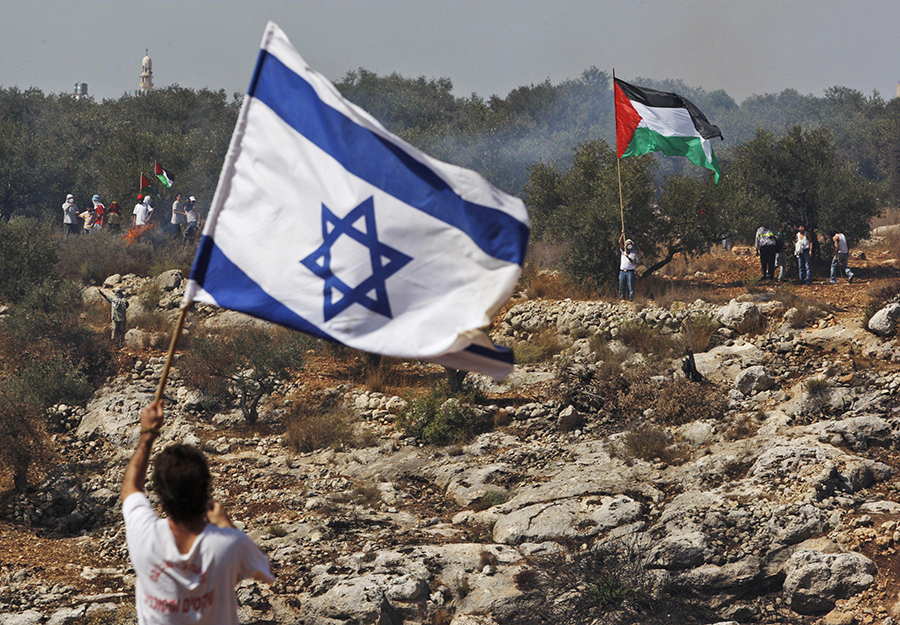
“The Same” – Response to We Shoot Children Too, Don’t We by Dan Almagor

Here's What Plan B in the Middle East Should Look Like | The Washington  Institute

Photo Link: https://www.washingtoninstitute.org/policy-analysis/heres-what-plan-b-middle-east-should-look

We are the same. We are all the same.

We bleed, sweat, and breathe same.

The difference is we’re better simply because we are

We have the right, it’s our duty.

But what divine being gave us the right,

who, what, gave us the right

to laugh at their shrieks, to their screams,

are we really defending when we do these things?

Why do we raise our weapons against the weaponless?

This is not right.

And now we teach children to take up our fight.

Is this right? Is it not wrong?

That we teach ours to shoot theirs for singing their nation’s song?

Why do we teach them to throw stones and bombs at others?

They should throw stones to skip along the river

where now blood flows, human crimson streams

which carry their dead’s broken dreams

The dead; men, women, and children who lived.

Do you think our actions can be forgived?

When people die, children cry

but why don’t we cry when children die?

This is a poem responding to the poem “We Shoot Children Too, Don’t We”. This was a very impactful poem showing the sense of humanity lost in the conflict ensuing between Israel and Palestine. Criticizing Israel’s actions against the people of Palestine, the poet demonstrates that we are all human. Through my poem, I attempt to encapsulate the same basic principle; we are all human and deserve to be treated as such.

Lost Dreams

Lost Dreams

Alone,

In the dark I sit,

Reflecting upon my past,

I dream,

I dream of grass stains on my knees after playing a game of soccer

I dream of family dinners where we sit together and laugh about how my brother failed his chemistry test

I dream about a time where I would wake up to a bright glowing sun shining down and warming my face

I dream of colors, nature, wildlife

I dream about my friends, family, loved ones

I dream of a time where we lived happily and in peace

I dream of going out of my house to feel the fresh breeze of winter weather 

I dream of cold water running through my body after a game of tag

I dream of bed time stories with my dad

I dream

But like all dreams

Mine fade into a pile of dust

War Dream Meaning Interpretation - Dream Meaning

Sitting in the corner of my room 

Waiting to be swept up in a cloud of smoke 

caused by a molotov cocktail 

I go to sleep knowing that it may be my last

I dream 

All this pain, this war

All over a flag

All over a large chunk of dirt 

My backyard, a playground for tanks

My streets, a maze for soldiers

My home, a bunker for survival

My dreams, the morphine to my pain

My city, the hunting grounds for target practice 

My school, a hospital for the injured

I dream 

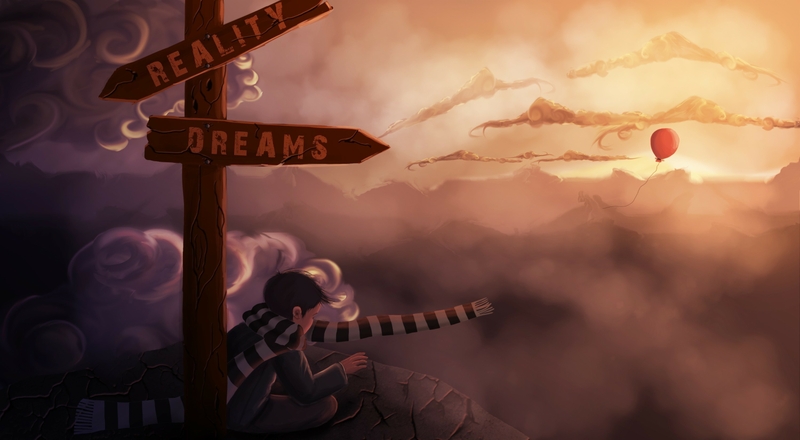
The Dream and the Reality | Blakely Bennett

Poetry Seminar Response: A Mess of Thought

Poetry Seminar Response:  A Mess of Thought

Response to “How to Write the Great American Indian Novel” by Sherman Alexie:

 Stereotype:

The words surround and choke

Mysterious Illustrations Of Mental Struggles By Japanese Artist Avogado6 ⋆  Anime & Manga

The safety and comfort I had known

Taking form and changing ways

It was intriguing; it was horrifying 


I knew the truth

Yet word after ignorant, arrogant word 

Struck with mighty force

Watch as it warps right to wrong to outrageous

The lies between them blur, the difference lost


I look down

I do not recognize what I see

The product of such words is strange, unknown

Abstract concepts, none familiar to me


Yet to my disbelief

This falsehood is what others believe 

Adorning ignorant nods and strange facts


My timid humble words

Strike not with any force, they do not stick they do not change

So how can I expect to show them truth

When they look to a me wearing their words

And say that it’s proof enough 


Response to “ We Shoot Children Too, Don’t We” by Dan Algamor 

Not Yet Gone:

Stand back and watch 

As the sky lights up

Peace and Love at War, Page 3, Banksy, Street artist, ArtistsAnd the stars shut down and shy away from such a fright


For a moment

Trick yourself into believing they are fireworks

The kind you and your cousins would release

A warm celebration every eid


Your cousins are gone now

Turned into fireworks and lit up the sky with shades of anger and fear

Your home lost with them

Taken by rapid guns and laughs


Look around and realize that home no longer exists

Your place of belonging no longer a place you can belong to

You are a ghost casting sorrowful shadows

The buildings in your wake crumbling, screaming, mourning


And if you dare scream, if you dare

They will angle the lights towards your face

And make demons from your despair

And weapons from your bare hands


So cover your cries

Take arms as they expect

Fighting for land not yet gone


Cover Image

Image 1

Image 2

The Inevitability of Death and the Fragility of Life

The Inevitability of Death and the Fragility of Life

“Between Life and Death”, Bosslogic, Mar 12, 2021

¨When an individual experiencing mental turmoil is unable to deal with the inevitability of death, they may become fixated on their mortality, resulting in them losing focus on life itself.¨


Death will come to all eventually, whether it be a person, object, or even an idea. From dust, we came from, and to it, we will return.

Like it or not, it is one of the universal truths of this world.

Nothing is permanent. Things die, ideas fade, and memories are forgotten. Everything will, at some point, disappear, swallowed up by the mists of time.

so what now? I mean, if everything I hold dear will disappear eventually, then what’s the point of even getting out of bed today? If each step I take brings me towards an open, empty, waiting grave, then should I just stop walking? Step back through that front door, and return to the solace of my room?


No.

I can’t just stay in my room all day, because lying in bed with too much time, and not enough to do, that’s when one is most prone to those types of thoughts.

You know the ones; no matter how loudly you play the music, or how dark the room is, like well-trained bloodhounds, they always seem to find their way into your mind. At times, their arrival is seemingly random, spawned from various thoughts; mundane thoughts about the miscellaneous that somehow wandered to the passage of time. Other times, they’ll come crashing in like a monstrous tsunami; submerging every waking thought in ice-cold dread, and settling into the deepest recesses of one’s mind, never fully evaporating. Always there, lurking in the back of your mind, stealing the air from your lungs until each breath is a desperate battle for a slight reprieve; a Herculean labor.


Outside it is, then.

Once I step through that door, I’ll be subject to a world where nothing is for certain.

Where each step, each thought, each word, each breath, could be my last.

But even if I don’t step out of that door, each second, minute, day, year that passes by could be my final, so I ask again; what now? What answer is there to this rhetorical question? Do I leave my fate up to chance? Seclude myself from the world, desperately hoping to prolong this tortured existence?


Or maybe…I could just live my life.

I don’t mean just existing, no. I mean living; living my life to the fullest despite the knowledge that one day, I’ll run out of sand. Who knows when my time will come? It could very well be the next second, minute, day, year; or maybe I already forfeited my life a long time ago. Riddle me this: What kind of life is that? One where every shadow or second leaves one shaking in their boots? How am I supposed to enjoy life, live it, if every second is spent miserably waiting for its end? If you ask me, it’s no life at all; it’s a pale imitation of what it could be.


Every journey has an ending, doesn’t it? Every well-worn path, open road, book, movie, series; they all have that final destination, that final curtain before the screen fades black, and all is silent. And in that quiet tranquility, all that lingers is a feeling, one almost indescribable.

Is it joy?

Regret?

Sorrow?

Melancholy?

Why do we feel like this? Because the journey has reached its conclusion?

Do we laugh?

Cry?

Applaud?

Celebrate?

Mourn?

About what?

The beginning,

or the end?

We’ve made it to the end, so why does it feel so empty?


Could it be something else? Maybe we don’t mourn the end; rather, we mourn the loss, the absence. We grieve for the fragility of those moments that we will never truly experience again. Once that final chord leaves the air, when the blooming brilliance of the flower finally wilts, we mourn their disappearance. After all, is it not the fragility of things that make them all the more beautiful? Is it not death that gives life meaning? That everything has an end helps us to appreciate them even more, be it the flowers in the ground, the clouds in the sky, or life itself. Everything exists in a delicate balance, almost as if by magic.

I don’t know what comes next, nor do I know what will happen in the next second, day, year, or century. But I do know that I’m going to use what I have left. Have you ever seen a glass sculpture? What a sight they are, so fragile, so delicate, that it seems like a single breath could cause it to crack. Do you know how they’re made? First, sand is taken, and it’s melted down. No longer can one tell one grain of sand from the other; instead, they’re one big, formless mass, waiting to be shaped, and given both life and purpose. Though the process is quite strenuous, it is worth every second.


Instead of counting the time I have left, mourning as the sand pools around me, I’ll make a glass sculpture.

I’ll exist in those brief moments of stillness and fragile beauty,

waltzing to the pulse of my heartbeat, as notes thread through the air, and flowers bloom.

And when my time comes, when my waltz stops, and the stillness shatters; when the air goes silent, and the last flower wilts,

I’ll face the final curtain, bow to the crowd, and take my leave.