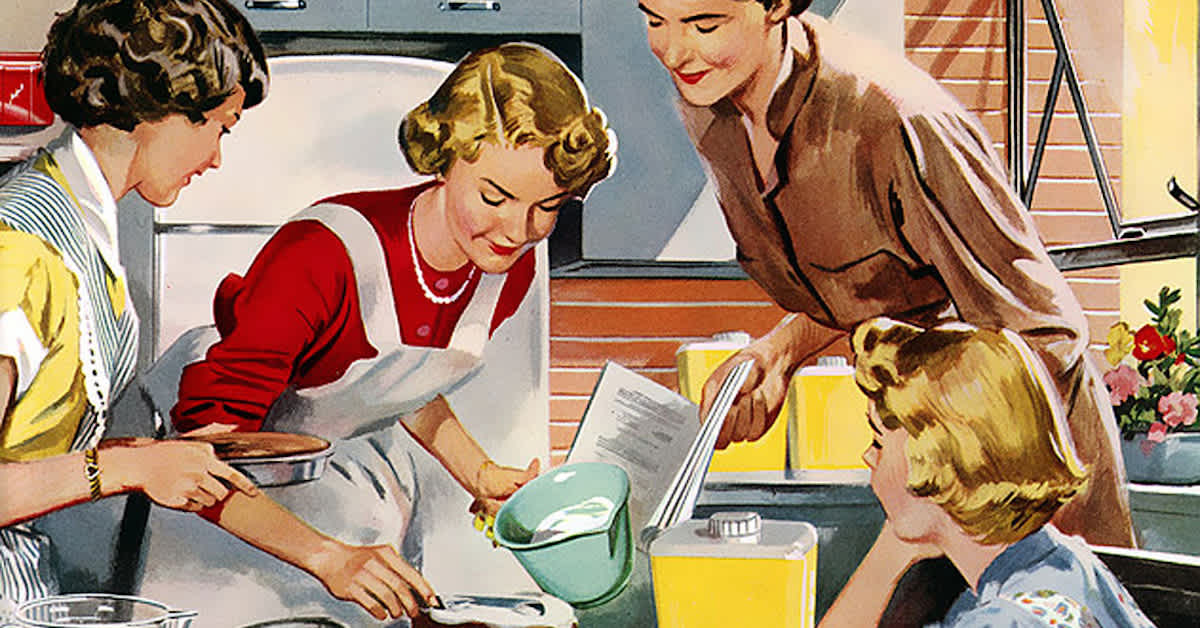
Comparing past and present house holds.

This 1955 Good House Wife's Guide Tells How To Treat Husbands | LittleThings.comThe good wife guide.

How Your Brain Works: A Simple Look at The Processes That Drive BehaviourPleasantville, a film directed by Gary Ross, portrays in parts of the film how different women’s duties were from the 1950s to the present we live in.  Comparing the types of work wives did in the 1950s to the 2020s can be described in many different ways. This blog will focus on women’s roles and duties from the 1950s. Previously, all women’s standard jobs were to take care of the house duties and raise the children when the husband was at work. In this period, you could see that women didn’t have many rights and freedom of speech. They weren’t allowed to go to work. They couldn’t manage funds and had no authority in their homes. The man always ruled over the family with an iron fist. Women had no opportunities in the past; they would only be able to learn the skills that would make them good wives. Sowing, doing laundry, and cooking were the main topics they had to know; they had no choice in what type of education they wanted. They all grew up only ever learning how to be a stay-at-home wife. On the other hand, now women have much more freedom to choose the general direction their future will be; yes, some women may want to be housewives like before, but now they have far more possibilities and different directions they can take in their lives. Women now have a lot more freedom to choose their life path, unlike how they were raised to be nothing but housewives in the 1950s, and now they have as much authority as men do about significant decisions in the household. So, the main message is that now women have much more freedom to do whatever they desire.
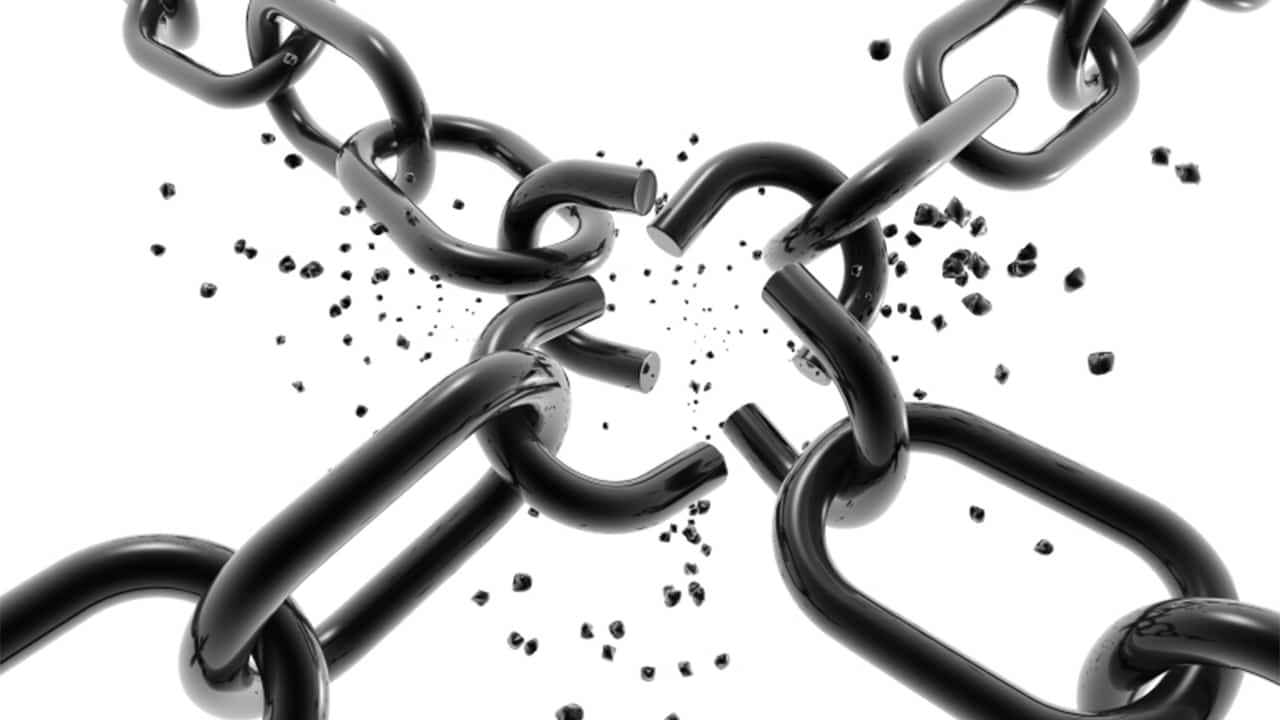
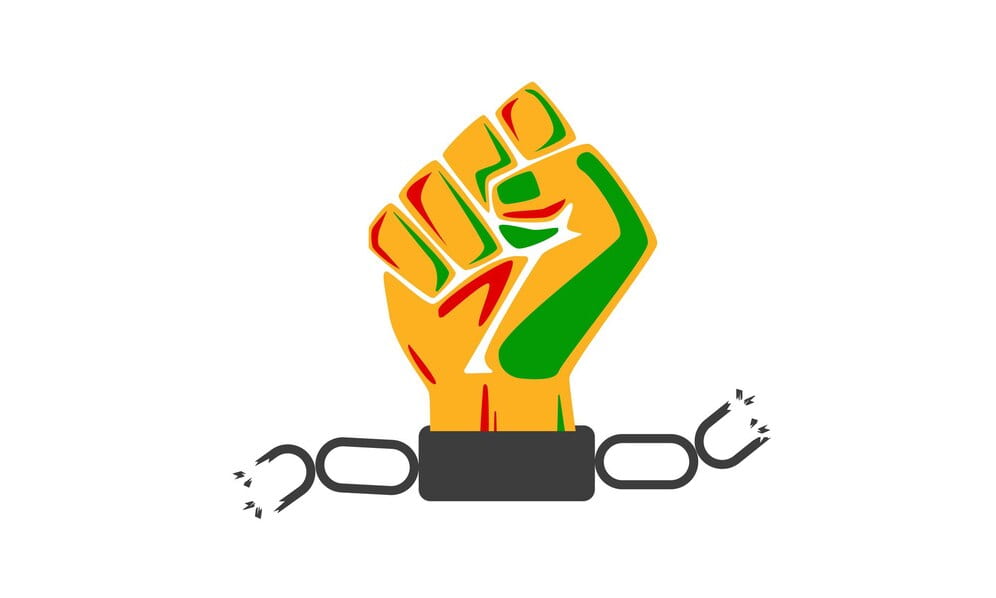
Break the Chains - Focal Point Ministries

The closest thing that can relate to this topic of freedom is that as I grow older, I have more freedom to do what I want. Because everyone knows that children are thrill seekers, just like when I was younger, I didn’t have much freedom to do whatever I wanted. On the other hand, I’m almost an adult, so I have more control over my life to do what I wish, like a future career in math or being a waiter. So, just like how women gained their freedom of speech over time, just like children when they grew up.


Citations:

How-Your-Brain-Works.jpg

 series-breakthechains_1280x720.jpg

3943074133_010c65c4e1_b.jpg


Scars of Those Who Suffered

Scars of Those Who Suffered
  1. The Hidden Fence

Rita Joe 

Once upon a time I was in spaces free 

I trod the lane of the rainbow road

My identity my own

And all the earth and sky my friend.

In barricaded fences of rescue 

Submission becoming my prison

Now slowing to a trickle. 

My stride becoming a shuffle

The feathers hanging limp as I signed the X


The spaces are still there for me to follow

In the wide open range 

I teach you my culture

I want to teach you about me


Let me.


This poem is written by a Mi’kmaq First Nations Female, Rita Joe. Her mother died when she was five years old, leaving her with no choice but to become a foster child. After that she was held in a residential school for four years as well. She became a writer to notify those who have never been in her shoes, and to inform people about her experiences as a discriminated race. ‘The Hidden Fence’ is mainly about the struggles when forced to lose one’s culture due to suppression. It also, metaphorically, focuses on how people handle change in life when in devastating circumstances; to see if individuals give in or find alternative solutions.

This poem resonated with me, personally, since I am an immigrant from Japan. Over the years my culture has been mocked by some, and I’ve learned to erase my identity from others to fit in with society. I’ve felt insecure eating my oriental lunch after some students called it ‘cat food’. I’ve also tried desperately to get rid of my accent that made me differ from my surroundings. Three years, I’ve spent my life hiding my original identity, not being able to express myself; however, during high school I realized having a unique background is significant and defines who I am. Once I opened up, and stopped being diffident I started noticing my relationships with people started to grow deep and wide. My friends often fight over my lunch and tell me how lucky I am to have a unique and delicious lunch.  Recently I have had numerous friendships where I feel loved and can trust from the bottom of my heart, due to my honest identity. I responded to this challenge optimistically; this led to a bright future and is key to having a fulfilled life. 

The poet’s message about facing struggles and accepting changes is an obstacle for many people. Though her message sounds complex, it is extremely persuasive in my eyes. From a young age her identity was stolen and she had no other choice but to hide herself from society to survive. However, she didn’t hold a grudge against oppression, nonetheless, she sounds hopeful in the final stanza being able to discover freedom wherever possible. Rita Joe took it to her hands to voice the tragic mistakes of the past, when indigenous people were forced to an incompatible way of life. The message of ‘The Hidden Fence’ is mature, straightforward and honest, making me reflect on my own life choices. Overall, Rita Joe’s poem gave me hope that no matter what happens in life, it all depends on the individual to alter their own path to happiness.

(This mosaic resembles different colours/personalities, together in unity to form an art piece/community)


Citations:

https://fineartamerica.com/art/mosaic

https://osnatfineart.com/painting/1571-equality


Peace and Childhood Memories

Peace and Childhood Memories

We Shoot Children Don’t We?

We Shoot Children, Don’t We by Dan Almagor highlights and identifies citizens’ hardships during the Israel-Palestine conflict. The poem describes how children should learn to express their own identities.

“Most of the people truly desire to raise their kids, not to throw stones or Molotov cocktails, but to study in peace.”

According to him, kids shouldn’t be taught to fight each other but to make peace between people for equality instead of battling against the enemy. Despite the long history of this war, people want to end it to live without it. Battling against Palestine is pointless and leaders lose lives.

In the last stanza, he states that “Seasons may come and seasons may go. Life goes on, as we very well know. Weddings, births, and deaths are all the same. But just the shame of it, the shame.”This shows the reader that life still continues through highs and lows throughout one’s life. But feeling shame about the war continuing is awful.

Upon analyzing this poem, I had no idea a war had broken out between Israel and Palestine. It surprised me how many people struggled during a war that should have ended sooner than later.


I heard one of Dan’s translated plays called “Fiddler on the Roof” which didn’t relate to his poems at all. But simply looking at the title made me feel that something terrible had occurred and children’s lives had been lost.

For me, people avoid standing up for themselves because of the consequences that can occur. I believe that these people should have stood up no matter what since it becomes pointless to fight for no reason. People should be able to turn past experiences into something better, not negatively.

In the poem, there was a lot of imagery to help readers understand what citizens faced. For example, the flag symbol represents unity in embracing one’s own identity. Let yourself avoid war, so children won’t kill others for a happy life.

Although this poem focuses only on Israel and Palestine, it can be related to any country that faces war and chaos. Every country encounters some issues that cannot be resolved, so standing up for the end of the war is essential. Almagor attempted to teach everyone about the war and how citizens suffered to end it. Yet they will all feel ashamed of not taking the right steps to end the problem.


 A Child Before a Mirror of Strangers

In our lives, we’re constantly advised to make the most of our childhood. Enjoy engaging experiences that stimulate your imagination before you’re too old to do them. However, when people adjust to adulthood, they realize that some children don’t embrace their childhood memories. This is a major issue that will influence their lives in the future.

The poem “A Child Before a Mirror of Strangers” by Wole Soyinka truly expresses the idea that as you get older, adults tend to affect their kids

because of their forgotten images of childhood. The poem explains that future generations are growing up fast and presenting themselves as adults instead of children. Most adults wish they had taken advantage of their childhood to create memories but now it’s too late.  You lose sight of yourself when your true self is out of reach. Even though it’s easy to forget memories, as a mature person, they should be recalled to reflect our current lives. Children who are forced to grow up should stay as they are since that will allow them to experience the wonders of the world.

I relate to the poem since it makes me feel nostalgic about my younger self and who I am today. It allowed me to reflect on how I forgot my own favorite childhood memories.

It shows me that I should try to remember the past, even though it’s challenging. This is because I’m becoming a grown-up very soon, and my perspective has surely changed to the point where I will forget to relive it. But I know things can be remembered for very specific reasons.

So even to this day,I still wonder why I erased memories that may have played a big part in my life now. Despite this, I should embrace the fact that my childhood was special to me and try to relive it as soon as possible.

Marginalization in Society

Marginalization in Society

The poem “Everyday We Get More Illegal” by Juan Felipe Herrera captures the struggles, complexities, and humanity of individuals grappling with the realities of immigration, challenging the legitimacy of the immigration laws in the United States. The poem uses a powerful metaphor of a peach tree, rising and falling with fruit while sparrows fight over it. This metaphor symbolizes the resilience of life, even in the face of adversity and struggle. Herrera draws attention to the harsh realities faced by immigrants in the United States, where laws and detention cells become oppressive forces that separate families and marginalized communities. The poet’s carefully selected language infuses the poem with urgency and momentum. Read more

The Cruel Inequalities of Mankind

The Cruel Inequalities of Mankind

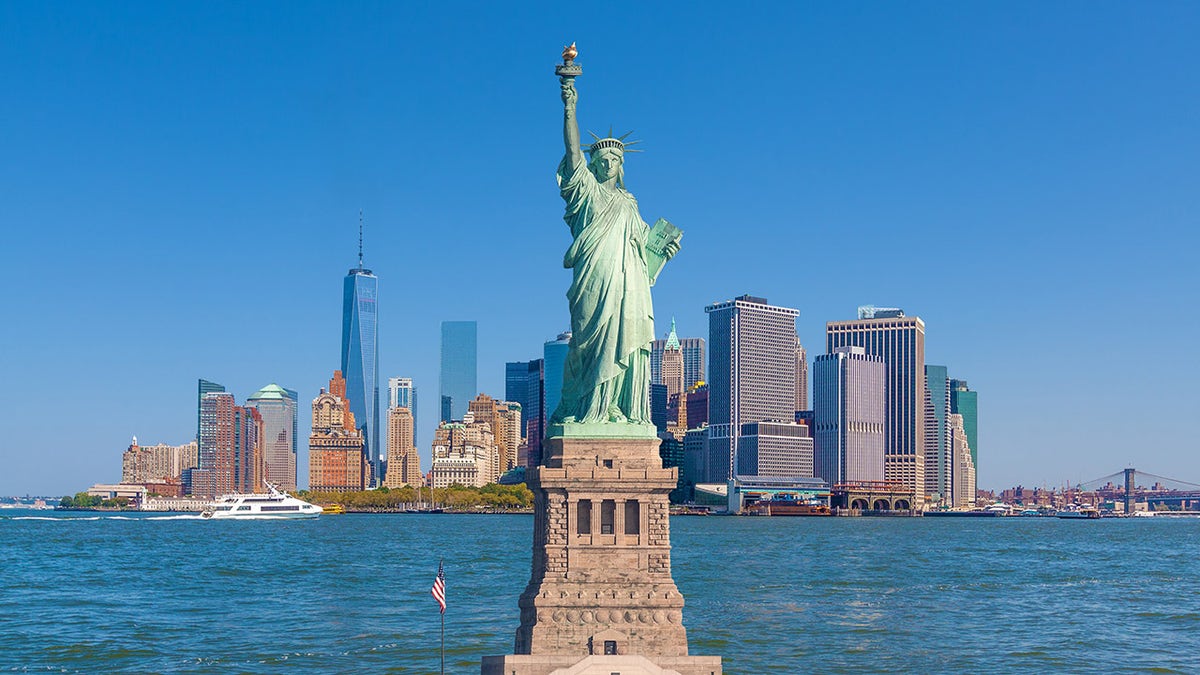
The poem “Lady Liberty” by Tato Laviera is one of the greatest works Laviera has made within his lifetime, expressing the common themes of liberty and equality consistently throughout the poem. The poem “Lady Liberty” is in the point of view of the Statue of Liberty. The poem starts off listing the great celebrations regarding the 4th of July and American independence, as said in “for liberty, your day filled in splendor, july fourth, new york harbor, nineteen eighty-six, midnight sky, fireworks splashing, heaven exploding into radiant bouquets,”. In 1986, the statue was closed for renovation due to weather eroding some sections of the statue. Afterwards, the poem begins to take a shift into the central theme of the poem.

Five facts you didn't know about the Statue of Liberty | Fox News

Since its construction, Lady Liberty has seen the cruel inequalities and injustices occurring throughout the United States such as massacres, slavery and racism, which are against the true meaning of the Statue of Liberty. The poem reflects on America’s brutal past, and how since the Declaration of Independence and the American Constitution granted freedom and rights to all people, it severely excluded people of colour and women. The very concept of slavery existing within the United States broke down the statue, as Lady Liberty could only stand and watch what her nation was becoming. The poem describes Lady Liberty’s ugly fight and struggle for true freedom and unity among her peoples, and how America is seen internationally as a great and major power. However, within America, the people see the truth of it. The poem also highlights the difference between the different societal statuses and how unfair the current American society really is, and how America still retains problems within it that can easily be fixed, but would rather display its strength on the international stage, as seen in “if you touch me, touch ALL of my people who need attention and societal repair, give the tired and the poor the same attention, AMERICA, touch us ALL with liberty, touch us ALL with liberty,”.

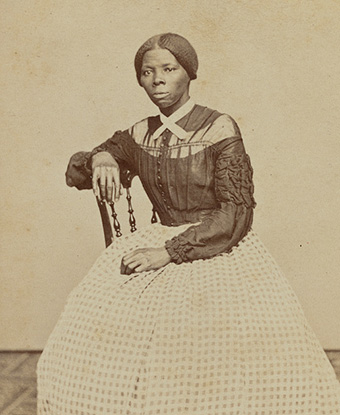
Throughout the poem, famous American abolitionists, presidents and other notable figures are mentioned, displaying the diversity of the American nation and how everyone’s contributions are seen as equal and true. In goes into depth regarding the figures’ accomplishments and achievements, which glorifies the Statue of Liberty and how it is MEANT to be a beacon of peace, prosperity and unity. Near the end of the poem, the celebrations of July 4th are again mentioned to symbolize that we can only truly celebrate American freedom once all of our internal struggles cease to exist.Harriet Tubman (U.S. National Park Service)

My personal opinion about the poem is one of approval. The United States of America is the world’s strongest superpower, and with all of the resources it expends in military budget, invasions, and foreign aid, it seems more than capable to help solve discrimination within the country and help the people who are poor and starving. The Statue of Liberty is a monument for all people. It was built to commemorate American freedom and the right of man, but those rights were not given for a very long time. Tato Laviera’s work of utilizing Lady Liberty as a way to display American injustice was a great way to symbolize the true meaning of freedom. “Lady Liberty” helps readers understand Laviera’s points and how the world still has a ways to go. Using weather to symbolize how Lady Liberty must be renovated due to the amount of inequality she has suffered truly made me understand Laviera’s point more.  It is true that there are many groups and individuals around the world who greatly suffer from basic needs not being met. Additionally, I found it shockingly surprising that these problems still exist even though our world has advanced so much and we still fail to solve these issues despite having the resources to do so. While reading this poem, I deeply pondered on why a large portion of the world still has basic needs which are not met. The answer I came up with was selfishness. If the world were to come together and attempt to solve these detrimental problems, we would easily be able to come up with a solution. 

What is Poverty? | Definition of Poverty | World Vision Canada

A poem similar to Laviera’s “Lady Liberty” would be the poem “Everyday We Get More Illegal” by Juan Felipe Herrera. This poem describes the condition of new immigrants coming to a foreign land, and I could draw a connection between Laviera’s poem and Herrera’s poem. New immigrants coming to a new land, feeling alienated from the rest of the population. This somewhat describes how liberty has not touched them yet. The immigrants come to the United States for a better life, however oftentimes they are met with new challenges they have never faced, such as racism or discriminatory acts, which still occur to this day. However, as immigrants become more comfortable to the societal values and traditions of the land, they become more acquainted with how American society revolves, as said in Herrera’s poem, “every day this changes a little”. In contrast to Laviera’s poem, it seems as if not much has changed in American, and even global society. People are still poor, there are millions starving and thirsty, and the world continues to withhold their resources.

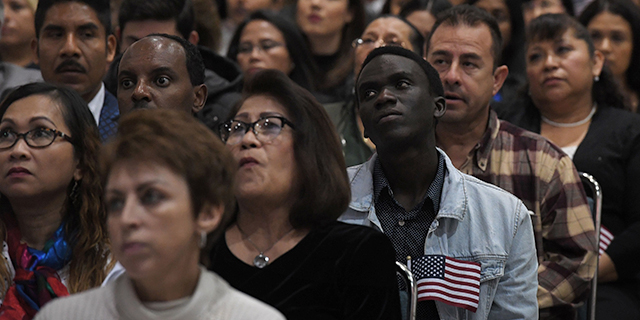
Key findings about U.S. immigrants | Pew Research Center

In conclusion, Laviera’s poem “Lady Liberty” is a fine asset to poetry as it describes the horrible conditions people must face and live through on a daily basis. Lady Liberty only wants to bring people  liberty once everyone has been touched by liberty and freedom, united by the American flag. When this occurs, only then can people truly celebrate the 4th of July.


Images
1. https://www.poverty-inequality.com/

2. https://www.foxnews.com/us/five-facts-didnt-know-statue-liberty

3. https://www.nps.gov/people/harriet-tubman.htm

4. https://www.worldvision.ca/stories/child-sponsorship/what-is-poverty

5. https://www.pewresearch.org/fact-tank/2020/08/20/key-findings-about-u-s-immigrants/


The Chains that Bind – The restriction of Humanity

The Chains that Bind – The restriction of Humanity

“Everyday we get more illegal”, by Juan Felipe Herrera, was a very interesting read and covered a topic I have heard a lot about but honestly haven’t thought much of before. Initially, I was confused when reading, the way it was written wasn’t like anything I’d seen before, so I had to re-read the poem a number of times before I began to truly understand what it meant.

I believe this poem represents the ability that people have to assign and take away the “humanness” from others. “Husband with the son the wife & the daughter who married a citizen they stay behind broken slashed”.

This line portrays the meaning quite well. The husband, the son, and the mother are separated from the daughter. The daughter who married a citizen is given her rights and freedoms, but her family is left behind. Everyone deserves equality, but in reality, only certain people have that privilege, which is the truth that Juan Felipe Herrera wanted to convey and let people know about. 

—————————————————————————————————————————————————

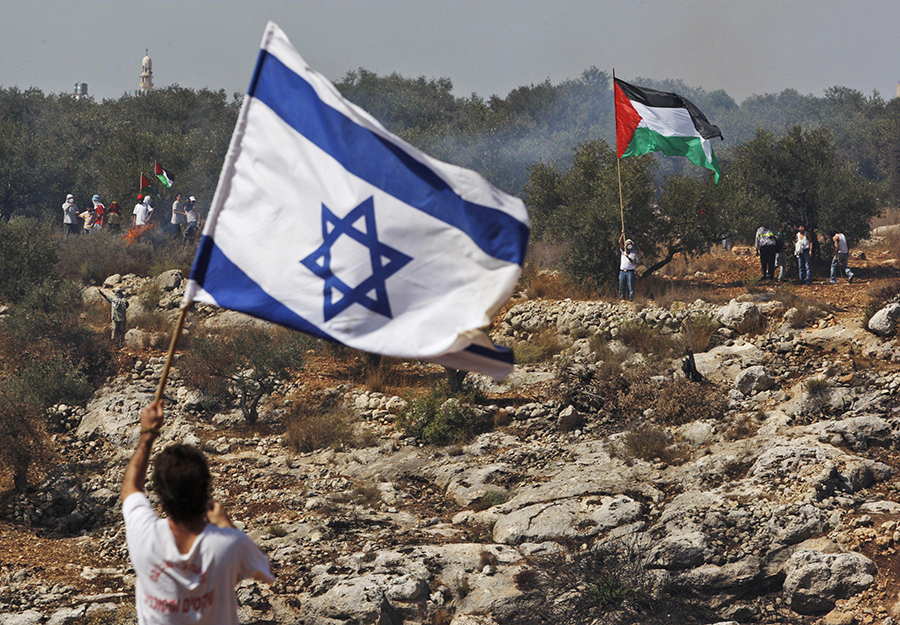
The Israeli-Palestinian conflict has been a long-running and highly contentious battle for sovereignty that has lasted for over 74 years. It’s a really messed up situation that is happening over there, and any statements about it could rile up a large number of people. “We Shoot Children Too, Don’t We”, by Dan Almagor is one work that has likely done exactly that.

Dan comments on his own people’s horrible treatment of Palestinians. He recognizes that Palestinians are just like everyone else: they seek independence and wish to live in peace rather than throw stones at military personnel, and they seek freedom just like the Israelis did so many decades ago.

It just seems that the need for control and national pride blinds many people into committing crimes against others.

I thought this poem was an incredibly powerful statement: conflict and chaos will only destroy a country; for it to survive, it must maintain its sense of humanity. The two sides don’t have to be friends, but they certainly don’t have to be enemies. It may be easier said than done, but people just have to live and let live. Despite all that has been said, I don’t see this conflict ending any time soon. It’ll forever be a stain on human history, but that isn’t surprising because this world is far from clean.

Poetry Seminar Responses

The Land of The Free” – Response to Let America Be America Again by Langston Hughes

Is America Really the Land of the Free? | Redefy Stories

Photo Link: https://www.redefy.org/stories/is-america-really-the-land-of-the-free

America. The land of the free.

That is what we set out to be.

But the American dream was an American nightmare

It turned out to be a nightmare, indeed

We pledge allegiance to the flag

We pledge liberty for all

But where was that pledge

When you watched us fall?

The only stars we saw in the sky were on the flag

Of the country that imprisoned us

They bruised and beat down all of our own

How did we call this our home?

Why do we call this our home?

It is our home as much as it is yours.

Our blood and our tears watered the crops

Filled the rivers, stained the streams

That sustained this so-called land of the free

But this land of the free did not sustain me

The land of the free. What does that mean?

And why can’t those called the free include me?

What was my crime that caused me to be chained?

Was I guilty of being? Guilty of breathing?

Nobody chose to stand up for me. 

But now I ask you to stand up with me.

With all for freedom comes freedom for all

A true freedom that lasts. A freedom that matters.

From the mountaintop to the big city

From the Great Plains to great rivers

Regardless of culture, race, or colour

From the rich to the poor

An America where everyone can be free. That is all I ask for.

This is a poem responding to the poem “Let America Be America Again” by Langston Hughes. My response starts off by introducing this notion of America being the land of the free. However, without naming a particular group, the narrator starts introducing the idea that it is not truly free. Much like the poem I was responding to, I decided to not assign an ethnicity or minority to the narrator in order to keep it relatable for all of the oppressed.

“The Same” – Response to We Shoot Children Too, Don’t We by Dan Almagor

Here's What Plan B in the Middle East Should Look Like | The Washington  Institute

Photo Link: https://www.washingtoninstitute.org/policy-analysis/heres-what-plan-b-middle-east-should-look

We are the same. We are all the same.

We bleed, sweat, and breathe same.

The difference is we’re better simply because we are

We have the right, it’s our duty.

But what divine being gave us the right,

who, what, gave us the right

to laugh at their shrieks, to their screams,

are we really defending when we do these things?

Why do we raise our weapons against the weaponless?

This is not right.

And now we teach children to take up our fight.

Is this right? Is it not wrong?

That we teach ours to shoot theirs for singing their nation’s song?

Why do we teach them to throw stones and bombs at others?

They should throw stones to skip along the river

where now blood flows, human crimson streams

which carry their dead’s broken dreams

The dead; men, women, and children who lived.

Do you think our actions can be forgived?

When people die, children cry

but why don’t we cry when children die?

This is a poem responding to the poem “We Shoot Children Too, Don’t We”. This was a very impactful poem showing the sense of humanity lost in the conflict ensuing between Israel and Palestine. Criticizing Israel’s actions against the people of Palestine, the poet demonstrates that we are all human. Through my poem, I attempt to encapsulate the same basic principle; we are all human and deserve to be treated as such.

Response to Barbie Doll Poem

Response to Barbie Doll Poem

The feeling of not belonging in.

The poem Barbie Doll by Marge Piercy addresses an issue that lives and grows in our society. It reminded me the feeling of how trying to fit in a certain group of people may not be possible no matter what or how you try. In the poem, the poet tells a story of a young girl who is faced with society’s expectations. As she is growing up in school, her classmates judge her flaws of her looks. These judgements glue into the girl’s mind forever which drove her to make poor decisions to try to fit in. Ultimately the poor decision making led to her own suicide.

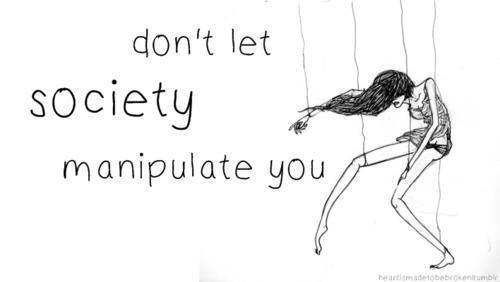
This poem highlights the problems of society’s expectations and judgement on other people. The toys the girl is presented with at the beginning like “dolls that did pee-pee, miniature GE stoves and irons, and wee lipsticks the colour of cherry candy.” These toys represented the stereotypical toys for girls that puts the intention that society wants women to be able to cook or look pretty. But in our modern society, we should not be forced upon us stereotypical roles and appearances when everyone should have the freedom to pursue what they desire. This same problem can be reflected on men where they should stereotypically always act tough or be self-dependent. Continuing on, the young girl hits puberty and receives an insult of having a big nose and fat legs. This insult becomes imbedded into her mind which influences her to change her body. Even after trying to make herself look as pretty as possible society still only saw the flaws in her resulting in her own suicide. The interesting way that modern society seems to just not accept certain people makes it from the equality that we want. The worst part was that the girl was not recognized for her beauty until she ultimately takes her own life. That addresses the problem that many individuals may not view something in a different way until something that greatly affects one’s life happens.

As a male individual myself I have not experienced the same stereotypical expectations as women so I can not completely relate but I have felt the pain of not belonging into a group. In some situations in my life trying to fit in certain groups feels sort of impossible as they just will not accept a certain aspect to you. I have known myself to be sometimes a weird person to converse with, which results in the fact that I probably will not be accepted into certain groups no matter how funny, normal, or quiet I am. Which relates back to a problem of the poem about how certain people will only point out the flaws of a person to not an extreme extent. One insult may stick in a person’s head forever. This makes it so important that we practice being kind to others or else we might find those we love to disappear.

References:
Featured Image: https://www.psychologytoday.com/sites/default/files/styles/article-inline-half/public/blogs/30123/2013/10/135639-135542.jpg?itok=VEHGKHP_
Society Manipulate Image: https://www.rvcj.com/wp-content/uploads/2016/01/society-expectations.jpg