To Live In Truth

To Live In Truth

Speak your mind, even if your voice shakes.” —Unknown

Pleasantville, directed by Gary Ross, is a film that explores the conflict between living true to one’s self or choosing to obediently conform with the rest of society. One character who especially experiences this conflict is Bud’s mother, Betty Parker. When Better Parker reveals the color on her face to Bud, she expresses her fear and worries about being unable to appear the same way as the rest of society does. Bud comforts his mother from this thought by helping her apply makeup to her face to hide her true colors—to appear “normal” to society. It was only after her encounter with Bill Johnson, a man who works with Bud at the Soda shop, that she learned to accept her newfound sense of “self”. In proof of this, Betty refuses to hide her face away with makeup, refuses to conform with the ideal image society wants, and instead, openly exposes her true face to the world.

Pleasantville movie review & film summary (1998) | Roger Ebert

In my younger years, I struggled to accept myself for who I am. I never allowed myself to truthfully open up to people about my interests, opinions, hobbies, or anything regarding my personal life, in front of my classmates. Rather than opening up, I observed the way others my age would behave, how they reacted to certain topics, what things they despised, and what things they loved. Through these observations, I created a version of myself that would satisfy all of my peers and blend in with the rest. Call it being fake—but this was my way of protecting myself from getting hurt by the judgment and the criticism of others.

Living this way was severely exhausting, as one could imagine. For five whole days and seven hours straight, I would switch my personality to be liked by classmates and teachers. It would be a constant rinse and repeat for the next 12 months, maybe even further, in years. Breaking this cycle was difficult as it had become something I do naturally. However, when this cycle finally broke, I had already surrounded myself with wonderful friends that taught me that being true to myself isn’t as scary, or painful, as I had initially thought.Is it Judgement or Concern?

But now that I live life in truth to myself, I am more susceptible to being judged, criticized, and hurt by other people. It’s an inevitable truth that I had tried so hard to avoid as a young girl. However, similar to Betty and her close bond with Mr. Johnson, I learned that I can lean on trusted friends when I feel hurt, lost, or afraid, from conflicting interactions between my desire to conform and my desire to stay true to who I am.

It’s difficult to choose which side to live by. If you choose to live a life that obeys the ideal, you can interact with others freely; no need to worry if you’ll fit in, no need to worry if you’ll be alone, and no need to worry about being judged. Living life by the ideal gives so many benefits, in sacrifice for being unique, and living truly. In contrast, living a life where you feel true to yourself, comes at the price of potential judgment, pain, and loneliness. As you live uniquely, it will be much more difficult to find people who can relate with you and are willing to continue to interact with you. If I were to say something minor and harmless as an example, like: “I prefer cats over dogs”, people’s viewpoint toward me would change. There’s no doubt about that. Some people may have a strong preference for something, and will now avoid me after learning our preferences are significantly different. I may even be considered odd in their eyes, now. And this is especially true as, in our modern society, we have social media to circulate and spread world trends. But at least, by living as someone “real”, I can feel a sense of happiness, just by being true.

Taking into consideration both sides, I believe living a life of truth is far greater than living a life of conformity. By living a true life, you will at least feel liberated, just as Betty Parker feels when she accepts her true self.

Untitled | Freedom photography, Freedom pictures, Vision board photos


Cites:

  • https://www.pinterest.ca/pin/57069120252187106/
  • https://www.rogerebert.com/reviews/pleasantville-1998

Conform or Follow Desire, A Daring Choice

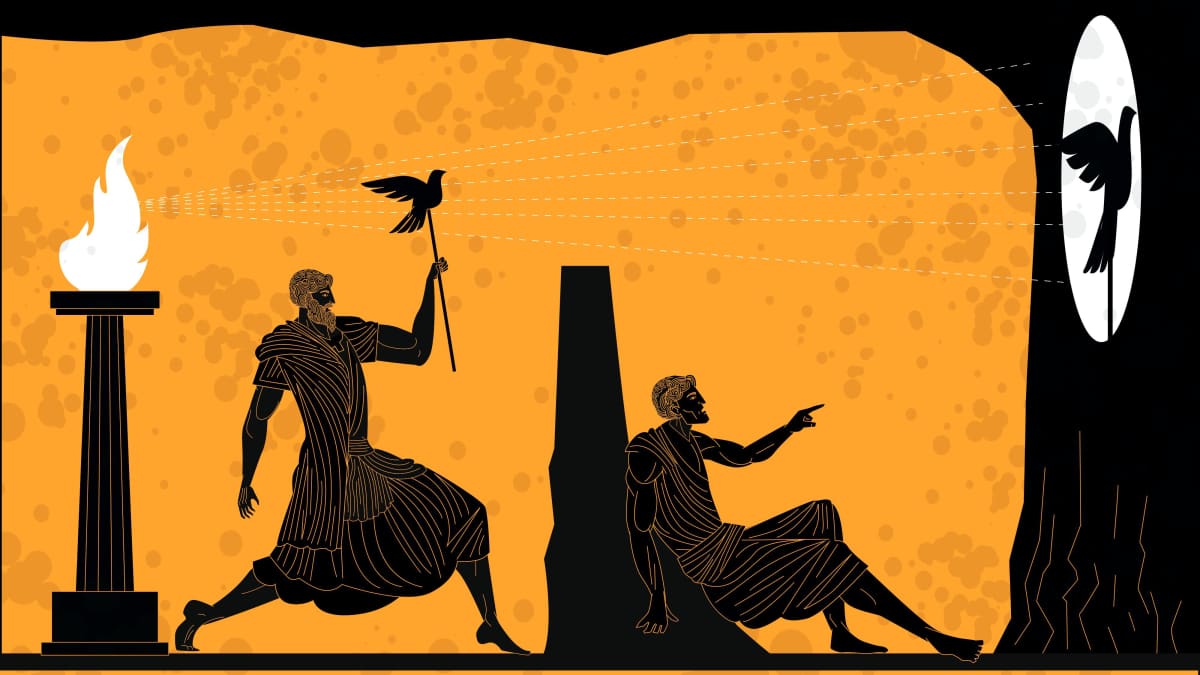
The themes of pursuing desires and having to conform explored in both Pleasantville and The Allegory of the Cave are ultimately about accepting change and embracing the unknown. In the 1998 film Pleasantville directed by Gary Ross, the themes of pursuing desires and having to conform are heavily explored through the lenses of two siblings, David and Jennifer, who are transported into a 1950’s black and white television show. This television show, Pleasantville, is a perfect representation of conformity, as it is a world where everything is the same and everyone is content with society. On the other hand, David and Jennifer struggle to fit into this society and ultimately change the lives of Pleasantville’s citizens, by introducing colour and personal desires into their lives. This occurs because the siblings let their personal desires alter the plot of the show with instances such as Mary Sue (Jennifer) committing promiscuous acts with Skip Martin, and Bud (David) showing Bill Johnson an art book filled with colour he has never seen before. Decisions like these lead to the citizens finding personal desires within themselves, and turning back the laws of conformity that citizens had to originally live by.  This conflict between conformity and pursuing desires can be seen in The Allegory of the Cave as well. The Allegory of the cave comes from Plato’s book of philosophical fiction, The Republic, where Socrates tells this allegory to his follower Glaucon. In this story, prisoners are chained in a cave and can only see the shadows of the objects that pass by. The prisoners accept the shadows as reality, as this is all they know. However, when one prisoner is released, he is able to see the truth and understand that the shadows were merely an illusion. This prisoner then must make the decision to either stay in the cave and accept the shadows as reality or venture out and pursue knowledge.


In Pleasantville, David and Jennifer are the catalysts of change as they introduce the citizens to change with colour and desire. Similarly, in The Allegory of the Cave, the prisoner must make the decision to either stay in the cave and accept the shadows as reality or explore the unknown and venture out. In both works, the characters are presented with a difficult choice between conformity and pursuing their desires. They must decide whether to stay in their comfort zones or take a risk and explore a new world. Ultimately, the characters must accept change and embrace the unknown in order to find true enlightenment. This is a lesson that can be applied to our own lives as well, as we must all make the decision to either conform or pursue our desires. 


Links:

– Bedard, M., Mike Bedard                                                                                                                                                                            Mike Bedard is a graduate of UCLA. He’s a screenwriter based out of Los , & Mike Bedard is a graduate of UCLA. He’s a screenwriter based out of Los Angeles who’s written several short films as well as sketch comedy for various theaters around LA. He’s also written articles for sites like Cracked and Ranker. (2022, May 16). Watch: Plato’s allegory of the cave & the films it inspired. StudioBinder. https://www.studiobinder.com/blog/platos-allegory-of-the-cave/

– Wikimedia Foundation. (2023, October 17). Pleasantville (film). Wikipedia. https://en.wikipedia.org/wiki/Pleasantville_(film)


Embracing Truth or Idealism: A Path to Deeper Understanding

Embracing Truth or Idealism: A Path to Deeper Understanding

Plato’s Allegory of “The Cave” closely resembles the conflict of idealism and truth displayed in the 1998 film Pleasantville, directed by Gary Ross. The overarching theme of “The Cave” is that when an individual gains enlightenment, such as possessing knowledge of a world far more advanced than the current one, others without such knowledge won’t be able to comprehend such wonders. Instead, they’ll regard the enlightened as the odd-one-out, and stick to a more conservative mindset. This theme was mainly portrayed in Pleasantville, as well. 

Realism and Idealism in Balance - Pictured As Words Realism, Idealism and Yin Yang Symbol, To Show Harmony between Realism and Stock Illustration - Illustration of equal, concept: 171544093

This movie detailed the importance change between the 1990’s and the 1950’s. Two teenage siblings, known for being polar opposites, get sucked into the universe of Pleasantville, a show that takes places in the 1950’s. Since this “perfect reality” can’t compare to their previous life, they started to change people and characteristics around them by introducing foreign methods of pleasure. For example, the colour red starts to appear once people around them indulge in romance, and books become full of knowledge. As people began to witness knowledge that exceeded their current boundaries, some strived to learn, such as Mr. Henderson fearlessly displaying his love for art on his store’s windows. Mr. Henderson and others “gained colour”, which is symbolized in this movie for acting out of character, therefore learning about themselves even more. The people who had gained colour in the film, and the ones dragged out of the Cave in Plato’s Allegory parallel with each other, due to their enlightenment. In Plato’s Allegory, the first one dragged out of the cave experience firsthand what reality is, over its cheap imitation. Instead of regarding the shadows of the objects as their true form, they see for themselves the errors of their thinking. As a result, they’ll be engulfed in pain, anguish, or even anger by not being truth over idealism. This phenomenon is shown in the film, as well, symbolized by Betty’s make up. Once Betty gains colour through pleasure, she’s ultimately ashamed of herself to the extent that she can’t even see her husband. However, to cope with her anguish, she hides her colour by applying black and white make-up. This shows that witnessing the truth over our idealist mindset, at first troubles an individual, because they’re previous thinking won’t help them accept who they are. For example in Pleasantville, having colour is looked down upon as a sort of disease, and in the Allegory of “The Cave”, the first prisoner to be liberated is looked down upon by his fellow prison mates for having such enlightened knowledge.

Although they have learned something that supersedes their prior knowledge, the authorities in Pleasantville have had the exact oppositeFreedom in the Face of Sophism and Mauvaise Foi in Plato's “Allegory of the Cave” - HubPages reaction, thus paralleling with the prisoners stuck in the cave. In Pleasantville, the mayor set in place a Law of Conduct that marginalized anyone who supported the change that the town experienced, such as new music, Lover’s lane, and even painting. In Plato’s Allegory, the prisoners stuck in their false reality of the Cave, weren’t able to comprehend such complex wonders the enlightened spoke of, thus paralleling with the authorities of Pleasantville. They, too, weren’t able to understand the citizens’ love for passion and change that they strived to revive their old system. The majority of people in both the film and allegory chose to conform to their society’s popular belief known as idealism. This resulted in them looking down upon those who became familiar with the truth, or the reality of their erroneous ways. Choosing to conform to idealism over truth is often the case when an individual refuses to accept enlightenment. But both the film and allegory show that those who endure the pain of becoming open-minded start to discard their rigid thinking, and accept the truth. Oftentimes, a human’s refusal to believe another perspective, also, occurs when they can’t accept the truth. In fact, it has happened to me several times. 

Alan Russell on X: "Cartoon - Unpleasant Truths vs. Comforting Lies https://t.co/EPl1g0icZs via @wordpressdotcom https://t.co/CSVmLMyiwj" / X

Perhaps, the hardest truth I’ve had to swallow was accepting that I wasn’t the best fighter in my karate division. This summer I was selected to compete in the 11th International WUKF karate tournament. And with karate being my pride, I believed I was better than everyone else, simply because I worked out 3 hours a day and beat most of the people in my club. In my idealist world, I was steadfast on believing that no individual could even pose a challenge to my might. Until I actually witnessed the wrath of every country, except for mine. Everyone’s fighting prowess was much more refined and smoother than mine. Kicks and tactics that I haven’t even thought of were displayed with such confidence, that overshone anything I could do. In relation to “The Cave”, me training back in Canada with my teammates paralleled to a prisoner in the Cave. And once I flew out to Scotland to compete, then I was “liberated from my imprisonment” only to witness the reality of my skills. Before I went to compete, I believed I would pull off an amazing gold medal out of sixty victory-hungry kids. Not only did I not receive a medal, but I got 5th place. My grief over my subpar work ethic, and shame over losing, thus, parallel with the anguish the prisoner must’ve felt by witnessing reality over mere shadows. And the humiliation I felt from losing, given to me by my parents, parallels with what the prisoner received from his fellow prison mates. 

Meditating Person gaining Enlightenment ... | Stock Video | Pond5

Gaining enlightenment is beneficial for finding truth, but society often conforms to idealism. Instead of pursuing reality, they’d much rather live by lying to themselves about how perfect their life is. In my case, I tried to hold on to my belief that I was the best without acknowledging the work ethic of others. With Pleasantville, it took a whole courtroom session to prove that expressing emotion and “having colour” isn’t a disease. And in Plato’s Allegory, the liberated prisoner wasn’t able to convince the other prisoner’s to witness such wonders of the outside world. Therefore, it shows that although enlightenment may shed light on the truth, it’s always an individual’s choice to pick which one to follow. Oftentimes, individual choose the truth, after realizing the flaws of their idealist world.


citations:

https://www.dreamstime.com/illustration/idealism.html

https://www.thoughtco.com/the-allegory-of-the-cave-120330

https://www.linkedin.com/pulse/comforting-lies-vs-unpleasant-truths-rebecca-johnson


Pleasantville Critical Response

Pleasantville Critical Response

Set in the 1950s, Pleasantville is portrayed as idyllic and perfect, with no knowledge or experience of the real world outside of their town. However, as David and Jennifer introduce new ideas and ways of thinking to the town, it leads to a division between traditionalists and modernists.
The film’s central message is about the power of knowledge and individuality and how they can transform society. Essentially, Pleasantville is a metaphor for a society that is fearful of change and the unknown, and it portrays the dangers of conformity and ignorance. The town’s residents fear the changes brought by the introduction of colour representing individuality. The film suggests that knowledge and understanding are essential in combating fear and prejudice and that society must be open to change to progress.


Pleasantville also raises questions about the role of media in shaping our perceptions of the world. The town’s inhabitants are heavily influenced by the black-and-white television show, which perpetuates a narrow view of the world and reinforces the strict rules placed on their society. The introduction of colour and individuality challenges this view and opens up new possibilities for the town’s citizens. The film suggests that media can be a force for both good and bad and that it is important to question the messages we receive from it rather than always absorb them.

Furthermore, the film is also a commentary on gender roles and stereotypes in society. In Pleasantville, women are bound to traditional roles such as homemakers and are expected to conform to a certain standard of behaviour. However, as the film progresses, female characters begin to assert their independence and challenge these stereotypes and roles placed upon them. The film portrays women as spokespeople of change and suggests that they have the power to challenge and transform societal norms.

In conclusion, Pleasantville is a thought-provoking and allegorical film that explores important themes such as societal change, media influence, and gender roles. The film’s message about the power of knowledge and individuality to transform society is as relevant today as it was in the 1950s. Pleasantville encourages us to question the state of our society and to be open to change to progress.


Citations:

(Featured) Image 1 –  Click here

Image 2 – Click here

Image 3 – Click here

A Taste of Freedom

A Taste of Freedom

Prompt: Discuss the idea(s) developed by the text creator in your chosen text about the conflict between pursuing a personal desire and choosing to conform


“Silence hangs over us, but it is a different kind of silence, one that lets me breathe. I have nightmares about the other kind, the silence of when Papa was alive.” – Kambili from Purple Hibiscus


Purple Hibiscus


Chimamanda Ngozi Adichie | Journal by getAbstract
Author of Purple Hibiscus, Chimamanda Ngozi Adichie


Chimamanda Ngozi Adichie’s debut novel “Purple Hibiscus” won the Commonwealth Writers’ Prize. Purple Hibiscus is well-liked because of the many themes discovered throughout the storyline. The theme that stood out the most to me was the conflict between pursuing a personal desire and choosing to conform.


How to Tell If Someone Is Lying: 10 Tells and Clues (Ranked in Ascending  Order of Reliability) | Inc.com
A perfect family or a perfect act?

Purple Hibiscus is narrated by 15-year-old Kambili Achike, the protagonist of the novel. Kambili is the daughter of a wealthy man, Eugene, who was in charge of the “Standard” newspaper, as well as a factory. Her brother, Jaja, was in school just like Kambili. Her mother, Beatrice, was a stay-at-home mother. They were known to be a respectable, wealthy, traditional, catholic, close-to-perfect family. But were they? Behind the safe, tall walls of the mansion, where the Achike family resided, anything short of perfection was met with abusive consequences from Eugene (Kambili’s father). In the country Nigeria, a coup occurs and a military leader comes to power. So what exactly makes this novel different from others? Even if Kambili fears her father, she still idolizes him, she continues to respect him, she craves his affection, and she pursues his expectations. But what happens when you expose children who have been subjected to abuse and restriction their entire life to the notion of freedom? 


Insight Five: Love and Fear
A representation of what Kambili’s father taught her love is. His love is characterized by the obedience of his family.

Kambili’s desires started when her father surprisingly let her and Jaja (her brother) take a trip to her Aunt (Eugene’s sister), Ifeoma. The purpose of this trip was to go to Aokpe and try to see The Virgin Mary. Upon their arrival at their house, Kamibli and Jaja observe the differences between their household and Aunty Ifeoma’s household. Though poor, Ifeoma always encouraged her children to challenge, express and laugh. Kambili was to hold her tongue unless necessary to speak, and she avoided social interaction because of this. Ifeoma’s children are free to interact with their grandfather (Eugene’s father), Papa Nnukuwu, leisurely. Kambili and Jaja are limited in contact with their grandfather because he was a pagan that did not believe in the Catholic faith. The Achike family is built on authoritarianism and fear whilst Ifeoma’s was built on love and respect. 


Freedom of thought is under attack – here's how to save your mind
Will Kambili be freed from her father’s brainwashing?


The schedules that Kambili and Jaja were to follow whilst they were there (assigned by their father) were immediately scrapped by Aunty Ifeoma. She brought Papa Nnukwu to her home, and the children grew accustomed to him. They were even expected to express themselves. Their first taste of freedom offered lots of happiness. It also resulted in the Achike children discovering their personal desire. They weren’t to even think about their individualistic ambitions back home, so they never gained the chance to explore their aspirations. Kambili’s desire was concentrated on the first man she had feelings for, Father Amadi.


Conformity is the jailer of freedom and the enemy of growth – John Fitzgerald Kennedy


5. Freedom - Canamorthodox: Finding Freedom in Christianity.
Finding freedom from conformity through choosing your personal desires

Father Amadi was a young and handsome Catholic priest that was close to Ifeoma and her children. One day during Kambili’s visit, he decides to dine with them. Kambili is immediately entranced by Father Amadi’s voice, which she describes as melodious. Throughout their encounters, Father Amadi changes Kambili. He introduces Kambili to personal desire and pushes her to start disobeying her father. He teaches her to drive against the confines she’s always been bound to. He teaches her to remain loyal to Catholicism whilst also appreciating herself and her ambitions. He deters her from the propriety she had always been turned to. He was her first step to breaking away from that conformity she’d been so accustomed to.


She began to see that her grandfather’s religion liberated him, whilst hers trapped and silenced her. She begins to realize how pleasantly her cousins lived their lives, though they did not have much. She started to recognize how contended she and her brother had become in the short time they stayed there. 


Her personal desires evolved with her stay at Aunty Ifeoma’s. She stood up to her cousin who mistreated her. She wore lipstick.A Freedom To Be, To Do.": Adichie's Purple Hibiscus She sang Igbo songs. She started to take pride in her Nigerian origins, instead of the white supremacy her father constantly pushed upon her. She fell in love with Father Amadi. She became close with her grandfather. And she started to defy her father. 


The man she had sought approval from her entire life, faced her with condemnation, yet she continued to push for what she believed in and what she loved. She was no longer pushed around by her father’s toxic, manipulative tactics nor by the pressure of conformity or propriety. She continued to long for what her father strictly prohibited.


This marks the character development and the religious growth that Kambili underwent. She went from a girl that would give up anything for her father’s love, to a woman that chose to no longer deal with the oppression. The fact is, she realized that her father only gave her his love and approval when she conformed to his wants and expectations. When she didn’t, she was only met with his malice and hostility. Kambili realized that her father was allowed to have these personal desires of imposing these impractical standards on his family, whilst she was to conform, conform, and conform with anything he anticipated to receive from her.


Kambili’s enlightenment was initiated by Papa Nwukwu’s spirituality filled with delight, Father Amadi’s encouragement, and Kambili’s growing feelings of resentment towards her father. And so, the purple hibiscus (represents freedom) finally blooms, just as she and her family have. 


Read more

A Choice of Pursuing Desires

A Choice of Pursuing Desires

The roughness of pursuing a dream or meeting expectations can leave a person flushed with exhaustion. The anxiety of avoiding disappointing others might lead to a lot of confusion that one doesn’t know how to handle. To deal with this, one can either run away from their problem or face it head-on. Gulab Bibi, the protagonist of the short story, The Poison of the Blue Rose, is torn between pursuing a personal passion and choosing to comply. Through Gulab Bibi’s experiences, Yasmin Marri demonstrates that when an uncertain individual wish to pursue a personal desire, they may choose to disappoint or adhere to society, resulting in the individual experiencing inner conflict.

Choosing between loyalty and pursuing a personal ambition might leave a person feeling overwhelmed. Doubts and disagreements develop as a result of this. Gulab Bibi falls in love with Rafiq, but her parents have already arranged for her to marry someone else. The narrator reads the lines on her hand and tells her that Rafiq is her fate. Gulab Bibi is at a loss for what to do and is overcome with emotion as a result of this internal conflict. She is confronted with the truth that she cannot disappoint her parents, despite her heart’s desire. When a person’s fantasy is broken by an unfulfilling fact, they may clearly understand what is best for them and their future, even if they are unhappy at the time. Gulab Bibi must next make a decision that will determine whether or not she will be happy in the future.

Individuals may feel compelled to select the polar opposite of what they desire. Society’s pressure can change a person’s feelings and make them question if a decision is right or bad. Gulab Bibi decides not to marry Rafiq after being pressed by her parents. She seeks help in yearning to the narrator’s house months after their previous contact in order to rekindle hope. She wears her wedding gown and is ready to marry, yet she still has contradictions. Despite the narrator’s efforts to relieve her of the burden, she informs the narrator that she will never forget Rafiq. The likelihood of regret is a crucial aspect that comes into play at this point in an individual’s decision-making process. The fear of not being satisfied in the future as a result of a previous decision might keep a person yearning for redemption. The fear of making the wrong decision can follow a person until they make it, and sometimes even after they do it. Gulab Bibi, on the other hand, trusts the narrator to lead her to a life without regrets.

Eventually, one must accept their faith because it is the only way to move forward in life. Gulab Bibi’s questions regarding the narrator’s prior love life triggered numerous memories that the narrator had previously suppressed, demonstrating that no one can truly escape their past because it will always be there no matter how hard they try to forget it. The conflict is handed on to the narrator at this point in the story. The concept of the blue rose is introduced to the readers in Wonders about the Past. It represents poison and the agony that can be inflicted by one’s past mistakes. Gulab Bibi recognized that when faced with the choice of pursuing a passion or conforming to expectations, the most sensible solution was to conform because it was for her own good. Even though she desired the one thing she couldn’t have, true love, the notion of disappointment grew excruciating.

Citations

https://www.linkedin.com/pulse/anatomy-brave-decisions-saurabh-singhal

https://medicalxpress.com/news/2018-12-conform-social-norm-people.html

https://www.flickr.com/photos/41087279@N00/327746344

One From Many

One From Many

“When individuals lack self identity, they adhere to social norms and begin to conform, resulting in a stronger collective identity and a loss of individuality. “

Identity plays an important role in individuals lives. Through knowledge and experience, identities begin to form. An identity is a representation of who you are as a person or a group. This idea of identity reflects a person’s traits, likes and dislikes, values, and beliefs. Through years of growing old, many people base their identity off of their past experiences and history. But what happens when individuals have to decide from preserving their self identity or letting go of their individuality to fit in to homogenize with the local society around them? This often leads to a decision being made to fit into the community they are surrounded by. This foreshadows my thesis statement; When individuals lack self identity, they adhere to social norms and begin to conform, resulting in a stronger collective identity and a loss of individuality. Due to being around a certain group of people or a specific community, one may begin to conform because they feel like they can’t fit in. Through conforming towards a certain society, individuality may be lost. This is often the byproduct of homogenizing with society and an individual’s surroundings. As people grow, their identity grows with them: but when individuals lack individuality they become more susceptible to a greater force taking over their originality. The lack of a strong foundation of self identity can cause an individual to become attune to the people that surround them. This reflects the impacts of how individuals who do not have a strong sense of self character and personality, might go on to adhere towards larger more widespread identities. This is prevalent throughout many people’s lives. An indirect example of this is politics and the recent election. Individuals who do not hold a strong opinion on what they believe in often result in the vote of the more popular party. This portrays that individual conforming towards the greater identity as a whole. The loss of individuality can be caused by many factors but as seen throughout life, individuals who lack self identity often begin to adhere to social norms. Which results in a more interconnected and stronger collective identity.

I greatly relate to this thesis as it has played a significant role in my life. Growing up I have always been different. I looked different, spoke differently, and ate different foods. This is what made up my identity as an individual. Looking back at my past, I wasn’t the type of individual to fit in but was the one to stand out. My first four years of elementary school I had to fight my way through societal pressures to be able to keep my individuality alive. If I had not put extra effort to fight for my respect and character, I would have lost my self identity long ago. Looking back at my past, I can empathize with others who have not been able to hold on to their historical roots as it is not easy to create a strong identity by yourself. At one point I had seen myself letting go of my culture to fit into society. But instead of giving up my personality and unique characteristics, I pushed myself to stand up for my singularity and make a stance with my diverse beliefs and roots. I connect with this thesis because often it is easy to adhere to social norms instead of having to decide what one may want their future identity to look like. Through connecting through a collective identity, one may feel like they have less hardships. But as a trade off, they have lost their self identity and the traits which make them unique to society. I continue to actively hold onto my identity as without it I am like everyone else. It’s as if I were a red dot amongst a collage of black and white. My identity not only makes me stick out but also gives me confidence and courage to do things some individuals may consider dangerous and harmful. One must hold on to their values and beliefs before they fall into the hands of society’s norms through conforming. In order to prevent this; one must anchor themselves with their individuality before the wind of society blows them over.