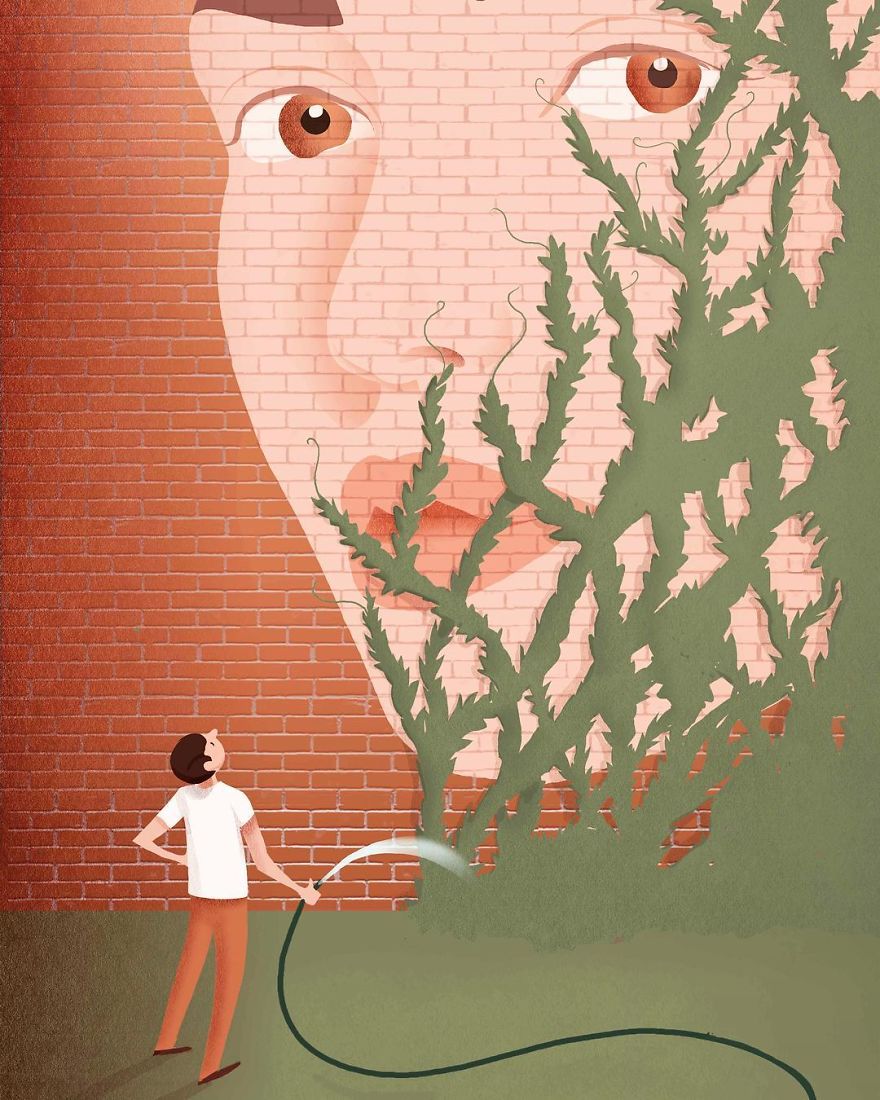
“School’s not a punishment. It’s the factory that makes useful men out of boys. Don’t you want to be like your father and brothers?.”
“Half a Day” quote response.
Journal 26
In the short story, “Half a day”, the title refers to the fundamental metaphorical implications of this story are a commentary on the human condition; in the classroom of life, a lifetime is merely “half a day.” The story also alluded to the life cycle, with the narrator passing from youth, middle age, and old age in a single day. In this blog, I’ll be explaining the quote and how the story relates to me.
The quote implies that his father’s description of the school, while intended as praise, reflects Mahfouz’s skepticism of not only the educational system but also the various organizations that monopolize our time in modern life. Mahfouz, who worked as a bureaucrat for many years, portrays school as a dehumanizing institution focused solely on generating people who are “useful” in society. He tacitly associates this tendency with industrialization and its requirement for an obedient labour force when he compares education to a factory. It’s also worth noting that the narrator’s father had to convince him that education isn’t a punishment; this image of punishment, when mixed with the narrator’s fear of being ejected from his home, harkens back to the Garden of Eden myth.
This story relates to me because the author discusses everyday events in an individual’s life and how time goes by in the blink of an. This reminds me of my first day of school and all the mixed emotions I was feeling excited, nervous but most importantly I was ready to finish this day and grow up so I can do adult stuff, who was I kidding this was one of the biggest mistakes I had made because I kept wishing to grow up, that I missed all the stuff I should have done as a kid like play grounders, hide and seek, tag and many more. Therefore this short story can be related to everybody, regardless of their background
CITATIONS
Dierdorff, E. (2020, January 30). Time Management is about more than life hacks. Harvard Business Review. Retrieved November 29, 2021, from https://hbr.org/2020/01/time-management-is-about-more-than-life-hacks.
Dierdorff, E. (2020, January 30). Time Management is about more than life hacks. Harvard Business Review. Retrieved November 29, 2021, from https://hbr.org/2020/01/time-management-is-about-more-than-life-hacks.
Journal 27 – Write about your first day of school in kindergarten. Did it become better or worse than anticipated?
Response to – Half a Day – Naguib Mahfouz
“It’s pretty scary to know how quickly time flies”
-James Wan
I’ve chosen this quote as it represents how time moves by in an instant, as a result so much can happen in what feels like just a few hours, in reality, years and or days have gone by. On my first day of school, I had mixed emotions, I was excited to meet new people but scared of leaving my parent’s side. My parents had driven me to school, we waited outside waiting to go in, while we were given a brief introduction. Eventually, the time had come it was time to go, leaving my parent’s side was the scariest part. As time progressed my first day got better, I got along with the other kids and made new friends, the day was spent getting to know each other. I didn’t expect my first day to go well, although it did go well and I enjoyed school. I’m in grade 11 now, this day feels as if it was yesterday, my transition from kindergarten to high school felt as if it happened in a day, in reality, it’s been many years. Progressively throughout the years school has gotten worse and a lot harder. In the short story Half a Day by Naguib Mahfouz, the idea of time moving very quickly in an individual’s life is highlighted throughout the story. The narrator started his first day of school, the boy is delighted with the new clothes he is wearing for the occasion, he is apprehensive about going to school. The boy walks to school while holding his father’s hand, occasionally asking why he must go, the narrator feels as if it’s a punishment. The father tells the boy, “today you truly begin living.” Eventually, school is over and the boy steps outside and his father is not there. The narrator finds that the street and surroundings have completely changed since the morning. He is unable to cross the street due to heavy traffic a, “young lad” offers to help him across, addressing him as “Grandpa”. The little boy has passed an entire lifetime in what seemed like only half a day, this is done to highlight how quickly time moves. The narrator had enjoyed his first day of school, as time progressed he realized school is bitter, in what seemed like half a day he became a Grandpa. A lot can happen in what seems like a short amount of time but in reality, could be years. This is highlighted through the contrast of the first day of school to the modern era in which the narrator now lives. As time passed for the boy it progressively got worse due to his realization of the dryness of school and how quickly time had gone by. The narrator would think of his first day of school as if it happened yesterday. I relate to this since my first day of school feels like it was yesterday at times as well. As I got older I felt like I hadn’t lived my life to the fullest since I dwell on the past and the first day of school till this day. Sometimes I still feel like a little boy, who had gotten older in what also seemed like a short amount of time, but in reality, was many years. The quote, “today you truly begin living”, said by the father stands out to me, although this is said, the little boy did not feel as if he started to truly live. The transition from school to a grandpa in such a “short” amount of time shows how his life was wasted instead. I also feel this way, I feel like I haven’t truly started to “live” yet, since all my time is spent thinking about the past rather than focusing on the present. In conclusion, so much can happen in what seems like it was yesterday but in reality, could be years.
Prompt: The power an individual has to create a meaningful life.
Meaning – having a serious, important, or useful quality or purpose.
In the short story, “The Cathedral”, Raymond Carver develops the idea that a meaningful life develops through the experience of having an epiphany and how, in the moment, the epiphany itself can occur when said individual has an encounter with someone or something that introduces qualities and concepts different to the individual’s worldview.
An epiphany, a concept best described as an striking internal realization, is something that can only truly happen subconsciously. It cannot be a planned experience, because the realization requires the individual to grasp something on the most personal level, one that cannot be described through words, but only taught through experiences that relate to the individual. This can be best found in the short story, “The Cathedral”. Near the end of “The Cathedral”, Raymond Carver shows the narrator, trying to explain a cathedral to Robert. As he fails to explain the utter complexity of a cathedral, Robert stops the narrator and asks him to draw it out–but instead, with Robert’s hand over his own. After doing this for a little bit, Robert asks the narrator to close his eyes while drawing. After doing so, the following exchange happens.
“Well?” He said. “Are you looking? …. I was in my house. I knew that. But I didn’t feel like I was inside anything. “It’s really something,” I said.
Throughout the Cathedral, the narrator takes time to bond with Robert, the blind man who is his guest. Initially, he is incredibly bigoted, believeing that blind peoiple can only be one way. As he connects with the blind man, he not only becomes more friendly with him, but also slowly understands his perspective. However, he is not able to do this fully. Instead, he only can understand him through analyzing his way of being. For example, the narrator analyzes the way Robert eats, smokes roaches, the colour of his eyes, and so forth. In simpler terms, he learns about Robert’s perspective through reasoning and observations. Now, this is helpful in learning more about Robert, but it does not give the narrator insight on Robert’s perspective on life. This all changes when he draws with Robert at the end of the story. Slowly but surely, the narrator gains a deeper, personal understanding of the world Robert lives in as he feels a sense of being present and absent at the same time. In drawing with Robert, the narrator experiences a whole new perspective of life without even hearing any verbal explanation or description of this view. In doing so, he has an epiphany, an internal realization. The epiphany of the narrator is designed to allow the reader to understand the change an individual’s life can have when they completely experience an epiphany. Even though the transformation in the narrator is not explicitly stated, as the quote concludes the story, the reader can infer from the former quotes describing the narrator’s life, that he has attained a new point of view. Raymond Carver includes, develops, and emphasizes the concept of an epiphany to bring attention to its significance when one is trying to develop a meaningful life. Readers can see “The Cathedral” compares the lives of the two men, displaying that one has a life of purpose and meaning, while the other is stuck in a world of mediocrity and boredom. The interaction between both characters and the aftermath of said interaction is then shown the latter individual, crossing over to the other side where the former individual is. In crossing over to that side, the individual filled with mediocrity gains meaning in their life.
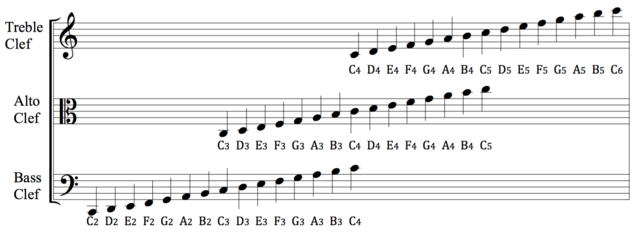
This particular connection displayed between epiphany and a meaningful life has occurred in my own experiences with school, home, and church music. In my music theory classes, I had many epiphanies when it came to my learning. I still remember having many “Ah-ha” moments when learning about how arpeggios work, or how transposition between different keys was done. But still, the greatest epiphany I had was when I finally understood the difference between the treble clef, bass clef, and alto clef. Similar to the narrator learning about the perspective of the blind man, each clef had a different perspective compared to the others. Unfortunately, this was tough for me to grasp. I had only learnt about the treble clef for so many years! To make matters worse, while the rest of the class understood the information and briskly moved on to the next topic, I sat in my seat with my head down, repeatedly reading the same paragraph regarding the topic over and over again. I had a clue to what it all meant, but not completely. I then decided to look at the grand staff(clef that includes all clefs), and play the music on my violin. All of a sudden, using the former knowledge I had, along with my violin, I figured it out! I was able to completely understand the work in a whole new light. In the midst of my joy and epiphany, I said,
“It makes sense!”
During my moment of epiphany, I found new value in the musical theory I was learning. This new found value added more meaning into my life, giving me understanding of the musical world. Like the argument Raymond Carver presented in “The Cathedral”, I too interacted with something that had qualities different to my perspective. In this situation, the bass clef and alto clef challenged my perspective, that being that there is only the treble clef. Having understood that the topic was different, I tried learning the topic in a way different from verbal instruction or written words, but rather through having the experience of playing my violin with the music. This different way of learning gave me an opportunity to experience epiphany. When I eventually did, the new concept enriched my musical life.
Journal Prompt: Discuss the significance of idealism and truth in an individual’s life
Having established a perpetual sense of comfort and security is considered to be the pinnacle of achievement in one’s life. An individual experiences a watered-down version of these sentiments whilst pursuing an idealized version of their given reality. During this pursuit, they avoid the truth for the fear of losing the hope that has provided them with the, albeit false, feelings of fulfillment in their life. Within the short story “Two Kinds”, Amy Tan presents the idea that when an individual forces their idealistic aspirations upon others, feelings of resentment may emerge, which will eventually culminate into a harsh awakening into reality when the truth is finally revealed.
Hope is a powerful factor that can motivate individuals to make impressive accomplishments unless it is followed blindly. It can become dangerous when individuals use it to help create an idealized version of a future, without fully accepting the possibility of failure. “My mother believed you could be anything you wanted to be in America.”This is the opening line of the short story and is stated by the narrator, Jing-mei. As an immigrant carrying the burden of providing for their family, Jing-mei’s mother views America as their savior of some sort. She is driven by the same “American Dream”, that has been proven to be futile to countless others before her. Due to these fallacious expectations, she has already immersed herself in an idealized world. Within her perceived reality, she envisions Jing-Mei automatically excelling at life due to having access to opportunities that weren’t available to herself. She begins to exert these expectations onto Jing-Mei’s life, urging her to become a prodigy simply because she deemed it possible. Her aspirations for Jing-Mei’s future don’t accommodate her daughter’s own true feelings towards the matter, as she views her daughter as a mere vessel to fulfill the ambitions that she was unable to pursue herself. “She would look through them all, searching for stories about remarkable children.”This statement displays the true motives of Jing Mei’s mother, as it becomes clear that she doesn’t value the unique qualities that Jing-Mei may possess, but instead the potential of molding her into another one of those headlines. An individual who displays blatant disregard to the personal well-being of others, in favor of upholding their own deluded desires, will often be more vulnerable when the truth is finally revealed.
Idealism is defined by its unrealistic thinking, as it is often incompatible with the truth found in reality. An individual who is immersed within an idealistic mindset often remains unaware when feelings of resentment emerge within others that are affected by their actions. Although Jing-Mei initially shows enthusiasm at the prospect of becoming a prodigy, her confidence is shattered when she continuously falls short of her expectations. Her self-worth continuously deteriorates as she is unable to grasp the unattainable ideals that her mother has placed upon her. “…. and I saw only my face staring back – and understood that it would always be this ordinary face – I began to cry. Such a sad, ugly girl!”Jing-Mei has a difficult time reconciling her desires for mediocrity -her true identity- with her mother’s unwavering desire of having a prodigy daughter. After a period of quick contemplation, Jing-Mei finally understands the futility of trying to appease her mother’s unrealistic ambitions, as it contradicts the truth of her individuality. Having declared this shift in attitude, the first seeds of bitterness are planted within Jing-Mei, as she asserts that she won’t bend to the will of her unrelenting mother. “I won’t let her change me, I promised myself. I won’t be what I’m not.” Although choosing to behave in an idealistic mindset may provide some semblance of comfort to an individual, those who are forced to face the brunt of their unrealistic thinking are expected to find extreme displeasure in being pressured to fulfill some faulty fantasy. It becomes difficult to explore one’s true identity and find happiness within when the irrational desires of somebody else are constantly looming over them.
It’s inevitable that an individual will reach their breaking point and no longer find any interest in entertaining someone else’s warped perception of the world. Their idealistic beliefs clash with the truth, consequentially affecting the quality of both their lives. One is stuck in a stage of denial, where they desperately try to cling onto whatever dying hopes that still provide them with some remnants of comfort. The other is prevented from staying true to their identity and becoming at peace with themself. Jing-Mei yearns for her mother’s approval of her, even without meeting her unreasonable expectations, and hopes that the failed piano recital will finally make her realize that she is unwilling to be who she wants her to be. Unfortunately, her mom still doesn’t understand, causing Jing-Mei to lash out with years of pent-up resentment spilling out. Although Jing-Mei did manage to live a life that was truthful to who she was, her mom had to grapple with the jarring reality after having spent years believing otherwise. The truth will inevitably prove to be incompatible with one’s ideals, and understanding how to reconcile the two will help prevent future sources of conflict.
When meeting someone new in life your first impression can go a long way. It will affect how you will treat them in the following hours, and it will eventually end up being a reason whether you like or dislike that person in particular. In the short story “The Cathedral,” the narrator has an overall negative first impression surrounding his wives’ friend Robert. Since Robert happens to be visually impaired, the narrator only looks at this single character aspect of him to form an opinion of Robert. Just because of his disability the narrator thinks of Robert as a burden that he will have to take care of while he stays at their place. After the narrator’s wife falls asleep on the couch, he finally gets to spend some quality time with Robert. He soon realizes that his first impression of Robert was quite wrong since it was coming from a very closed-minded individual. He ends up having an epiphany surrounding Robert’s ability to “see” on a deeper level. Coming from the fact that Robert has developed a wide range of listening skills from the audiotapes the narrator’s wife sends him. To the reader, it is almost like the narrator has his own blindness toward Robert at the beginning by not accepting him as he truly is. Once you get to know someone better and spend time with them, your first impression of them will have most likely have changed. Since most people like to judge others on their physical features and not the intriguing personality they may possess. This is what exactly happened to the narrator, Robert was able to open his mind and make him realize that seeing stuff with your eyes does not entirely correlate to how one “sees” the world. Your first impression surrounding someone goes a long way so it is best to treat someone on how they act rather than how they are.
“And then I saw what seemed to be the prodigy side of me – a face I had never seen before… I won’t let her change me, I promised myself. I won’t be what I’m not.”
Conflict is typically found in a plethora of variants in any and all stories. Two Kinds by Amy Tan tackles the complexities of mother-daughter relationships. A mother: she who prioritizes the idolization of the daughter places her upon a high pedestal. A daughter: she originally wishes to please the unattainable until she recognizes the truth and the impossibility of her situation. The two concepts, idealism and truth, clash and slowly deteriorate the connection between the two individuals. The childlike need to attain a mother’s approval initially drives an individual, prior to the realization that their goal interferes with their true happiness and identity.
As a child, a parent’s love and validation are two that seem to always be intertwined. To be able to receive a parent’s “unconditional” love, which all children crave, parental approval is deemed as a necessary requirement in the child’s eyes. In Jing-Mei’s case she was more than willing to help achieve her mother’s dream in having a praise worthy trophy daughter, “In fact in the beginning I was just as excited as my mother, maybe even more so.”. The quote showcases the original desire that stems within a child’s need to quell their parents’ expectations, an urge that resides in every child. The desires of the child takes form in their dreams of becoming their parents wants; a dream where their love and adoration manifests into their reality. Jing-Mei’s initial dreams originate from the hunger for her parents’ approval, “In all my imaginings I was filled with a sense that I would soon become perfect: My mother and father would adore me.”. Once the imaginations of truly attaining a parent’s love becomes pertinent to the daughter a thought arises, I must make them happy. The pressure to succeed greatly impacts a child, more so at young and bright ages, and creates lasting effects on the child. When the daughter’s sole goal is focused on a parent’s love it produces a certain sense of urgency. An urgent need to quickly reach their dreams make the child restless, “But sometimes the prodigy in me becomes impatient. ‘If you don’t hurry up and get me out of here, I’m disappearing for good,’ it warned. ‘And then you’ll always be nothing.’”. The negative consequences become more and more apparent as time moves with no improvements or progress. The quotes denote that without the daughter’s perfection it warrants discrediting their abilities and withdrawing acknowledgement for their achievements, no matter how small.
So, once they begin failing, despite their struggles and hardships, to reach expectations the disappointment will always prevail. The parents disapproval crumbles a child’s confidence and desires for success; achieving their praise. Jing-Mei’s failures began multiplying, “And after seeing, once again, my mother’s disappointed face, something inside me began to die.”. The mother has shattered her hopes of retaining the adoration. Crushed. All the obstacles that rose, blocked Jing-Mei from truly trying to grasp her approval and pushed the daughter to her breaking point. An epiphany, a realization of sorts. “And then I saw what seemed to be the prodigy side of me – a face I have never seen before… I won’t let her change me, I promised myself. I won’t be what I’m not.”, it awakened Jing-Mei to the reality of her predicament. The quest for her mother’s love should not interfere with her being, it should not require an unlimited amount of hardships and personal sacrifice; it should be granted regardless of failures or successes. An individual cannot be granted happiness by being who they are not. Therefore, the daughter begins striving for her truth by rebelling against the requirements for validation. An overbearing mother forcefully pushes a daughter to her perfected mold and an unwilling daughter creates the beginnings of a deteriorating connection. Conflict arises as the daughter refuses to meet the mother’s ideals and as the mother refuses to accept the daughter’s truth. Neither willing to listen nor accept each other for their differences. One used to a child trying to gain approval and the other tired of their demand, a disconnect.
Questions begin to grow, did they ever truly love ME?A tough question. “Why don’t you like me the way I am?” I cried. “I’m not a genius!”Jing-Mei asks the tough question. A girl who has convinced herself that a parent’s love coincides with approval will always wonder, was I ever really worth loving? Had I really become nothing? The daughter searches for reassurance to calm her doubts, to douse the fire she lit herself. However, Jing-Mei did get the confirmation she needed, she received, “My mother slapped me. ‘Who ask you to be genius?’, she shouted. “Only ask you be your best. For you sake. You think I want you to be genius?”. The mother’s response created a greater divide compared to the already existing disconnect. Both mother and daughter did not 100% communicate their feelings, it is a difficult process; the seemingly aggressive question resulted in a defensive answer. Comfort and console are never as simple as they appear to be, and acceptance is not such an easy concept to understand. As time moves, more disputes accumulate without either party trying to reconcile or communicate for the better. A daughter separates from the mother to recover their true selves and a mother must let go. Happiness is better suited when one can pursue self love rather than wishing for a parent’s, or anyone’s, approval.
“‘Pleading Child’ was shooter but slower, ‘Perfectly Contented’ was longer but faster. And after I had played them both a few times, I realized they were two halves of the same song.”
Pleading Child and Perfectly Contented created one whole, they are one in the same. In the beginning children plead for their parent;s love, their approval, their praise, and even their adoration. It seems as though it’s a long and suffering process, a quest that will never be completed. The journey only appears as so because it’s slow, however, people eventually realize themselves and these meaningless quests. It’s short. Until, the individuals reach contentment through their own conquest of the self, a quick-paced progress. It goes by fast, however, it satisfies them completely through their long life experiences. Individuals become more experienced and well versed in themselves other validation becomes inconsequential. They begin to understand that one does not have to obtain the ideals of others but merely focus on the truth that lies before them, self fulfillment.
Everyone at a point in their lives is ignorant of the world they live in or the problems they face. These could be considered as false realities that we are all trapped in. Some would call these false realities “caves”, which is an idea explored between Plato’s “Allegory of the Cave” and the film Pleasantville. Most of the time we are not able to recognize that we are stuck in these “caves” that prevent us from seeing a bigger picture in life. I believe that the influence from another individual helps an individual enlighten themselves. But individuals must experience change themselves to fully see that bigger picture.
In the “Allegory of the Cave”, Plato uses an example of prisoners being forced to look at a wall that displays shadows of the real objects that travel behind them. These shadows are displayed through puppeteers and objects travelling on a walkway in-between a fire and the prisoners. He used the vivid description of the cave to help the audience understand the essence of the cave and how it is a false or “scripted” reality that the prisoners must face. Through constantly experiencing this, the prisoners are to assume this is what real life is like. I related this to the life of a lab rat, how they feel like they live normal lives but they will never see or feel what the real world outside their cage is like. Then Plato brings up the scenario of what would happen if a prisoner was released from the cave to live in the outside world. This shows the idea of enlightenment in an individual and how it changes their life. After experiencing this new change, the enlightened individual tries to enlighten the other prisoners in the cave, but is unsuccessful as the prisoners only believe in the shadows they have experienced their whole life.
This idea of the cave and enlightenment is also shown in the film Pleasantville as all the characters individually enlighten themselves. All the main characters that experienced enlightenment were influenced by each other’s actions, which eventually led to themselves enlightening to change colour. I thought Jennifer, also known as Mary Sue, was an excellent example of how one cannot be enlightened by others only influenced by them. She helped many others change colour through helping them recognize the emotion of love. But she never changed colour herself as she already has felt the emotion so it was not enlightening herself. Later on, Bud showed everyone books and literature which Jennifer explored. Through Bud’s help, Jennifer decided to walk out of the cave and read books. Which led to her enlightenment and change of colour.
Both “Allegory of the Cave” and Pleasantville demonstrate the idea of enlightenment similarly by showing how through external influences or help, an individual can discover the bigger world or a new part of themselves. In Plato’s “Allegory of the Cave” the enlightened prisoner was released by someone else and dragged out to experience the real world. And in Pleasantville each individual through events and experiences from others results in them discovering something new in themselves which results in their enlightenment.
A lion chased me up a tree, and I greatly enjoyed the view from the top
Confucius
This quote demonstrates the central idea that both “Allegory of the Cave” and Pleasantville show in a simple line. The quote uses the lion as the external factor pushing the individual to enlighten themselves. But the individual themselves experience the great view or reality which enlightens them.
Overall the connection between these two pieces helped me understand the important theme of enlightenment and how there is a cave that exists in all of us. Further thinking has made me wonder how many caves do we all face in our lives and only how many are we able to break through?
What are your thoughts about the idea of ‘epiphany’ in relation to the story “Cathedral?”
It’s no secret that life passes us by everyday. Often times we are stuck in a constant loop living the same day repeatedly over and over again. It’s inevitable when life is more of a task than it is enjoyable. That being until we experience something new. Something that changes our perspective on life. Something so far out of our comfort zones that if we are lucky, will result in an epiphany. The word epiphany can be defined as a moment in which you suddenly see or understand something in a new or very clear way. Raymond Carvers “Cathedral” provides a deeper insight to this idea of “epiphany” and what truly happens to someone when they experience one.
“And his being blind bothered me. My idea of blindness came from the movies. In the movies, the blind moved slowly and never laughed. Sometimes they were led by seeing-eye dogs. A blind man in my house was not something I looked forward too”
This quote said by the narrator demonstrates a close-minded individual and an unwillingness to try something new. Before his epiphany, the narrator is initially out of touch with himself. He sees the world through a screen and fails to understands how it operates outside in reality. His personality radiates through this quote. Although the narrator in the story is not literally blind, he portrays a lack of insight and awareness which you can argue makes him even more blind than Robert. For example he pities Beulah because Robert could never look at her. However what he fails to realize is that Robert was able to connect with his wife in a non-physical way and understand her on an intimate level. This is something the narrator does not have with his wife at all, as he evidently makes no effort to get to know her any further. This is shown through his bitter jealous feelings towards Robert as the narrator immediately categorizes Robert as apart of his wife’s past.
The moment leading up to the epiphany that the narrator has happens when the blind man in the story persuades the narrator to close his eyes and visualize drawing a cathedral. With the blind mans hand over the narrators whilst drawing, the narrator experiences an epiphany where he could see more then and there with his eyes closed than he ever could with his eyes open.
“So we kept on with it. His fingers rode my fingers as my hands went over the paper. It was like nothing else in my life up to now. Then he said ‘I think that’s it. I think you got it,’ he said. ‘Take a look. What do you think?’ But I had my eyes closed. I thought I’d keep them that way for a little longer. I thought it was something I ought to do. ‘Well?’ he said. ‘Are you looking?’ My eyes were still closed. I was in my house. I knew that. But I didn’t feel like I was inside anything. ‘Its really something, ‘I said.”
The closing passage of the story details the epiphany that strikes the narrator at the end. It reveals a shift towards freedom from the narrators self confinement in his own life. In the quote it’s revealed that he reconsiders the meaning of sight since he leaves his eyes shut yet confesses to seeing something. The narrator finally realizes that he’s been trapping himself within the walls of his house and life, ignoring the greater freedom that’s always been available to him which its not having to be inside of anything. Through no longer looking at the life that surrounds him, he allows himself to open up and see a “greater world”. He can now see things beyond the surface in which they lay in.
Elite gymnastics was among the many constants in my life growing up that led me to new experiences, some that were out of my comfort zone much like the narrators “blind drawing” of the cathedral in the short story. One particular instance that happened on a no more than ordinary day of training resulted in me having an epiphany, thus opening my eyes and changing my perspective on how I saw things. I was working very hard on bars trying to achieve a skill known as a Shaposhnikova. The move consists of me flinging my body backwards from the low bar after rotating underneath, and turning half way during the transition from low too high bar. The aim of the move is to catch the bar facing forwards. It’s deemed a very difficult skill to achieve and master, and I underestimated its difficulty. The frustration was visible after many failed attempts, so my coach sat me down and told me to close my eyes, just like how the blind man told the narrator to close his eyes in the story. My coach then walked me through the move visually, and I went on a journey inside of my head on what the skill felt and looked like. Then, my coaches next course of actions was having me actually attempt the skill but with my eyes shut. He instructed me to go back on that journey of me doing the skill inside of my head however doing it for real this time on bars with his spot. The results were that I was successful in performing the skill. That ordinary gym practice had turned into a day where I experienced an epiphany. From that day forward, I saw gymnastics through a different perspective. I understood what it meant to go through the motions of a skill both physically as well as inside of my head. The way I trained changed, and my methods of achieving skills changed as well. So often we are caught up in the walls we confine ourselves too that we fail to see the bigger picture. Experiencing an epiphany was door opening and allowed me to think and see “outside of the box”. It was only then that my success and achievements meant something. Through an epiphany I was met with self growth and an eye-opening experience that changed my course of life.
When an innocent and young individual is confronted with the idealistic reality of life, they will develop a unique sense of realism that revolves around a pleasant and unclouded lifestyle that generates from their naive and limited cognitive abilities at such a young age, thereby resulting in the constant acquisition of worldly and practical knowledge that is associated with the harsh realities of the environment that surrounds them as they progress throughout their adolescence and adulthood. The perspective of a child differs greatly from that of a teenager or adult. The viewpoint of a child possesses somewhat of a filter that prohibits any negative, disturbing, and harsh thoughts or truths from entering the child’s mind, which assists them in maintaining a positive and carefree outlook on life and developing an ideal version of life without any obstacles or uncertainties. However, as they grow older, that filter gets eliminated from the child’s perception. They begin to develop a true perspective and outlook on life that is primarily focused on the hurdles, obstacles, and grim realities that are revealed to them as they progress throughout different stages within their life. During each stage, they encounter varying adversities that provide them with the necessary information that they require to survive, and possibly even thrive, during that specific point in their life.
“Half A Day,” which was written by Naguib Mahfouz, explores how individuals evolve as a result of time in terms of knowledge and understanding of worldly matters and affairs. They discover and learn about themselves, human nature, and the truth about life as they walk and reveal their destined path. In the middle of the story, as the narrator describes his first day of school and what the children did that day, he said, “As our path revealed itself to us, however, we did not find it as totally sweet and unclouded as we had presumed.” The narrator mentions how his day became more difficult than he had expected as he progressed through it. The narrator’s statement, although appearing as though he is referring to how his first day of school was more challenging than he had anticipated, is, in reality, referring to how his life was harder to navigate than he had presumed as a young child, which, in turn, depicts how the narrator’s perception of his life has evolved as a result of his interpretation of time and the wisdom and worldly knowledge that he has acquired as he transitioned from youth to adolescence and adulthood. He conveys how his child-like and limited cognitive abilities and lack of worldly knowledge contributed to his self-constructed facade of a sweet, happy, and unclouded lifestyle. Furthermore, this also mirrors how Mahfouz utilized the school as an allusion to life. The journey and realities of life mirror the abilities and functions of a learning institution in many ways. In life, the narrator was taught lessons and was required to take tests that allowed him to rid himself of the false perception of an overly optimistic, carefree, and idealistic reality that he had mentally invented during his youth.
When individuals are at an age where they are, specifically, instructed to focus on the joys of their youth, they are purposefully not given information regarding how cruel and unjust the world can be. Their elders do this in an effort to protect the younger generations from the harsh realities of the world. This protection is necessary in order to guard children’s innocent minds and allow them to grow without the unnecessary fear of life frightening them at such a young age. The quality of innocence that all children possess acts as a shield that protects them from the truth, hurdles, and obstacles that life presents. They only perceive life as a perfect world that contains endless possibilities and opportunities that are going to make them fulfilled and content, which can be seen when children say that they wish to grow up to be a “princess” or a “knight in shining armour.” However, as they grow older, their innocence starts to fade as they are confronted with obstacles and numerous truths of the harsh realities of life that greatly conflict with what they believed to be true at the time of their youth. All individuals walk the path that is destined for them. The path starts from their birth and stops at the end of their life, which is what society refers to as the journey of life. The path becomes harder to navigate as young individuals grow older. What seemed like an easy and straightforward road evolves into a twisted maze where directions don’t make sense. This process occurs as a result of the filter and shield of innocence fading as individuals progress into adolescence and adulthood.
Within this continuously modernizing and evolving society, children are often exposed to platforms that indirectly or directly influence their perception of reality, which assists them in constructing their utopian universe, in which nothing can go wrong or unplanned. It is a world with a happy and content atmosphere and endless positive and exciting possibilities and opportunities. By exposing young children to several cartoons and stories that are fixated upon having a “happy ending” and unrealistic expectations for life, society contributes to the shaping of the innocent and naive minds of children. Due to the fact that children are constantly witnessing and hearing stories and fairy-tales about fictional characters, they develop a false perception of reality that eliminates the element of authenticity. Young individuals begin to believe that their lives will also be based upon the foundation of a “happily ever after” storyline, mirroring how everything will fall into place at the end and they will never experience any misgivings throughout their entire lives, which, as they will eventually come to know as a result of time, is unrealistic and, what older generations might refer to as, delusional. However, it is not considered delusional or abnormal for a child to believe this due to their lack of worldly knowledge and limited cognitive abilities. They are human beings that have been protected from the painful and unpleasant experiences and realities of the environment that surrounds them. Nevertheless, as they grow older and begin to reflect upon their past experiences and mindset, it is only then that they may think that they were delusional or ridiculous.
As an individual with a very active imagination as a child, I also imagined life as a very easy and simple experience that would be full of wonderful surprises and events that would be enjoyable experiences. I was always such a happy little girl who loved to smile and make the best out of every situation. Like most children, I did not understand what it meant to be stressed or upset over an actual matter of concern. Although it is true that each age has its own stress levels and problems, the stress levels of a child differ greatly from that of a teenager or adult. Children are mostly concerned about irrelevant things, such as if they missed their favourite cartoon, if they forgot to bring something to their friend’s house, or if they are given a small punishment for misbehaving. This is what allows them to construct their unique sense of reality that is driven by the thought of a sweet and pleasant lifestyle. As a child, I would watch my parents, my older siblings, and my older cousins go about their daily lives as teenagers, young adults, and adults, which allowed a sense of excitement in me to arise at the thought of how much fun it would be when I grew up. Like most little girls, I loved to watch Disney princess movies and “happily ever after” storylines. I used to imagine life as having a similar outcome. However, I soon realized that my elders had created a bubble around me that blocked off all grim realities and truths of life. That bubble disappeared when I became older. I soon acknowledged that the “happily ever after” that my parents, siblings, and cousins were living was merely a facade that they were portraying before my eyes. In reality, behind all of the luxury and celebrations, they were devoted to their work or education, which allowed them to prosper throughout their lives. I only saw their happiness, laughter, and their enjoyment of life. I never witnessed their sacrifices or the potent devotion towards their work and furtherment of their education. This acted as the filter that protected my innocence and prevented me from learning the harsh and stressful realities of life.
As I grew older and my workload from school increased, I directed all of my focus towards my assignments and other schoolwork. I soon realized that I had to work for my “happily ever after” and happiness. I realized that it was much more difficult and challenging than I had anticipated. I walked my destined path, and I can say, with certainty and utmost confidence, that it was not easy to navigate at all. This path was confusing and full of twists and turns. Previously, I had assumed that the journey of life was completely straightforward. Unfortunately, I was sadly mistaken. In fact, I am still walking this path, and I am positive that there are many obstacles that will come along as I reach every destination. However, I will learn to deal with and overcome those obstacles as my worldly and practical knowledge grows and evolves as a result of time. During my youth, my sense of reality was shaped by what my elders portrayed before me, which resulted in me developing a sense of realism that was based upon a pleasant and unclouded lifestyle that was fueled by my innocent and limited cognitive abilities at such a young age. Moreover, as I progressed throughout the different stages of my life, my interpretation of life evolved as a result of my acquisition of worldly and practical knowledge regarding the harsh and grim realities and truths of the environment and world that I reside in.
Literature that I am responding to: “Half A Day” written by Naguib Mahfouz.
Journal entry #26 quote response: “As our path revealed itself to us, however, we did not find it as totally sweet and unclouded as we had presumed.”
There are situations where we only analyze objects using our eyes without fully seeing the big picture. We rely on our senses to guide us without relying on our instincts. We refuse to understand and comprehend the truth and turn our backs on reality. The short story “Cathedral”, by Raymond Carver, has taught me that one’s vision restrains us from analyzing “the big picture,” stifling the usage of our mind’s creativity and imagination which can lead to the refusal of being enlightened and finding epiphany. It creates a sense of refusal to change one’s beliefs until actually experiencing it from someone else who has already been in the place of the other. However, when guided by others, is when individuals will truly see the bright light and become enlightened. In the short story, the narrator is introduced to Robert, a blind old man, who serves as an acquaintance to him but is a very good friend of the narrator’s wife. There is a juxtaposition seen between the two individuals as Robert, despite being blind, has developed and created a thrilling and successful life for himself. He had a wife, made friends, and is an optimistic individual who has experienced the best parts of life and is content whereas the narrator, is more pessimistic, displeased, and unsatisfied with the way how he is living his life. One filled with misgivings, misery, and disconcert. However, after drawing a cathedral, seen on TV with Robert, the narrator becomes a protege and is more clear and has a better envisionment of the cathedral in his mind. He reaches an epiphany and finds the light in the darkness as his creativity and imagination reach new heights.
I’ve faced a situation like this before where I refused and fail to acknowledge and heed my parent’s advice. I’ve become oblivious and stubborn; and at times, I just completely disregard whatever they say. In a way, you could say that my ears are blind. And what I hate is that I’m slowly turning this into a habit and it’s something that I don’t want to occur. It’s going to be hard at first but I know that others including me have to embrace this truth. This is noticeable through the narrator. Initially, the narrator doesn’t welcome and acknowledge Robert in his home. he becomes but then slowly starts to become closer to the blind man. Finally, he becomes aware and there is a “moment of grace” when the narrator understands and places himself inside Robert’s shoes.
Additionally, there is a symbolic connection and irony to the short story. The symbolic connection can be seen between the narrator and the cathedral on the TV. Cathedrals are “houses” of God where you can find peace by worshipping and reflecting on one’s actions. When Robert asks the narrator if he is religious, he responds with “I guess I don’t believe it or anything.” This shows the significance of how disconnected the narrator is from others and God. Furthermore, the narrator’s struggle in describing the cathedral on TV extends the fact that the narrator truly is blind. It is ironic as the narrator thought he was superior in some ways to Robert. As mentioned before, since cathedrals are places to connect with God, by drawing the cathedral, the narrator is in some way making a connection with God as well. He becomes enlightened after drawing the cathedral and closing his eyes. Doing this, resulted in the narrator becoming enlightened and reaching an epiphany thus allowing him to finally be able to see.
References:
“Brown Cathedral During Daytime.” Unsplash, 2021, https://unsplash.com/photos/d0xjEv-WJQk
“Landscape Photography Of Person’s Hand In Front Of Sun.” Unsplash, 2021, https://unsplash.com/photos/TStNU7H4UEE