Connecting Poetic Threads

Connecting Poetic Threads
“if you touch me, touch ALL of my people
who need attention and societal repair,
give the tired and the poor
the same attention, AMERICA,
touch us ALL with liberty,
touch us ALL with liberty.”
– Lady Liberty


Both the poems Lady Liberty by Tato Laviera and Caged Bird by Maya Angelou communicated strong emotions in me, connecting with my history and my experiences. Both poems delved into the aspects of freedom, immigration, and the responsibilities that society holds, offering thought-provoking insights into the challenges faced by marginalized and minority communities.

Tato Laviera.

As someone whose parents had immigrated to Canada, the themes of liberty, immigration, and societal responsibility from Lady Liberty struck a chord with me. Lady Liberty’s plea for attention and societal healing reminded me of the difficulties experienced by immigrants, reminding me of my family’s journey and the obstacles they had faced in pursuit of a better life. Furthermore, Lady Liberty’s call to embrace all people strongly aligned with the values of inclusivity and equality, which was something that I held to a high standard. The poem served as a message not just to America, but the entire world, urging us to address and recognize that true freedom can not be attained if it comes at the expense of neglecting others’ needs. The poem prompted me to reflect on the implications of liberty and societal accountability, emphasizing how interconnected nations and people were in their shared journey toward happiness. It had served as a reminder that while we celebrated freedom we also needed to acknowledge and work towards resolving the smaller and underlying issues within our society. We should strive to make sure that everyone regardless of their background or circumstances has access to liberty. Lady Liberty led me to reflect on the meaning of freedom, our responsibilities to society, and the interconnectedness of communities. The poem’s vivid descriptions, powerful comparisons, and moving messages helped me delve into understanding the complexities involved in striving for freedom and the significance of working as a community to create a fair society.

As I read both Lady Liberty and Caged Bird, I found myself drawing multiple connections between the two poems. The contrasting images of magnificence and decay in Lady Liberty mirrored the exploration of confinement and freedom found in Caged Bird. It had become clear to me that both poems served as contemplations on our shared responsibility when it came to striving for a truly inclusive society.

Maya Angelou’s poem evoked thoughts that connected not only with the theme of the poem and Lady Liberty but also with my personal experiences. The contrasting imagery of the free bird and the bird that was trapped created a depiction of freedom and confinement. The free bird had been capable of “soaring on the wind” and “claiming the sky,” symbolizing the experience of living without limitations. In contrast, the caged bird represented those who faced struggles due to cultural or personal barriers as it remained confined within a space. I saw parallels between the caged bird and my parents’ experiences. The caged bird’s song about longing for “things yet still desired” reminded me of their yearning for a better life and opportunities. Similar to the caged bird, my parents bravely expressed their dreams against all odds and created a life in a country where they often found themselves Caged. The depiction of “bars of rage” and the haunting cry of a “nightmare scream” captured the frustration and despair that arose when one felt confined and trapped. This is strongly connected with the challenges experienced by immigrants, who frequently encounter prejudice, discrimination, and the burden of expectations. Watching the presentation on the poem and learning about the author and their history allowed me to expand my understanding even more. Angelou’s poetry beautifully captured the struggles faced by African Americans, which was something I could relate to as my parents had also faced challenges as immigrants. It made me realize how interconnected minority communities were and that the fight for freedom and equality was something that was shared despite the differences between communities. As I related my background to the poem, it evoked a sense of empathy and solidarity within me. The caged bird’s song, symbolizing freedom and reaching toward horizons, is like an anthem for those who strived for a better life.

The challenges depicted in Lady Liberty marked by decay, mirrored the feelings of confinement and longing portrayed in Caged Bird. Both poems highlighted the importance of repairing our society, embracing inclusivity, and recognizing how nations were interconnected in their pursuit of freedom. Together they deliver a call to action that urges society to address the imperfections within our communities and ensure that freedom is a shared mission – one that goes beyond borders, cultures, and backgrounds. As I navigate through my own identity, these poems serve as guiding lights, reminding me of our responsibility to create a world where freedom and acceptance are not merely celebrated but also universally attainable.


Citations-
NEW YORK – SEPTEMBER 27: Honoree Jesus Tato Laviera attends the American Diabetes Association launching of “Live The Good Life” Campaign at N Harlem on September 27, 2006 in New York City. (Photo by Donna Ward/Getty Images)

Embracing Diversity

Embracing Diversity

The message in the poem “The Profile of Africa” by Maxine Tynes is profound. It speaks that we should not be ashamed of our skin colour or cultural heritage but rather embrace it. This poem serves as an important reminder for Canada, a country which is proud of its multiculturalism. It has become the backbone of our nation, enriched by the spectrum of cultures that coexist and strive to understand one another’s differences instead of viewing them as weaknesses. As Canadians, we are fortunate to live in a society that values diversity and promotes acceptance for everyone. Despite this, there are still instances where individuals experience racism and prejudice based solely on their skin colour or cultural background. This poem deeply resonated with me because it serves as a reminder of the importance of confronting these harmful attitudes and biases. It urges us to take pride in our true selves, regardless of others’ opinions or judgments. Moreover, it motivates us to embrace our unique qualities and demonstrate tolerance towards the differences among fellow individuals.

Being a Pakistani Muslim of South Asian descent, I have personally encountered both acceptance as well as the challenge of stereotypes within society. It’s important to share and reflect on experiences and stories like “The Profile of Africa” to create understanding and promote unity among people from diverse backgrounds. Embracing my Muslim and South Asian heritage has been a journey of self-discovery and a source of strength, just as the poem encourages people to embrace their own backgrounds proudly.

“The Profile of Africa” serves as a reminder that the physical characteristics we possess are reflections of our past and ancestry. It encourages us to embrace our differences, and to hold up our skin as a banner, displaying the stories carved into it and representing with pride where we come from. This is an especially meaningful message in Canada, one of the most culturally diverse countries in the world. To forget or hide who we are would be to deny part of what makes us unique; part of what makes this great nation so beautiful. At the end of the day, no one can ever take away our heritage or who we are; it is something that will always remain with us despite popular opinion, adversity or any other challenge that stands in our way. We must be proud of ourselves and all those who share similarities with us while being mindful to respect and recognize diversity regardless

Furthermore, this poem talks about the power of collective energy and collaboration. Society often seeks to keep us separate based on our individual differences, the author speaks up on behalf of celebrating those things which make us distinct and unique from one another. This poem is an encouragement to unite instead of fragment, to lend each other assistance in times of need, and to celebrate every part which makes up our identities as human beings. The poem encourages individuals to take pride in their roots, and the colour of their skin, and celebrate the beauty found in our differences. It challenges societal norms that seek to keep us apart and instead promotes an enlightened mentality where we can embrace our unique identities as one collective human race. When we take a stand together regardless of background or skin color, we can create a world that values respect and understanding over hatred and discrimination. We can build a world where everyone has the opportunity to follow their dreams, regardless of their birthplace or beliefs. Beyond just valuing diversity in ourselves, it is equally important to recognize our shared humanity as well. Uniting under a common banner of acceptance allows us to foster an environment that celebrates similarities among us. By understanding that we all have the same basic desires – for love, security, and peace of mind – we can create a world where everyone is equal and has access to life’s most essential resources.


The Restriction On Freedom.

The Restriction On Freedom.

Before reading this poem I had a fundamental idea of who the author was and what they usually write about.

I originally made the assumption that the poem was going to be generic and unnoteworthy since it was issued and had been in the mainstream for quite a while.

Still, after reading “Every day we get more Illegal” by Juan Philipe Herrera, I was pleasantly surprised!

Everything from the choice of words to the way it was formatted all had a connection to the overarching idea of how immigrants are treated and viewed in society, for example, the line “laws pass laws with scientific walls” shows how the law is being upheld by weapons of science such as guns and disobeying those laws would have a high probability of death in the case of the offender as these weapons are easy to use.

In general, this poem, while it might not seem like it, provides one with an in-depth view of the immigrant situation and how if we want to change the system for the people who come over to the west for a better life we need to be more open to the facts that they are humans too while disregarding where they came from as a reason to treat them differently.


Another poem that was elaborated on in class that I found interesting was ¨Siren Song¨ by Margret Atwood.

The idea of using the experience of being underestimated to your advantage is fascinating and she portrays it very clearly in her poem.

The sailor goes toward the siren because of his ideology that the siren can not hurt him, this would eventually lead to his demise as the siren is ready and able to kill the sailor because of his naiveness and her past experience of being underestimated by previous sailors.

While I am unable to relate to this personally I can mention how it relates to humans and society as a whole.

The idea of the underdog winning is very common and looked fondly upon by people in today’s world as the idea is promoted by movies and inspirational stories online. In this poem, the Siren could be seen as the underdog who is underestimated by the sailor which gives the Siren an advantage, this can be seen in the real world when, for example, a new employee is hired at a major law firm, everyone who´s been there longer does not expect, but the new person uses that to their advantage to surprise everyone by doing better than everyone.



Citations:


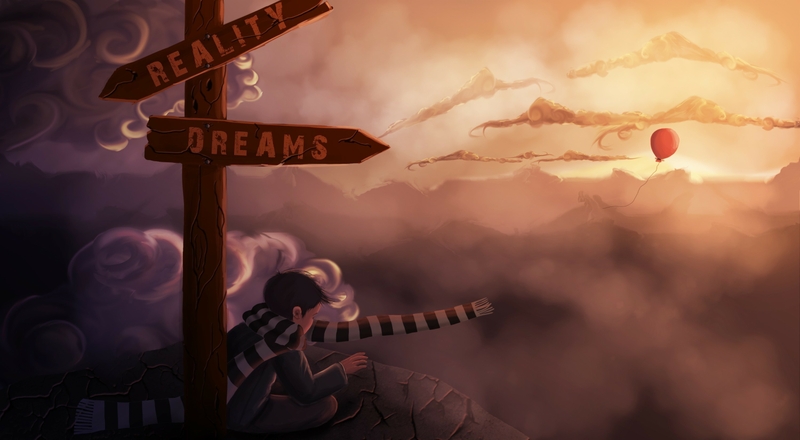
Lost Dreams

Lost Dreams

Alone,

In the dark I sit,

Reflecting upon my past,

I dream,

I dream of grass stains on my knees after playing a game of soccer

I dream of family dinners where we sit together and laugh about how my brother failed his chemistry test

I dream about a time where I would wake up to a bright glowing sun shining down and warming my face

I dream of colors, nature, wildlife

I dream about my friends, family, loved ones

I dream of a time where we lived happily and in peace

I dream of going out of my house to feel the fresh breeze of winter weather 

I dream of cold water running through my body after a game of tag

I dream of bed time stories with my dad

I dream

But like all dreams

Mine fade into a pile of dust

War Dream Meaning Interpretation - Dream Meaning

Sitting in the corner of my room 

Waiting to be swept up in a cloud of smoke 

caused by a molotov cocktail 

I go to sleep knowing that it may be my last

I dream 

All this pain, this war

All over a flag

All over a large chunk of dirt 

My backyard, a playground for tanks

My streets, a maze for soldiers

My home, a bunker for survival

My dreams, the morphine to my pain

My city, the hunting grounds for target practice 

My school, a hospital for the injured

I dream 

The Dream and the Reality | Blakely Bennett

Choose Him & Thinking

Choose Him & Thinking

Response to Barbie Doll by Marge Piercy


“Choose Him”


And so the king was born

With his alluring physique

And desirable nature

And promising eyes

Then in the magic of puberty, a pal said:

You have a pleasant figure, who wouldn’t want it?


He was assertive, brilliant,

Commanding and protective,

Determined and demanding

He went back and forth offering himself,

Who will finally choose him?


He was advised to control.

Pretend he doesn’t notice

His damaging behavior.

His good nature in full capacity

Like a never-fading youth

He cut off his pure morals

And offered them up


In the casket displayed on tarnished fabric he lay

With his ruffled hair,

Chiseled jawline,

Suit and tie.

Doesn’t he look heavenly? Everyone said.

One last look.

To every man a happy ending.


For my response to Barbie Doll by Marge Piercy, I decided to rewrite the poem from society’s perspective on men. I kept a few parts of the original poem in order to show the similarities of how men and women are both expected to meet certain expectations. 

Unfortunately, men are often only seen for their physical appearances and abilities. Similar to women, men are held to a high standard. If a man is considered “ugly” he is seen as an outcast; people do not want to have a poor reputation because they are friends with such individuals. Toxic masculinity is deeply rooted in society and it will require a lot of work to educate individuals, of all genders, on how they can help to remove these hurtful standards from everyday life.


Response to I Know Why the Caged Bird Sings by Maya Angelou


 “Thinking”


I still think about that time

The time that I escaped

That suffocating cell

The nauseating enclosure

Restricting me from taking a breath


I still think of my friend

Who’s stuck

Praying to get out

Dreaming of the day they can fly out

And sing with their golden voice

Of the confinement 

That they call life


I still think about my life

What would have happened

If I never left?

Would I have even tried?

Or was it all a strange coincidence?


I still think of my friend.

Will they ever get out?


For my response to I Know Why the Caged Bird Sings by Maya Angelou, I decided to write a poem. Different from my previous response, I didn’t follow the same format. Instead, I decided to write from the perspective of a bird who already escaped the cage and is now wondering when their friend will be able to do the same. I didn’t use any punctuation except for question marks in order to highlight the inner thoughts and worries that the bird is having. My poem represents the aftermath of escaping a difficult, emotionally draining situation that might even last a lifetime.


Image Citations:

https://www.discovermagazine.com/mind/in-a-world-of-endless-choices-why-is-decision-making-so-tiring

https://www.kqed.org/mindshift/27166/why-confusion-can-be-a-good-thing

The Breaking and Building of Society

The Breaking and Building of Society

Blog 3

Response to poetry seminar (Barbie doll by Marge Piercy)

In Barbie Doll by Marge Piercy, Piercy explores the standards that are being placed upon women, especially in the early 1970s. Even though Piercy wrote this poem to show the standard of her time, the poem still applies even today. Many girls have placed upon themselves the burden that society believes they should carry. Like the beginning of the poem says, these girls were born normal with no care in the world but were slowly forced to accept their predestined roles as future women. Free Vector | Low self-esteem illustrationThe poem states that the “girlchild” possesses good and desirable qualities yet she is unable to see those qualities because she believes those things don’t make her desirable in the eyes of others. She believes what matters are the physical attributes of herself and whether those attributes make the “pretty list”. Today’s world has placed a tremendous emphasis on physical looks. Young girls and boys are told the basics of what “makes” a man and a woman. Women should have qualities that can seduce men and have no “imperfections”. Men on the other hand should be strong, tall, and possess manly qualities. These expectations can destroy an individuals’ mental thinking.  I personally have experienced what it feels like to want to be accepted by the society based on my physical looks. Even now, sometimes I still find myself wanting that validation. Like the girl mentioned in the poem, many have given up their true self to fit the mold that others have made for them. Sushiksha - A blog by Shravya S Mallya: Societal Pressure and ExpectationsThe idea of fitting in has never been a new concept to humans. We crave relationships with others but sometimes we make a false pretense of who we are so as to find favor with others. And other times, we unintentionally, or intentionally, change ourselves to fit other people’s construct, not because we want to but because it is what is deemed better.


Response to: “I know why the caged bird sings” by Maya Angelou 

My poem:

Those songs are all we heard

The same ones we were singing 

Songs of things unknown but longed for 

With fearful thrills behind our bars of rage 

With clipped wings and tied feet


Yet there’s one with wings wide open

Flying to every corner of the earth

The orange sun and bursting stars 

He claims he owns 

The wind takes his hand and leads him 

Towards El Dorado 


We, in shackles and chains, have nothing 

But each other and our dreams and hope

We’ll sing our song

A song of things unknown but

Sung with a fearful thrill and 

Heard throughout distant lands 

For the caged bird sings of freedom

WANDIA NJOYA - Fifty Years Later, The Caged Bird Still Sings | The Elephant

I made this poem to show that there are other caged birds. I wanted to bring out the idea that other caged birds can motivate one another and lift each other up even if they are being caged. The caged birds represent the minorities or POC who are being mistreated and not given the same opportunity to succeed as white individuals. Movements like BLM and the Indian farmers’ protest are just a few examples of the many instances that show individuals lifting and helping one another. 

pic sources:

https://www.freepik.com/free-vector/low-self-esteem-illustration_11108061.htm

Fifty Years Later, The Caged Bird Still Sings


Poetry Seminar Response

Poetry Seminar Response

Response to My Seminar (Barbie Doll by Marge Piercy)

Broken Barbie. http://www.bloodyloud.com/wp-content/gallery/barbiekiller/les-scenes-de-crimes-de-barbie-style-dexter-3.jpg

In Marge Piercy’s “Barbie Doll”, there are a lot of comparisons to be made between my life and the life of the ‘girlchild’ in the poem. Likely, that is intentional – Piercy intended for this poem to be familiar to as many readers as possible in order to make the maximum amount of impact. I think she succeeded. Upon reading this poem, my mind was immediately filled with thoughts on how Piercy treated the ‘girlchild’ in the poem, and how society treats females. After all, it wasn’t so long ago that having a daughter would be cause for tears, not celebration. In parts of the world, that actually does happen. One infamous news story comes to my mind. A woman died because her husband made her have an abortion 4 times. All because the sex of the baby turned out to be female. Unfortunately, that’s the world we live in today, and while it’s changed quite a bit (feminism has really made an impact in the rights of women all around the world), it isn’t foolproof. Nor is it perfect.

In this day and age, society holds females up to what seems like a golden standard, a double-edged sword. Especially teenage girls. If a girl likes the color pink, she’s a “girly-girl” and “holding up to society’s false standards”. If she doesn’t, she’s a “tomboy” and “doesn’t meet society’s standards”. A teenage girl can’t be interested in politics and current events before being calling a feminist (because increasingly, feminism is viewed in a rather negative light). She also can’t be not interested in them, because then she’s called an idiot. If she dates people, she’s called. If she doesn’t date people, she’s called a prude. And then there’s the heaping mountain of social pressure, because not all pressure comes from society.

Pressure doesn’t only come in the form of picture-perfect Instagram models, or famously pretty influencers, or TikTokers with two million followers. Some pressure comes from those closest to them. Their classmates, their friends, teachers, parents, guardians. All people that have an important role to play in their life, that shape it to a staggering degree. Teenagers can be the most cruel people in existence. Self-aware enough to notice and target at weak spots, insecurities, flaws, personal ideals, and convictions. But selfish and absorbed enough not to care about the aftermath (until it’s far too late, or just never at all), or notice the damage done, or actually apologize when a hurt is given. I say this with full confidence as a teenager myself.

And so this is where I end. Marge Piercy came, intending to educate others on the double standards and pressure society has on females. I’m of the opinion that people already know about it. They know about the hurt and stress they put women under, and they still follow through with it because “It’s just the status quo; who cares?” I think that focus should be shifted – less on educating others, because people are as educated as they’re going to get, at this rate, and more on making people care enough to do things about it.


Response to Other Seminar (Siren Song by Margaret Atwood)

Siren Drowning Men. https://i.pinimg.com/originals/18/82/e9/1882e9ea08a5d0fe09491b010ee81d87.jpg

I reach out to him. I am monstrous, but pathetic in my monstrosity. Many men scorn my visage, drawing themselves away from my hooked talons and long claws. They see my hideousness, and decree that I have no use to them. It is a man-like thing to do, so much so that I feel no surprise when they turn their backs.

Some men view themselves as the paragon of virtue and see themselves as heroic in manner. My personal savior, they think to themselves, and hide their shudder of inward revulsions with skill. Not skilled enough for me, of course, but skilled enough nonetheless for other women to have taken the offer, and end up in whatever form they have been forced to. The honey drips from their lips glistening gold but with a ringing, sour note. I enjoy these type of men the most.

But in the end, I suppose it matters not. They are all men – foolish in their self-assured superiority, and pathetically easy to manipulate. I say it is only fair. We sing, and let them flock to Us. All three of Us. One for discord, Two for balance, and Three for perfect harmony. Whether that harmony favors the men or Us – well, that is an easy question, with an even easier answer. We are the beginning, the middle, and the end, and they go through those life stages faster than flies in the dead of winter.

I call for help, and twist myself into a long-lost maiden of their choosing. Golden curls here, smooth white skin there, appealing eyes – and I’ve gotten them, hooked on to my bait like stupid, stupid guppies. After all, my story is one that stirs pity, incites the man-like emotions of self-righteous help, the need to come on top.

And they come in droves. Oh, how they come!

Half are lost to the raging, unforgiving seas of Scylla and Charybdis. It is Our rent to them, so to speak, and they feast on Our offerings. Others go insane from their lack of assistance, go insane from our deadly song, and end up frothing at the mouth. Dionysus himself joins in Our revelry, his madness wild and his drink wilder. A rare few make it to Our shores, crawly up on the seemingly golden sand. One that will soon turn to harsh pebbles and sharp rocks, tearing away at their clothes and flesh. An appetizer for what is to come, and We extend Our hands, still singing. They will make good eating until the next offering comes.

But of course, it is no matter in the end. All are amusement to Us.

I wrote a sort of short story in response to Atwood’s poem. It takes place from the siren’s point of view, and traverses through her thoughts as she goes through her daily purpose, which is to drown and feed on men. In here, the reader can see her classify men into two basic premises, and can also see how clearly she dismisses them. Though she puts some thought into classifying them, she also doesn’t care. All she cares is that in the end, they are gone, and she can continue with her lifestyle. I chose to write this because while Atwood’s poem does go through some sort of thought process, it doesn’t directly follow the reasoning of the siren as she sings her song – and I wished to do so.

One From Many

One From Many

“When individuals lack self identity, they adhere to social norms and begin to conform, resulting in a stronger collective identity and a loss of individuality. “

Identity plays an important role in individuals lives. Through knowledge and experience, identities begin to form. An identity is a representation of who you are as a person or a group. This idea of identity reflects a person’s traits, likes and dislikes, values, and beliefs. Through years of growing old, many people base their identity off of their past experiences and history. But what happens when individuals have to decide from preserving their self identity or letting go of their individuality to fit in to homogenize with the local society around them? This often leads to a decision being made to fit into the community they are surrounded by. This foreshadows my thesis statement; When individuals lack self identity, they adhere to social norms and begin to conform, resulting in a stronger collective identity and a loss of individuality. Due to being around a certain group of people or a specific community, one may begin to conform because they feel like they can’t fit in. Through conforming towards a certain society, individuality may be lost. This is often the byproduct of homogenizing with society and an individual’s surroundings. As people grow, their identity grows with them: but when individuals lack individuality they become more susceptible to a greater force taking over their originality. The lack of a strong foundation of self identity can cause an individual to become attune to the people that surround them. This reflects the impacts of how individuals who do not have a strong sense of self character and personality, might go on to adhere towards larger more widespread identities. This is prevalent throughout many people’s lives. An indirect example of this is politics and the recent election. Individuals who do not hold a strong opinion on what they believe in often result in the vote of the more popular party. This portrays that individual conforming towards the greater identity as a whole. The loss of individuality can be caused by many factors but as seen throughout life, individuals who lack self identity often begin to adhere to social norms. Which results in a more interconnected and stronger collective identity.

I greatly relate to this thesis as it has played a significant role in my life. Growing up I have always been different. I looked different, spoke differently, and ate different foods. This is what made up my identity as an individual. Looking back at my past, I wasn’t the type of individual to fit in but was the one to stand out. My first four years of elementary school I had to fight my way through societal pressures to be able to keep my individuality alive. If I had not put extra effort to fight for my respect and character, I would have lost my self identity long ago. Looking back at my past, I can empathize with others who have not been able to hold on to their historical roots as it is not easy to create a strong identity by yourself. At one point I had seen myself letting go of my culture to fit into society. But instead of giving up my personality and unique characteristics, I pushed myself to stand up for my singularity and make a stance with my diverse beliefs and roots. I connect with this thesis because often it is easy to adhere to social norms instead of having to decide what one may want their future identity to look like. Through connecting through a collective identity, one may feel like they have less hardships. But as a trade off, they have lost their self identity and the traits which make them unique to society. I continue to actively hold onto my identity as without it I am like everyone else. It’s as if I were a red dot amongst a collage of black and white. My identity not only makes me stick out but also gives me confidence and courage to do things some individuals may consider dangerous and harmful. One must hold on to their values and beliefs before they fall into the hands of society’s norms through conforming. In order to prevent this; one must anchor themselves with their individuality before the wind of society blows them over.